Delhi HC: FCI Cannot Recover Excess Payments from Retired Staff while Withholding Valid Arrears
 Copy Link
 Share
Share Save
Save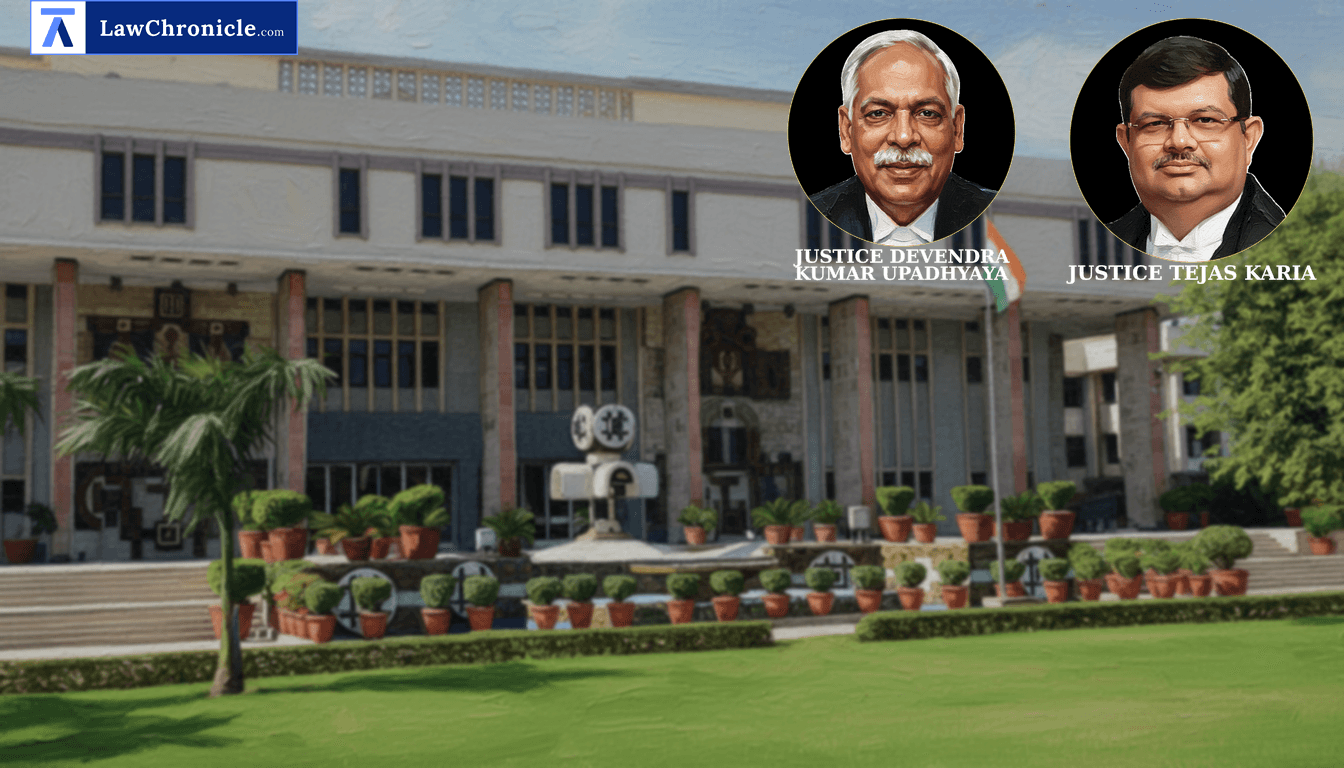
The Delhi High Court has held that the Food Corporation of India (FCI) cannot adopt a 'pick and choose' policy by pursuing recoveries from retired employees for excess pay while simultaneously withholding differential arrears from those entitled to benefits under the same pay revision scheme. In a decision emphasizing fairness and non-discrimination, a bench comprising the Chief Justice Devendra Kumar Upadhyaya and Justice Tejas Karia upheld a Single Judge's order, ruling that the implementation of a pay scale must be uniform and cannot be conditioned upon the unilateral advantage of the employer.
Court Rejects Uneven Implementation of Pay Regimes
The dispute centered around the transition of employees from the Central Dearness Allowance (CDA) to the Industrial Dearness Allowance (IDA) pattern. While the FCI sought to recover amounts from some employees on the grounds of retrospective refixation, it issued circulars to keep 'payment cases' where employees were owed arrears in abeyance. The Court found this approach legally unsustainable.
Judicial Rationale on Arbitrary Policy Application
The Court, in its reasoning, observed: "A State instrumentality is bound to act fairly, reasonably, and in a non-discriminatory manner, and cannot adopt a position that permits it to retain the benefits of a policy while simultaneously denying corresponding entitlements accruing to its employees. The implementation of a welfare scheme cannot be conditioned upon the unilateral advantage of the employer, particularly where such an approach results in unequal treatment and prejudice to its employees."
Background:
Following the landmark Supreme Court decision in Jute Corporation of India Officers Association v. Jute Corporation of India Ltd., the Union of India initiated a policy to phase out the CDA pattern in Central Public Sector Enterprises (CPSEs). In implementation, the Department of Public Enterprises (DPE) and the FCI issued several circulars directing that employees promoted on or after January 1, 1989, would be converted from the CDA to the IDA pattern.
Problems arose when the FCI issued circulars in 2013 and 2015, resolving to recover excess payments from some employees while holding the payments of arrears for others in abeyance to avoid future recovery difficulties. This led to two sets of writ petitions: one challenging the retrospective recovery from retired senior officers, and another seeking the release of withheld benefits.
The FCI argued that based on Chandi Prasad Uniyal v. State of Uttarakhand ( "(2012) 8 SCC 417": 2012 CaseBase(SC) 537), excess payment of public money is recoverable even if made by mistake. However, the Respondents relied on State of Punjab & Ors. v. Rafiq Masih (White Washer) & Ors. ( "(2015) 4 SCC 334": 2014 CaseBase(SC) 477), which prohibits recovery from retired employees when no fraud or misrepresentation is involved. The FCI also cited Celir LLP v. Bafna Motors (Mumbai) (P) Ltd. and Securities and Exchange Board of India v. Sunil Krishna Khaitan ( "(2023) 2 SCC 643": 2022 CaseBase(SC) 598) to argue that equity cannot supplant the law.
The High Court found that the recoveries attempted against retired officers were harsh and inequitable, particularly as the alleged excess payments were due to internal administrative discrepancies and not employee fraud. Furthermore, the Court slammed the FCI's selective application of the IDA framework, noting that it violated Article 14 of the Constitution of India, 1950. The appeals by the FCI were dismissed, and the Single Judge's directions for refunds and payments with interest were upheld.
Case Details:
Case No.: LPA 357/2026 & CM Nos. 32403/2026, 32404/2026, 32405/2026
Case Title: FOOD CORPORATION OF INDIA v. JAGNESHWAR PRASAD GUPTA & ORS.
Appearances:
For the Petitioner(s): Mr. Purushottam Sharma, Ms. Vani Vyas and Mr. Prakhar Singh, Advs.
For the Respondent(s): Mr. G.D. Mishra, Adv.; Mr. Ashish Aggarwal, Mr. O.P. Faizi, Mr. Anand Aggarwal, Ms. Darshana Aggarwal, Ms. Nishita Verma, Ms. Anjali Kashyap, Ms. Lisha Arora, Mr. Himanshu Singh, Ms. Ishita, Advs.; Ms. Aarti Mahajan Shedha, Adv.; Mr. Naresh Kaushik, Sr. Adv. with Mr. Anand Singh, Ms. Saumya Johari, Mr. A. Gautam, Advs.
Source: 2026 CaseBase(DEL) 413
 Breaking News