

Fee Determined At Course Entry Cannot Be Changed Midstream: Supreme Court
 Copy Link
 Share
Share Save
Save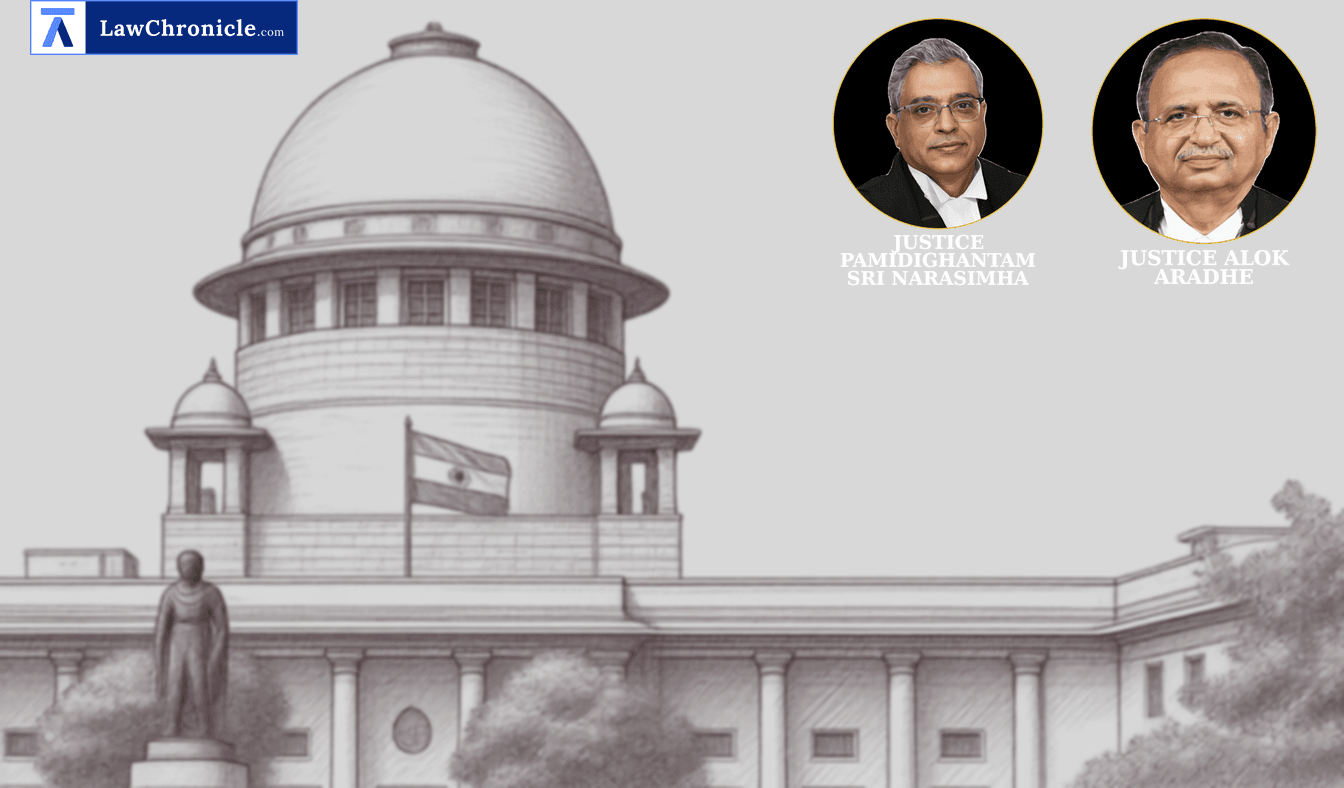
In a major relief to professional students across the country, the Supreme Court has ruled that educational fees determined at the commencement of a course cannot be altered midstream to the detriment of enrolled candidates. Barring exceptional, unforeseen cost escalations, the apex court mandated that financial liabilities must remain predictable throughout the entire duration of a degree programme.
A bench comprising Justice Pamidighantam Sri Narasimha and Justice Alok Aradhe delivered the judgment while dealing with a batch of civil appeals challenging a Calcutta High Court judgment that blocked a mid-session fee revision for B.Tech students in West Bengal.
Key Takeaways
No Midstream Fee Hikes: Fees fixed at the time of admission cannot be enhanced mid-session for already enrolled batches.
Institutional Status for Fee Committees: Statutory fee fixation committees must function efficiently and notify fee schedules prior to admissions.
Protection of Financial Predictability: Students and families rely on clear financial planning, which cannot be disrupted by delayed state notifications.
Strict Exceptional Scope: Mid-course fee adjustments are strictly limited to extraordinary economic shifts or unforeseen statutory changes.
The Supreme Court affirmed the ultimate directions of the High Court restraining private engineering colleges from demanding hiked fees from students admitted prior to the State's fee revision notification. The Bench held that fee fixation committees must maintain operational efficiency to prevent administrative delays from spilling over onto students.
The Apex Court issued the following directions:
"(i) The fee fixation committees have a statutory foundation and have an important public purpose to subserve. The institutionalisation of these committees is necessary for realising the interests of aspiring students for professional higher education and also for establishing credible higher and professional educational institutions through private enterprise. High Courts will exercise due judicial review to ensure that these committees perform their duties with institutional efficiency, expertise, and integrity.
(ii) The regulatory regime for fixation of fees, as contemplated in the decisions of this Court, AICTE Regulations, National Education Policy, 2020, coupled with principles of certainty, necessitates the relevant authorities to notify fee payable for the entire course before a student takes admission. There must be certainty about the fee liability; variation in the fee payable during the subsistence of the course is permissible only in exceptional instances such as unforeseen increase in the expenditure.
(iii) The final directions of the High Court, as reproduced in paragraph 15 of this judgment with respect to applicability of the revised fees under Notification dated 16.10.2023 are affirmed. The Appellant-College will take necessary steps for complying with those directions."
The Supreme Court, in its reasoning, observed that "In undertaking such revision, it is also necessary to adopt and apply the principle of certainty with respect to the fees payable for the professional course into which the student is admitted... A student entering a four-or five-year professional programme should ordinarily know, at the very threshold, the financial liability that they or their family is undertaking. Such advance determination promotes transparency, enables informed choice, and facilitates financial planning."
Ratio
The regulatory framework governing professional education, combined with the principle of financial certainty, mandates that the fee payable for the entire duration of a course must be notified before the commencement of admissions. Midstream fee revisions cannot be enforced on already enrolled students unless justified by extraordinary, unanticipated financial circumstances.
Background
The controversy arose after the West Bengal Department of Higher Education issued a Notification on October 16, 2023, enhancing the upper ceiling of fees chargeable by private self-financing professional colleges to a maximum of ₹1,10,000 per annum. Following this, Dr. B.C. Roy Engineering College revised its fee structure on December 15, 2023, applying a 37.5% fee hike on the ongoing 2023–27 B.Tech cohort starting from their second semester.
Students challenged this hike before the Calcutta High Court, citing Regulation 7 of the All India Council for Technical Education (Norms and Guidelines for Fees and Guidelines for Admission in Professional Colleges) Regulations, 1994. While a Single Judge dismissed the writ petitions, a Division Bench in Tanushri Mondal and Others v State of West Bengal and Others partially allowed the appeals, holding that the revised fee structure could only apply to students admitted on or after October 16, 2023, and directed refunds or fee adjustments for previously admitted students.
In appeal, the Supreme Court relied on the foundational principles of fee regulation laid down in TMA Pai Foundation and Others v. State of Karnataka and Others, P.A. Inamdar and Others v. State of Maharashtra and Others ( "(2005) 6 SCC 537": 2005 CaseBase(SC) 202), and Islamic Academy of Education and Another v. State of Karnataka and Others ( "(2003) 6 SCC 697": 2003 CaseBase(SC) 469), alongside the administrative review standards in Lifecare Innovations Pvt. Ltd. and Another v. Union of India and Others ( "2025 SCC OnLine SC 436": 2025 CaseBase(SC) 162). While the Supreme Court disagreed with the High Court's reasoning on retroactivity and estoppel, it upheld the final operational directions protecting students from midstream fee hikes and partially allowed the appeals.
Case Details:
Case No.: Civil Appeal No. of 2026 (@ Special Leave Petition (C) No. 13237 of 2026)
Neutral Citation: 2026 INSC 1120
Case Title: Dr. B.C. Roy Engineering College & Anr. v. The State of West Bengal & Ors.
Appearances:
For the Petitioner(s): Mr. Jaideep Gupta, Senior Advocate; Mr. Harin Raval, Senior Advocate; Mr. Rauf Rahim, Senior Advocate
For the Respondent(s): Mr. Sanjay R. Hegde, Senior Advocate
Source: 2026 CaseBase(SC) 8270
 Breaking News