


Fifteen-Year Restoration Period For Commuted Pension Is Legally Valid: Delhi High Court
 Copy Link
 Share
 Save
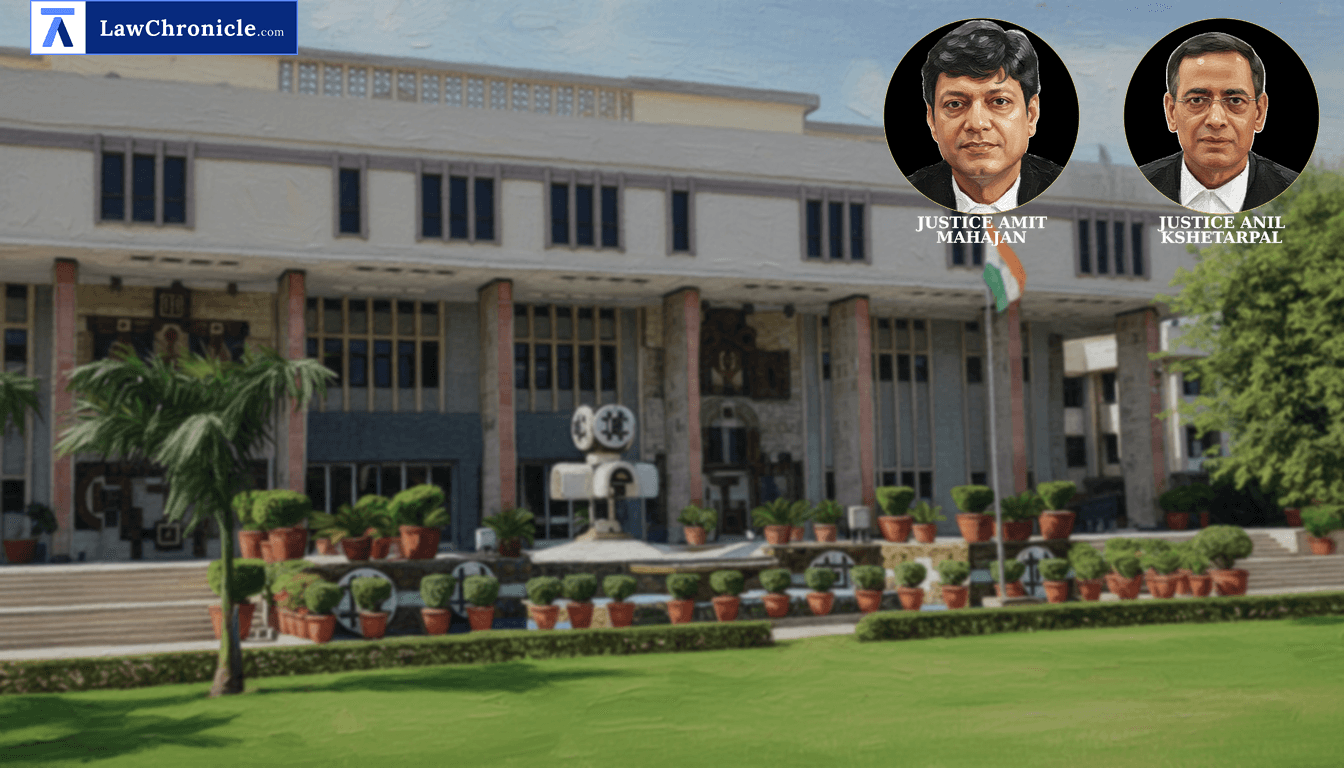
The Delhi High Court, in Union of India & Ors. v. Sub Trilok Chand & Anr. (and connected matters), upheld the statutory fifteen-year restoration period for commuted pension, rejecting a batch of petitions that assailed the recovery mechanism as excessive and arbitrary.
A division bench comprising Justice Anil Kshetarpal and Justice Amit Mahajan addressed the common grievance of pensioners from various sectors, including the Central Government, Defence, Railways, and banking institutions. The petitioners had argued that with revised commutation factors and declining interest rates, the commuted amount is effectively recovered by the State within twelve years, making the continued deduction for fifteen years a case of unjust enrichment.
The Nature of Pension Commutation
The Court clarified that commutation is a voluntary welfare measure and not a commercial loan. It noted that the scheme allows a retiring employee to receive a lump-sum capitalized value of a portion of their future pension to meet immediate financial needs. Referring to the Central Civil Services (Commutation of Pension) Rules, 1981 and the Income Tax Act, 1961, the Court observed that these rules possess statutory force and provide a uniform standard. The Bench emphasized that because the State assumes the 'mortality risk' where no recovery is made from heirs if the pensioner dies early the recovery period cannot be calculated through simple arithmetic.
The Court, in its reasoning, observed: "The commuted value of pension is not computed as recovery of principal advanced to an individual pensioner but is determined through actuarial tables taking into account multiple macro-economic and demographic variables... The commutation scheme therefore does not operate as a commercial borrowing transaction or lending arrangement. Rather, it represents a statutorily structured redistribution of pension payments across time, founded upon actuarial balancing."
Judicial Deference to Economic Policy
Actuarial Equilibrium vs. Mathematical Recovery
Addressing the petitioners' claim that recovery is completed within 12 years, the Court relied on the landmark Supreme Court decision in Common Cause, a Registered Society v. Union of India ( "(1987) 1 SCC 142": 1987 CaseBase(SC) 314). The Bench noted that the Supreme Court had already considered the 'years-of-purchase' basis and found the fifteen-year rule equitable. The Court stated that judicial review in matters of fiscal policy is limited, especially when successive Central Pay Commissions have consistently recommended retaining the 15-year period.
The Court noted that similar challenges had been dismissed by various High Courts, including the Punjab and Haryana High Court in Shila Devi & Ors. v. State of Punjab & Ors. and Rattan Chand v. Bhakra Beas Management Board & Ors., as well as the Telangana High Court in M.V.S.N. Acharyulu & Ors. v. The State of Telangana. It held that the 15-year restoration period under Rule 10A of the Central Civil Services (Commutation of Pension) Rules, 1981 does not violate Article 14, 21, or 300A of the Constitution of India.
Directions Issued to Statutory Authorities
While upholding the recovery period, the Court protected pensioners who had enjoyed interim stays during the litigation. The Court has the following directions:
"...the concerned employer shall not recover the deferred amount in a lump sum. Instead, recovery shall continue beyond the prescribed fifteen-year restoration period for the exact duration corresponding to the period during which such interim protection remained operative, so as to balance fiscal neutrality with avoidance of undue hardship to pensioners."
Background:
The dispute arose as retired employees challenged Rule 10A of the Central Civil Services (Commutation of Pension) Rules, 1981 and analogous rules. They contended that after the 6th and 7th Central Pay Commissions, the 'commutation factors' were revised such that the State recovers the principal and interest much faster than before. They cited the doctrine of proportionality and argued that the current 15-year rule was outdated.
The Union of India defended the rule, stating that commutation is voluntary and that pensioners, having 'approbated' the benefit by taking the lump sum, cannot 'reprobate' the recovery terms. The Court agreed with the Union, setting aside an interim order of the Armed Forces Tribunal that had stayed recoveries, and dismissed all petitions filed by the pensioners.
Case Details:
Case No.: W.P.(C) 12781/2024
Case Title: UNION OF INDIA & ORS. v. SUB TRILOK CHAND RETD NO. JC374073A & ANR. (and connected matters)
Appearances:
For the Petitioner(s): Ms. Avshreya Pratap Singh Rudy, CGSC; Mr. Sarvesh Bisaria; Mr. Sahil Chandra; Ms. Saahila Lamba; Ms. Sunita Singh; Ms. Richa Ojha; Mr. Arun Bhardwaj, Senior Advocate; Mr. Siddharth; Mr. Vidya Sagar, Advocates.
For the Respondent(s): Mr. US Maurya; Mr. Ripudaman Bhardwaj, CGSC; Mr. Rajesh Kumar Gautam; Mr. Farman Ali, CGSC; Mr. Satya Ranjan Swain, CGSC; Mr. Hussain Taqvi, SPC; Mr. Shubham Saigal; Ms. Ekta Chaudhary, SPC; Ms. Pratima N Lakra, CGSC; Mr. Sai Manik Sud, SPC; Ms. Rukhmini Bobde, CGSC; Ms. Saumya Tandon, CGSC; Ms. Shakun Sudha, SPC; Mr. Suhail Malik, SPC; Mr. Neeraj Kumar, CGSC, Advocates.
Source: 2026 CaseBase(DEL) 386
Similar Articles
 Breaking News


