First Survey Finding of Flooding Prevails; Supreme Court Sets Aside NCDRC Dismissal, Remands for Quantum
 Copy Link
 Share
Share Save
Save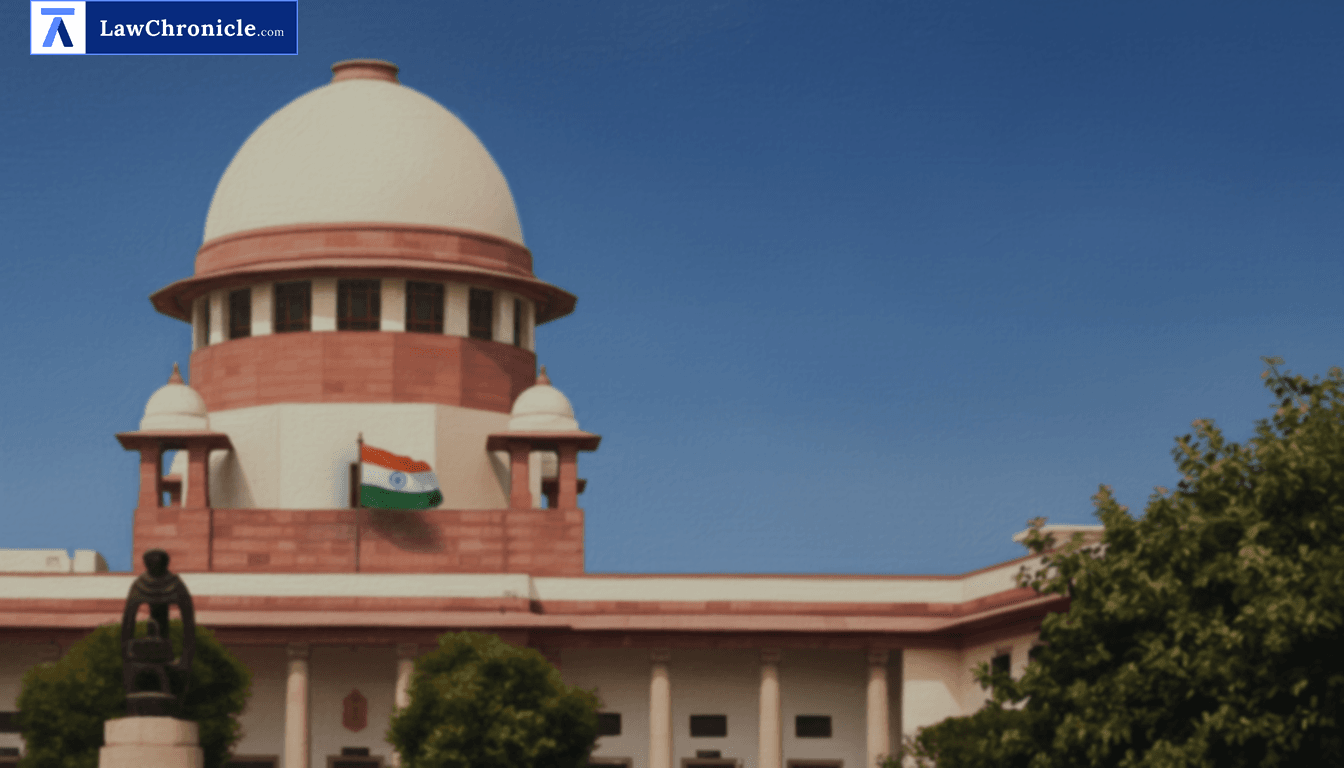
A Bench of Justices B.V. Nagarathna and Satish Chandra Sharma heard an appeal under Section 23 of the Consumer Protection Act, 1986 against the National Consumer Disputes Redressal Commission’s order dismissing a complaint by the owner of a house-holder insured building whose basement was inundated. The appeal challenged the insurer’s repudiation of a claim on the ground that damage arose from “seepage,” which the policy did not cover, rather than from flood or inundation.
The Court allowed the appeal in part, held that the initial survey and multiple technical certificates established that the proximate cause of loss was flooding due to heavy rainfall and not gradual seepage, and directed remand to the NCDRC for assessment of compensation. The Court found the insurer’s second, belated survey “arbitrary and without due basis” and set it aside. The Court, in its reasoning, observed: “In view of the concurrent findings in the certificates and first survey report aforementioned, we conclude that the damage to the insured premises was not caused by any inherent structural defect or seepage, but was instead a direct consequence of the unprecedented and heavy rainfall experienced during the relevant period, which led to flooding of water into the basement.” The Court therefore set aside the contrary findings recorded by the NCDRC and remitted the matter for quantification of loss in accordance with the policy.
Background The owner (appellant) insured a multi-storey premises with United India Insurance Company Ltd. for Rs. 1.50 crores for the policy year 13.03.2016–12.03.2017. After heavy rains in late August 2016, the basement was found flooded on the appellant’s return to Delhi; the appellant reported the loss and the insurer conducted a survey on 03.09.2016. The first survey report dated 06.09.2016 attributed the loss to heavy rains on 25.08.2016 and noted water entry from the flooring. The insurer commissioned further expert certificates and a second survey report dated 18.10.2016, which concluded the loss was due to continuous seepage; the insurer repudiated the claim on 23.11.2016.
The appellant contested the repudiation before the NCDRC, which dismissed the complaint, accepting the insurer’s position that the damage resulted from seepage not covered by the policy. The appellant relied on the Meteorological Department report and the immediate first survey, contending the inundation was sudden and caused by heavy localized rainfall. The respondent insurer relied on structural engineer certificates which, it argued, showed continuous ingress of seepage water and corrosion of reinforcement, and maintained that seepage was not an insured peril.
The Supreme Court examined the first survey report and multiple technical certificates. It found that the first survey and two independent engineering certificates supported flooding due to heavy rainfall and corroborated water ingress through flooring into the basement. It held that the Unique Consulting Engineers’ report, which addressed structural corrosion, did not establish causation for the basement flooding and therefore could not displace the first survey’s proximate-cause finding. The Court held that the insurer’s second survey, conducted after an earlier comprehensive survey, diverged without explanation and was therefore arbitrary. The Court set aside the second survey and the NCDRC’s adverse findings, and remanded the matter to the NCDRC solely to determine the appropriate quantum of compensation payable under the policy. The appeal was disposed of accordingly; pending applications stood disposed.
Case Details: Case No.: Civil Appeal No. 6623 of 2025 (2025 INSC 731) Case Title: Gopal Dikshit v. United India Insurance Company Ltd. Appearances: For the Petitioner(s): Not indicated in the judgment For the Respondent(s): Not indicated in the judgment
 Breaking News