


Flawed Selection Process For Para Asian Games Women's Doubles: Karnataka HC
 Copy Link
 Share
 Save
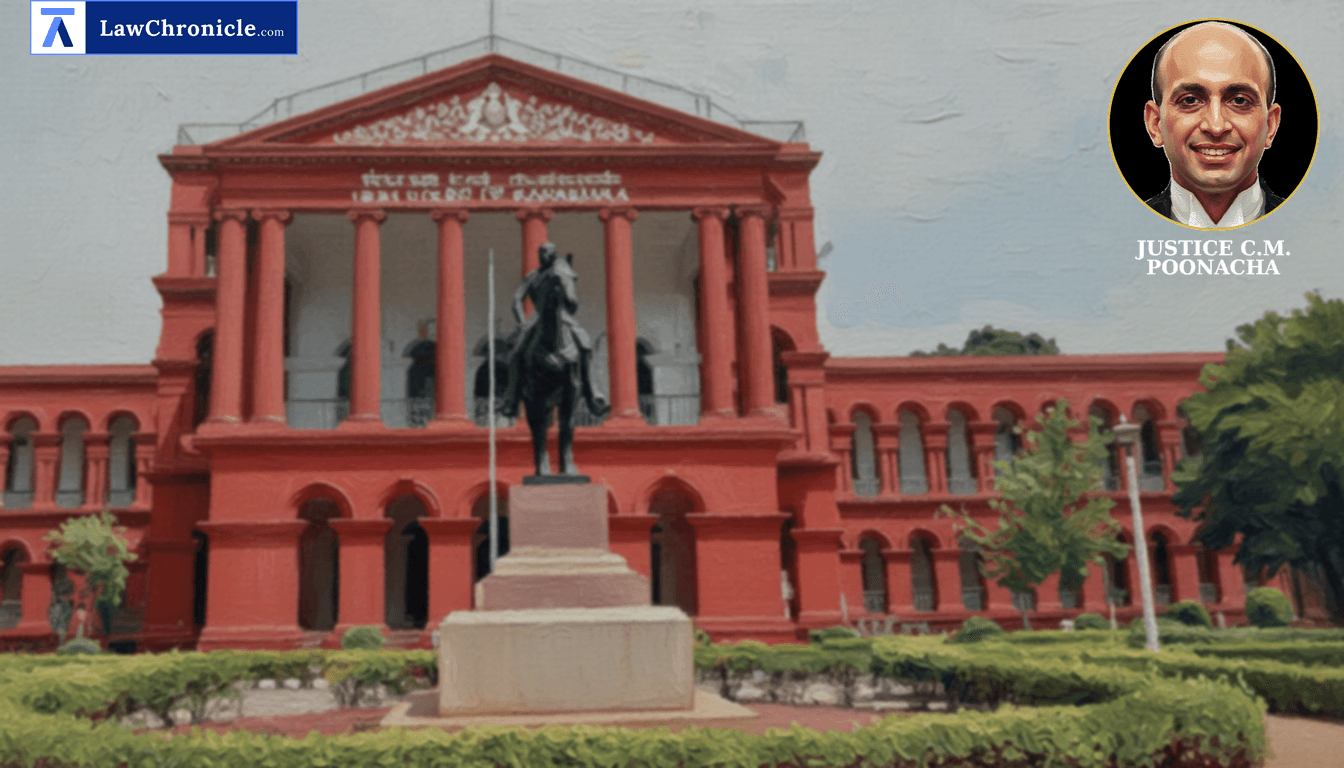
The Karnataka High Court has exposed a glaring procedural irregularity in the selection of female athletes for international sporting events, ruling that the current practice of selecting doubles partners from a pool of singles players is ex-facie contrary to established athletic norms. This decisive intervention mandates a complete re-evaluation of the selection criteria for the upcoming Para Asian Games to ensure merit-based representation on the global stage.
In a case involving a physically disabled Para Table Tennis player, a single-judge bench of Justice C.M. Poonacha examined the selection policies formulated by the Ministry of Youth Affairs and Sports and the actions of the Paralympic Committee of India. The petitioner, an 80% permanently disabled Consultant Orthodontist and world-ranked athlete, challenged her exclusion from the AICHI-NAGOYA 2026 Asian Para Games despite meeting key eligibility benchmarks.
Key Takeaways
Normative Selection Alignment
Selection for doubles events must respect the technical requirement of pairs accustomed to playing together rather than arbitrary picking from singles slots.
Policy Non-Discrimination
Government policies do not distinguish between entries for singles and doubles; National Sports Federations cannot create restrictive barriers that favor one category over the other.
Judicial Oversight of Sports Bodies
High Courts will intervene where the selection discretion of sports bodies is exercised in a manner that is ex-facie improper or contrary to technical expertise.
Court Rejects Arbitrary 'Singles-Only' Selection for Doubles
The Court scrutinized the counter-affidavit filed by the Paralympic Committee of India (PCI), which revealed that all six female athlete slots were filled based solely on singles rankings. The PCI argued that selected athletes could thereafter choose partners from within that group. Rejecting this approach, the Court noted that participation in a doubles event usually involves a pair accustomed to playing together, a factor the PCI completely ignored.
The Court, in its reasoning, observed: "The said manner of selection for doubles events is ex-facie contrary to well known norms of selection for double events, inasmuch as participation in a doubles event is, under normal circumstances, a pair of players who are accustomed to playing together having regard to various factors, which aspects have not been taken into consideration by the PCI."
Directions Issued to Statutory Authorities
Recognizing the urgency of the upcoming games, the Court issued specific mandates to ensure the petitioner’s credentials and the broader selection integrity are addressed. The Court has following directions:
"The present writ petition is disposed of by directing the concerned respondents to re-consider the team selection for the doubles events for the women’s table tennis events the upcoming PAG, 2026 scheduled to be held from 18th to 24th October, 2026. Needful to be done by the concerned respondents, by also taking into consideration as to whether the petitioners would be entitled for selection for the women’s doubles table tennis events, as expeditiously as possible, in any event not later than one week from the date of receipt of a copy of this order. Having regard to the last date for participation of the events, an endeavour would be made to recommend the names of athletes for participation in the PAG, 2026 for the women’s doubles table tennis events. Further, the respondent Nos.1 and 2 shall take corrective measures to ensure that adequate care is taken so that a proper selection process is undertaken by the concerned authorities in accordance with established norms keeping in mind the fact that the selected athletes are representing the country in international competitions."
Ratio
National Sports Federations (NSFs) must exercise their technical discretion in team selection in a manner that aligns with established international sporting norms. A selection process for doubles events that excludes specialist pairs by filling slots exclusively through singles rankings is procedurally flawed and legally unsustainable, especially when the governing government policy treats singles and doubles entries without discrimination.
Background
The petitioner, a Para Table Tennis player ranked in the world list, approached the court via a writ petition under Article 226 and 227 of the Constitution Of India. She contended that despite winning a Bronze Medal in the ITTF Para Asian Championship 2025 and holding a significant Asian rank, she was not considered for the 2026 Asian Para Games. The Ministry of Youth Affairs and Sports admitted that while she did not meet the 'Top 6' criteria for singles, she and her partner met the eligibility criteria for doubles under Clause 4.1(III) of the policy dated 24.09.2025. However, the PCI had failed to nominate any specific female players for doubles, leaving the slots to be filled by singles players. The Court found this methodology lacked technical expertise and failed to ensure that the best medal prospects represented the country.
Case Details:
Case No.: WRIT PETITION NO. 26896 OF 2026 (GM-RES)
Neutral Citation: 2026:KHC:50489
Case Title: Dr Rajalakshmi Shankar Janardhana Murthy V. The Secretary, Ministry Of Youth Affairs And Sports And Others
Appearances:
For the Petitioner(s): SRI. BIPIN B S., ADVOCATE
For the Respondent(s): Sri. Mahesh Arkalgud Srikanth., Advocate For R1; Sri. D Basavaraj, Advocate For R2; Sri. Snehil Balani, Advocate For R3; Sri. Praveen Raikote, Advocate For R3 To R6
Source: 2026 CaseBase(KAR) 20398
Similar Articles

 Breaking News


