


Foreign Court Orders Must Yield to Child Welfare in Custody Battles: Supreme Court
 Copy Link
 Share
 Save
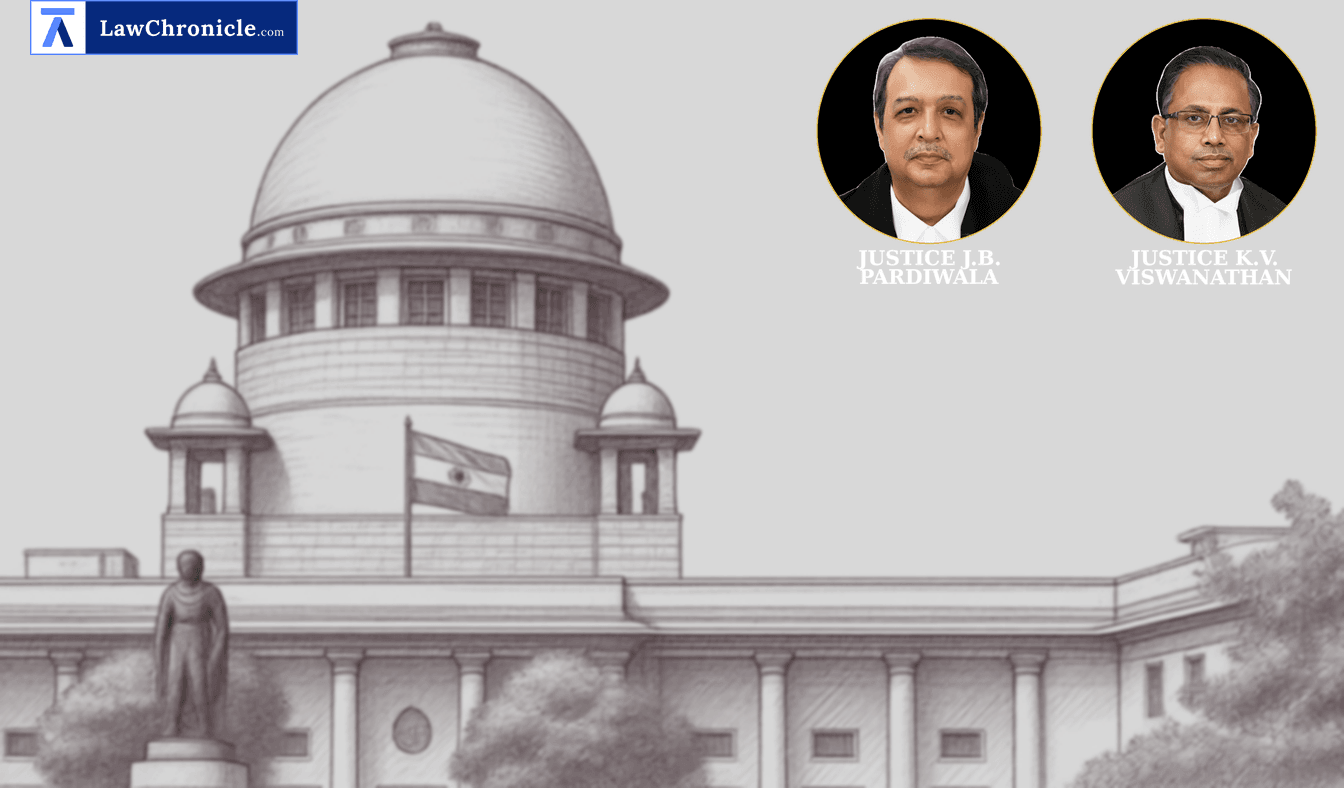
Refusing to let parent-child custody disputes turn into mechanical legal tugs-of-war, the Supreme Court has ruled that a foreign court order must yield to the paramount welfare of the minor child, emphasizing that habeas corpus petitions between parents must prioritize the child's holistic development over technical claims of illegal detention.
A bench comprising Justice J.B. Pardiwala and Justice K.V. Viswanathan allowed an appeal against the Karnataka High Court judgment, directing the return of a minor US citizen child to the United States alongside her mother while establishing stringent financial and residential safeguards for their wellbeing.
Key Takeaways
- Child Welfare Trumps Foreign Orders: Orders issued by foreign courts regarding child custody do not automatically bind Indian courts, which act under parens patriae jurisdiction to independently assess the best interests of the minor.
- Habeas Corpus Shift: In custody battles between parents, the primary focus of habeas corpus shifts from testing the strict legality of detention to redressing the wrongful deprivation of parental custody based on child welfare.
- Rejection of Purely Material Metrics: Welfare encompasses emotional stability, psychological security, and compassionate guidance rather than merely financial capability or physical comfort.
- No Advantage to Wrongdoers: While child welfare remains paramount, a parent who removes a child in defiance of a foreign court order cannot ordinarily benefit from their own wrongdoing when conflicting factors are evenly balanced.
Court's Rationale and Directions
The Supreme Court observed that the primary aim of habeas corpus petitions in child custody disputes is to determine the child's overall welfare. The Apex Court further explained that "In a dispute between two parents, a debate on legality takes us nowhere. Each parent may well have an equal and lawful claim to the child’s custody. In fact, the purpose of the petition in such cases is not to test the legality but to give the court a means by which it may determine what is best for the welfare of the child."
Addressing the interaction between foreign custody decrees and Indian judicial review, the Supreme Court highlighted that comity of courts requires due consideration but not blind execution. It added that "First and foremost, the welfare of the child is the paramount consideration in every such case, whatever orders the courts of another country may have made. Put differently, a court in this country, when exercising its jurisdiction, cannot blindly follow the order of a foreign court and act merely as an executing court... There is thus no ambiguity in the fact that an order of a foreign court must yield to the welfare of the child."
Accordingly, the Supreme Court issued the following directions:
"39. In view of the above statement made on behalf of Respondent No. 4, which we accept and record, we direct that Respondent No. 4 shall travel to the United States with the child on or before 31.12.2026. Respondent No. 4 shall take all necessary steps, including obtaining the requisite visa and travel documents, at the earliest. Should any cooperation be required from the Appellant for this purpose, he shall extend it promptly to facilitate the smooth travel of Respondent No. 4 and the child to the USA.
- It has been brought to our notice that the child’s US passport has expired. The passport will have to be renewed, or a new passport will have to be issued. In this regard, the cooperation of the Appellant, as her father, is required. The Appellant shall take all steps necessary to have Vindhya’s passport renewed or a new passport issued. Respondent No. 4 shall hand over Vindhya’s expired US passport to Mr. Prabhjit Jauhar, learned counsel appearing for the Appellant, within a period of one week from today. Once Mr. Prabhjit Jauhar receives the passport, he shall do the needful in accordance with the procedure.
- The Appellant, Vayu Kishore, participated in today’s proceedings online from the United States. He heard us dictate the operative parts of this order. He also heard us discuss the undertakings given by him through his learned senior counsel, which we have recorded above. To reiterate, these are: (i) he would arrange separate accommodation for Respondent No. 4 near his residence in the United States and bear all expenses for it, including rent; (ii) he would assist Respondent No. 4 in having her Green Card, which has since lapsed, restored; (iii) he would provide Respondent No. 4 monthly financial assistance of USD 3,200, as ordered by the Superior Court of California, and bear all her travel and other miscellaneous expenses; and (iv) he would not take any legal steps against Respondent No. 4 in respect of the alleged violation of the order dated 25.08.2022, and would cooperate in any other proceedings initiated against her in the United States, so as to restore family life.
- Mr. Vayu Kishore undertakes to move the U.S. Court, in the pending proceeding seeking certain orders similar to the present order made by us.
- We direct that the undertakings recorded above be given by the Appellant by way of an affidavit, which shall form part of the record of the case. Since Respondent No. 4 has agreed to move, we insist that the Appellant adhere to the undertakings given here and leave no stone unturned to ensure that the best care is taken of both his daughter and his wife. As a matter of abundant caution, we direct the Appellant to furnish security in the sum of Rs. 1,00,00,000/- (Rupees One Crore only) by way of a fixed deposit receipt initially for a period of 18 months on an auto renewable basis in the name of the Registrar, Supreme Court of India. Let this security be furnished within a period of two weeks from today.
- Lastly, we clarify, by way of abundant caution, that none of the observations made in this order shall have any bearing on the custody or divorce proceedings currently pending between the parties in the USA, which shall be proceeded and decided on their own merits."
Ratio
In parental custody disputes involving foreign court decrees and the removal of a child to India, the paramount consideration is the welfare and best interests of the child evaluated under parens patriae jurisdiction. Orders of foreign courts must yield to child welfare, and while summary or elaborate inquiries may be adopted depending on the facts, promptness, and root integration in the new country, a parent's unilateral defiance of a foreign court order cannot serve to confer an unfair legal advantage where child welfare considerations are otherwise balanced.
Background
The marriage between the appellant father (a US citizen) and respondent mother took place in New Jersey, USA, in 2018, and they set up their matrimonial home in California. Their daughter was born in the USA in May 2019 and holds American citizenship. Following marital discord, the mother initiated dissolution of marriage and custody proceedings before the Superior Court of California, Contra Costa County. On August 25, 2022, the US court granted joint legal custody and shared 50:50 parenting with explicit orders restraining either parent from removing the child from California without written consent or a court order.
However, in September 2022, the mother left for India with the child. The California court subsequently recorded a violation of its orders on December 2, 2022, ordering the immediate return of the child to the father. The father subsequently approached the Karnataka High Court by filing a Habeas Corpus petition under Article 226 seeking the child's return to the USA. The Karnataka High Court dismissed the petition, ruling that the mother's custody was not unlawful under Section 6 of the Hindu Minority and Guardianship Act, 1956 and holding that forcing the mother to move back would violate her right to privacy as highlighted in Vasudha Sethi v. Kiran V. Bhaskar. It also relied on precedents such as Tejaswini Gaud v. Shekhar Jagdish Prasad Tewari ( "(2019) 7 SCC 42": 2019 CaseBase(SC) 441) and Nithya Anand Raghavan v. State (NCT of Delhi).
On appeal, the Supreme Court evaluated previous rulings including Rajeswari Chandrasekar Ganesh v. State of Tamil Nadu and Others ( "(2023) 12 SCC 472": 2022 CaseBase(SC) 742), Yashita Sahu v. State of Rajasthan and Others ( "(2020) 3 SCC 67": 2020 CaseBase(SC) 1030), Ravi Chandran (Dr.) (2) v. Union of India & Ors, Elizabeth Dinshaw v. Arvand M. Dinshaw, Dhanwanti Joshi v. Madhav Unde ( "(1998) 1 SCC 112": 1997 CaseBase(SC) 1013), Sarita Sharma v. Sushil, and Lahari Sakhamuri v. Sobhan Kodali ( "(2019) 7 SCC 311": 2019 CaseBase(SC) 1555). The Supreme Court observed that the minor child, being a citizen of the US, ought to be educated and brought up there. Concurrently, a connected petition filed by the wife under the Guardians and Wards Act, 1890, which was rejected under Order VII Rule 11 of the CPC by the Family Court, Jamshedpur and affirmed by the Jharkhand High Court, was dismissed by the Supreme Court.
Case Details:
Case No.: Civil Appeal No. 13785 of 2026 (@ Special Leave Petition (C) No. 4163 of 2024)
Neutral Citation: 2026 INSC 1130
Case Title: Vayu Kishore v. State of Karnataka & Ors.
Appearances:
For the Petitioner(s): Mr. Mukul Rohatgi, Sr. Adv., Ms. Meenakshi Arora, Sr. Adv., Mr. Prabhjit Jauhar, Adv.
For the Respondent(s): Ms. Malavika Rajkotia, Adv.
Source: 2026 CaseBase(SC) 9495
Similar Articles



 Breaking News


