Fraudulent Admission of CIRP Can Be Recalled and Continued Post-Admission: SC
 Copy Link
 Share
 Save
The Supreme Court has ruled that Adjudicating Authorities possess the inherent power to recall corporate insolvency resolution processes initiated through fraud, while retaining the discretion to preserve and continue the overall resolution process in rem to protect innocent stakeholders. The Bench explained that fraud and collusion used to fraudulently trigger insolvency proceedings do not automatically force the complete destruction of corporate resolution process once third-party rights step in.
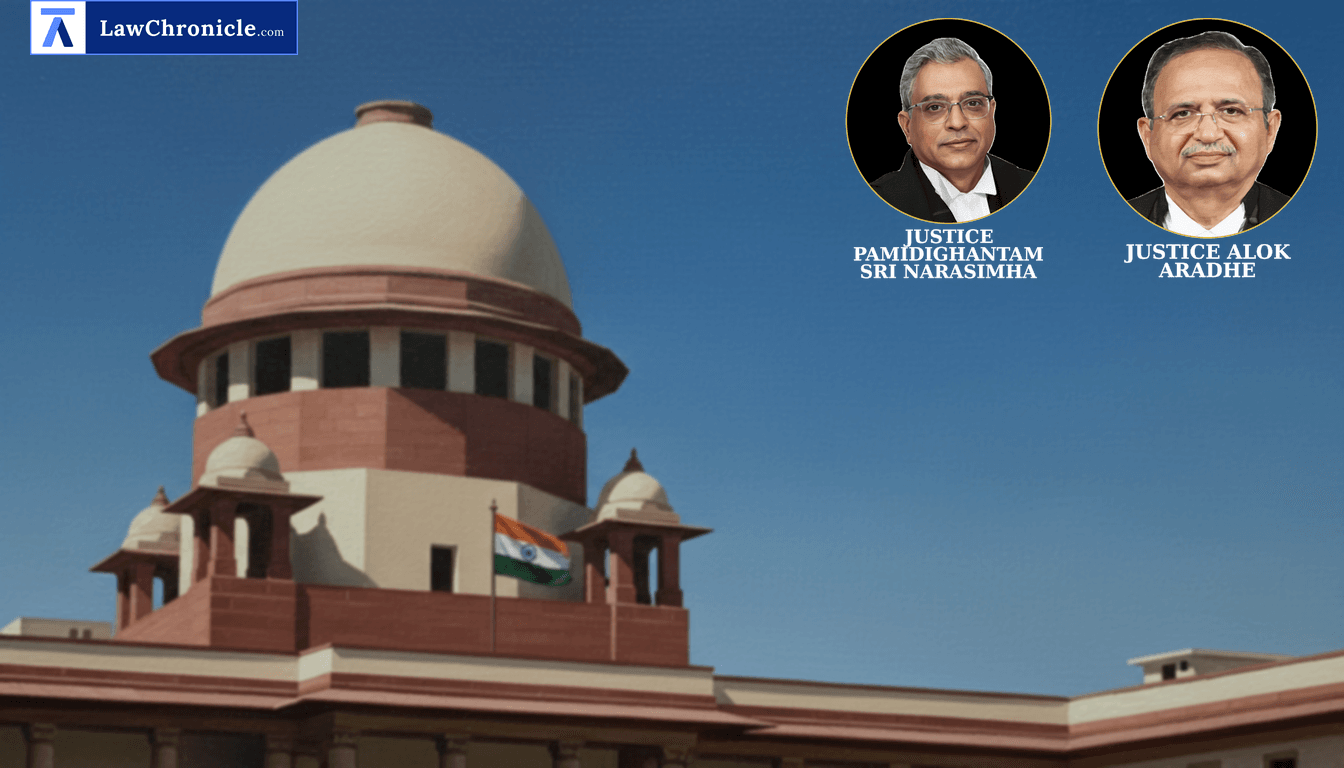
A Bench of Justice Pamidighantam Sri Narasimha and Justice Alok Aradhe delivered the judgment addressing crucial jurisdictional and procedural questions under the Insolvency and Bankruptcy Code, 2016. The Apex Court was confronted with a situation where a Section 9 petition was fraudulently filed in collusion between an alleged operational creditor and the suspended management of the corporate debtor to frustrate allottees and stall consumer and real estate regulatory remedies.
Key Takeaways
Power to Recall fraudulent CIRP: Adjudicating Authorities possess inherent jurisdiction to recall admission orders obtained through fraudulent or collusive invocation of statutory provisions.
Transition from In Personam to In Rem: Upon admission, proceedings under Insolvency and Bankruptcy Code, 2016 shift from an inter-se private dispute to a collective proceeding in rem, protecting wider stakeholder interests.
Preservation of Resolution Process: A finding of fraud at the initiation stage does not automatically mandate the termination of CIRP if continuing the process serves the broader public purpose of insolvency resolution.
Purging Collusive Creditors: Fraudulent initiating applicants must be excluded from participating further, and proceedings under Section 65 of Insolvency and Bankruptcy Code, 2016 may be initiated against them.
Court's Analysis on Jurisdictional Facts and Continuation of CIRP
The Supreme Court affirmed that the existence of a valid debt constitutes a foundational jurisdictional fact. Relying on legal principles established in Carona Ltd. v. Parvathy Swaminathan & Sons and Shrisht Dhawan (SMT) v. M/s Shaw Brothers, the Court reiterated that an order obtained by playing a fraud on a court or tribunal is ultra vires and void. Deception deployed to invoke jurisdiction constitutes fraud in public law, empowering the tribunal to recall its admission order.
However, referring to GLAS Trust Company LLC v. Byju Raveendran & Ors. ( "(2025) 3 SCC 625": 2024 CaseBase(SC) 798), the Court emphasized that once a Section 9 application is admitted, the character of the proceeding undergoes a fundamental transformation. The process ceases to be a private dispute between the initiating creditor and the corporate debtor, becoming a proceeding in rem where all creditors acquire statutory rights.
The Supreme Court explained vide statutory essence under the IBC Code 2016 that “The text of the Code, coupled with the purpose and object that it seeks to subserve, enables us to conclude that insolvency resolution process can be continued even after a finding that the original application under Section 9 was initiated fraudulently and with active collusion of the suspended Directors of the corporate debtor.” The Apex Court noted that statutory mechanisms under Insolvency and Bankruptcy Code, 2016, such as Section 12A, demonstrate that the initiating applicant loses unilateral control over the proceedings post-admission. Consequently, the Adjudicating Authority, after excluding the collusive party, must evaluate whether preserving the CIRP subserves the larger interest of corporate insolvency resolution.
Ratio
Initiation of proceedings under the Insolvency and Bankruptcy Code, 2016 is founded on jurisdictional facts, and if admission is secured through fraud and collusion, the Adjudicating Authority retains the power to recall such admission. However, because admission transforms the CIRP into a collective proceeding in rem, the Adjudicating Authority is not bound to terminate the entire process; it possesses the jurisdiction to exclude the collusive applicant and continue the CIRP if doing so serves the broader object of resolving corporate insolvency in the interest of all legitimate stakeholders.
Background
The dispute pertains to a real estate project named 'Greenopolis' being developed on land owned by Orris Infrastructure Private Limited following a development agreement with Three C Shelters Private Limited (Corporate Debtor). Due to massive delays in construction, homebuyers formed the Greenopolis Welfare Association and approached regulatory authorities. The Haryana Real Estate Regulatory Authority issued directions regarding the project and escrow accounts. To bypass these regulatory liabilities, a Section 9 petition under Insolvency and Bankruptcy Code, 2016 was filed by M/s Straight Edge Contracts Pvt. Ltd. claiming operational debt, which was admitted on the basis of collusive debt admissions by dummy directors of the Corporate Debtor.
When the fraud was unearthed, applications were filed before the Adjudicating Authority (NCLT). The NCLT found active collusion and fraud but held it lacked jurisdiction to recall its own admission order. On appeal, the NCLAT, relying on precedents including Beacon Trusteeship v. Earthcon Infracon Pvt. Ltd., S.P. Chengalvaraya Naidu v. Jagannath, and A.V. Papayya Sastry v. Govt. of A.P. & Ors., held that fraud vitiates all actions and the NCLT had full power to recall, thereby setting aside the entire CIRP. Aggrieved by the complete termination of the CIRP, land-owners and homebuyers appealed to the Supreme Court.
The Supreme Court set aside the NCLAT's complete closure, restored the CIRP proceedings before the NCLT, and directed the NCLT to determine whether the CIRP should be continued in the interest of all stakeholders after eliminating the collusive applicant.
Case Details:
Case No.: Civil Appeal Nos. 6797-6801 of 2023
Neutral Citation: 2026 INSC 1070
Case Title: Orris Infrastructure Private Limited v. Rakesh Kumar Gupta & Ors.
Source: 2026 CaseBase(SC) 8194
 Breaking News