


Gujarat HC Grants Pre-Arrest Bail to Wife in Husband's Suicide Case
 Copy Link
 Share
 Save
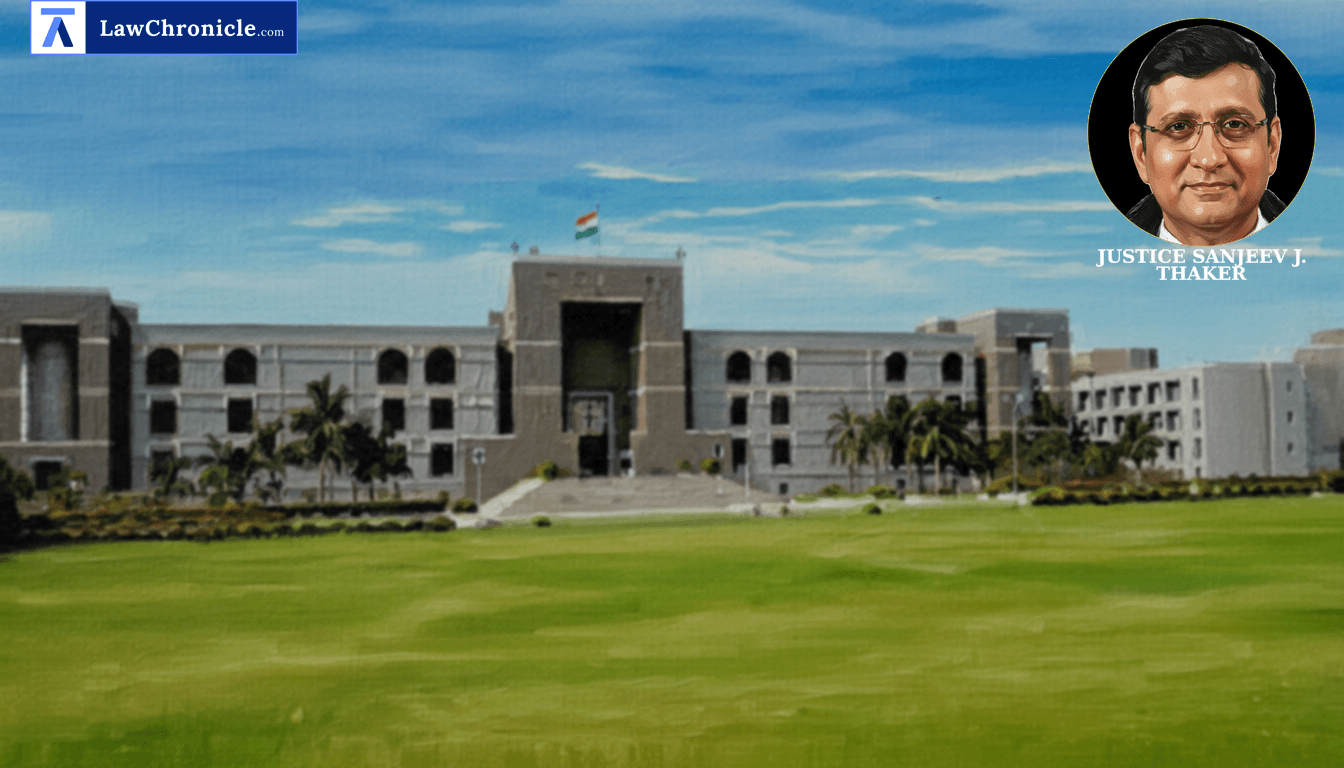
In a significant development concerning matrimonial disputes and criminal liability, the Gujarat High Court has granted pre-arrest bail to a woman whose husband committed suicide shortly after she initiated legal proceedings against him. The ruling underscores the judicial caution required in cases where allegations of abetment to suicide arise amidst existing legal disputes between spouses.
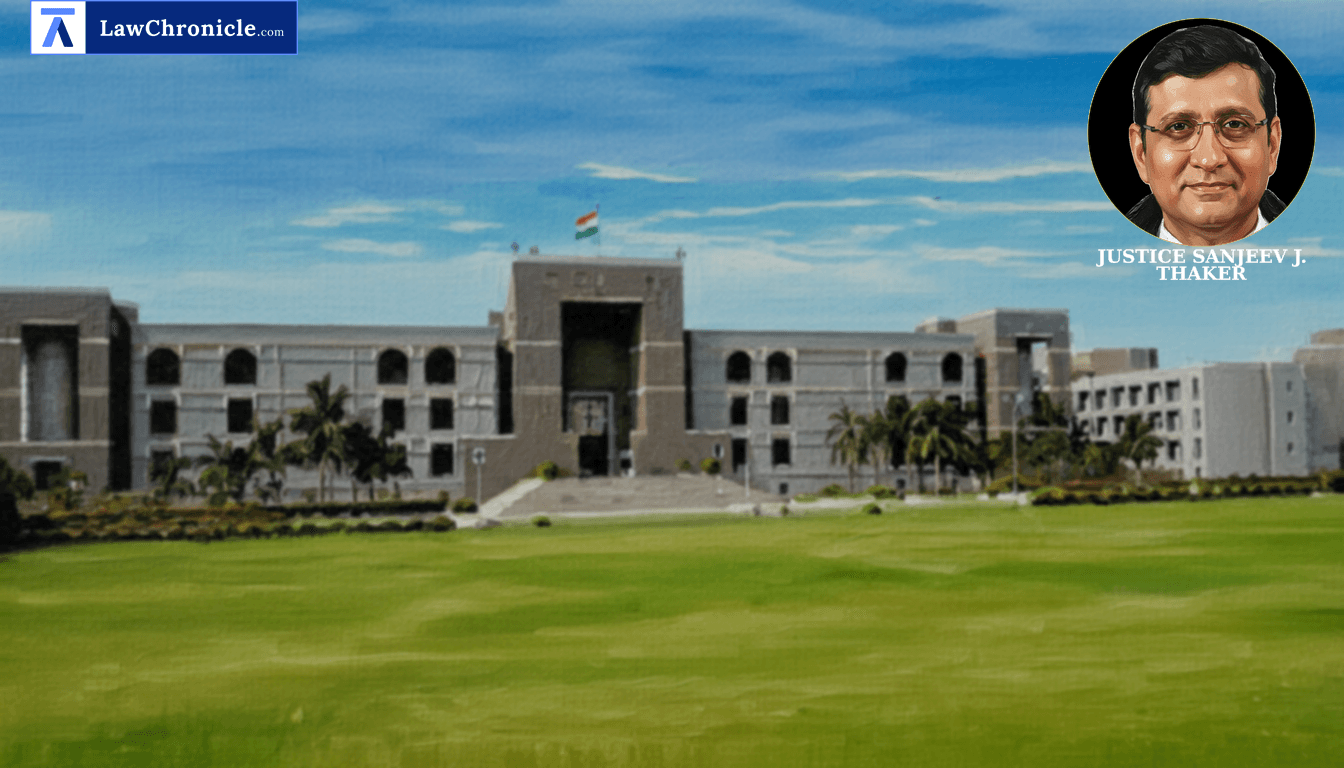
Justice Sanjeev J. Thaker presided over the matter, considering an application filed under Section 482 of the Bharatiya Nagarik Suraksha Sanhita, 2023. The applicant sought protection from arrest in connection with an FIR registered at Amreli Rural Police Station for offences under the Bhartiya Nyay Sahnita. The Court focused on the necessity of custodial interrogation and the specific timeline of events preceding the husband's death.
Judicial Discretion and Bail Principles
The Court observed that the exercise of discretion in granting anticipatory bail must be done judiciously and in compliance with established legal principles. The Court noted that at the stage of bail, an elaborate examination of evidence should be avoided to prevent prejudice to the trial. However, certain factors such as the nature of accusations, the possibility of the accused fleeing from justice, and the background of the applicant are paramount.
The Court, in its reasoning, observed: "Having heard the learned advocates appearing for the parties and perusing the papers available on record, it is incumbent upon the Court to exercise its discretion judiciously, cautiously and strictly in compliance with the basic principles laid down in plethora of decisions of the Apex Court on the point. It is well settled that, among other circumstances, the factors to be borne in mind while considering an application for bail are (i) the nature and gravity of the accusation; (ii) the antecedents of the applicant including the fact as to whether he has previously undergone imprisonment on conviction by a Court in respect of any cognizable offence; (iii) the possibility of the applicant to flee from justice; and (iv) where the accusation has been made with the object of injuring or humiliating the applicant by having him so arrested."
In granting relief, the High Court relied upon the landmark precedents set in Siddharam Satlingappa Mhetre v. State of Maharashtra and Others ( "(2011) 1 SCC 6941": 2010 CaseBase(SC) 1528), which reiterated the law established in Shri Gurubaksh Singh Sibbia & Others, and further supported by the decision in Sushila Aggarwal v. State (NCT of Delhi) ( "(2020) 5 SCC 1": 2020 CaseBase(SC) 1053).
Court Directions
The Court issued the following directions:
"(a) shall cooperate with the investigation and make available for interrogation whenever required;
(b) shall not directly or indirectly make any inducement, threat or promise to any person acquainted with the fact of the case so as to dissuade him from disclosing such facts to the court or to any police officer;
(c) shall not obstruct or hamper the police investigation and not to play mischief with the evidence collected or yet to be collected by the police;
(d) shall remain present at the concerned Police Station on 06.07.2026 between 11.00 a.m. and 2.00 p.m.;
(e) shall at the time of execution of bond, furnish the address to the investigating officer and the court concerned and shall not change residence till the final disposal of the case till further orders;
(f) shall not leave India without the permission of the Court and if having passport shall deposit the same before the trial Court within a week;
(g) It is open to the police or the investigating agency to move the learned trial Court for a direction under Section 483(2) of the Bharatiya Nagarik Suraksha Sanhita, 2023 to arrest the accused, in the event of violation of any term, such as absconding, non-cooperating during investigation, evasion, intimidation or inducement to witnesses with a view to influence outcome of the investigation or trial, etc."
Background:
The dispute arose from a strained marital relationship. The applicant had been residing at her parental home since October 2025. Records indicated that in January 2026, the applicant expressed a desire to resolve the dispute at the Amreli Mahila Police Station, but the deceased husband refused. Subsequently, the applicant filed a formal complaint on December 5, 2026 (pursuant to which an FIR was registered on February 19, 2026), under various sections of the Bhartiya Nyay Sahnita. The deceased took his own life on February 22, 2026.
The applicant’s counsel argued that since she was not residing with the deceased and had merely taken legal steps to address her grievances, custodial interrogation was unnecessary. The State opposed the bail, citing the gravity of the offence. However, the Court, noting the lack of past antecedents and the fact that the applicant had sought legal recourse rather than illegal means, allowed the application.
Case Details:
Case No.: R/CRIMINAL MISC.APPLICATION NO. 14440 of 2026
NeutralCitation: 2026:GUJHC:38988
Case Title: HETALBEN MAGANBHAI VEKARIYA Versus STATE OF GUJARAT
Appearances:
For the Petitioner(s): MR PREMAL RACHH WITH MR SAGAR D VAGHASIYA
For the Respondent(s): MR RONAK RAVAL, APP
Source: 2026 CaseBase(GUJ) 316
 Breaking News


