


Gujarat High Court Rebukes Litigants for 'Hide and Seek' Tactics and Material Suppression
 Copy Link
 Share
 Save
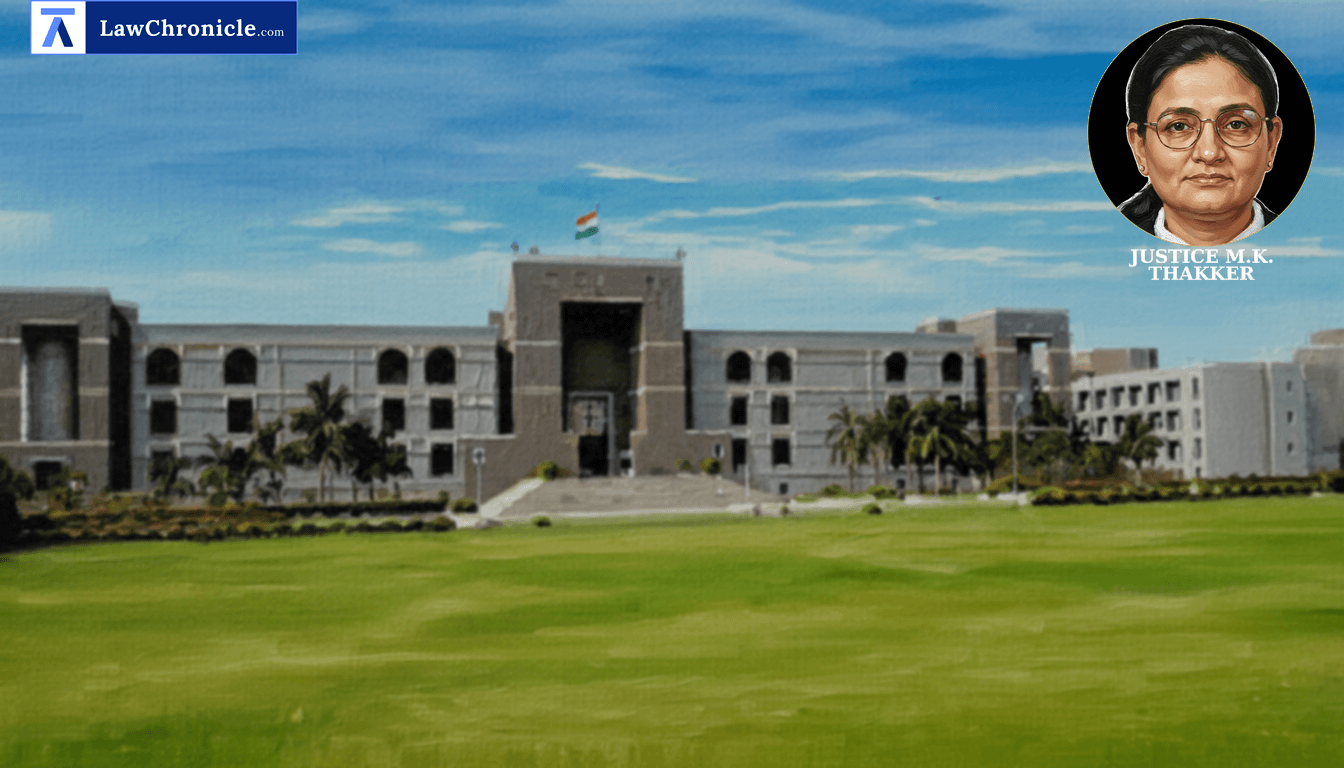
The High Court of Gujarat has issued a stern warning against the growing trend of 'jugglery and manipulation' in writ jurisdiction, emphasizing that litigants who approach the court with 'soiled hands' by suppressing parallel proceedings forfeit their right to equitable relief.
A single-judge bench of Justice Honourable Mrs. Justice M. K. Thakker presided over the hearing, which initially sought to quash an order by the Sessions Court that had cancelled a Non-Bailable Warrant and committed the petitioner to judicial custody. The court closely scrutinized the conduct of the petitioner who simultaneously pursued bail in a trial court while pressing for urgent interim relief in the High Court on a holiday.
Key Takeaways
Candid Disclosure is Mandatory
Litigants invoking extraordinary jurisdiction under Constitution of India, 1950 must disclose all material facts, even those adverse to their case, as the court's functioning relies on the absolute truth of factual representations.
Suppression Vitiates Equitable Relief
Any attempt to play 'hide and seek' or 'pick and choose' facts to mislead the court can lead to the summary dismissal of the petition, regardless of the merits of the underlying legal claim.
Judicial Process Protection
The court maintains an inherent power to discharge a rule nisi and refuse to proceed further if it discovers it has been deceived by a misleading affidavit, serving as a deterrent against unscrupulous litigation.
Court Observations on 'Soiled Hands' and Candour
The court emphasized that the jurisdiction under Constitution of India, 1950 and Article 32 is extraordinary and discretionary, requiring substantial justice to be the primary goal.
The Court, in its reasoning, observed: "The party who invokes the extraordinary jurisdiction of this Court under Article 32 or of a High Court under Constitution of India, 1950 of the Constitution is supposed to be truthful, frank and open. He must disclose all material facts without any reservation even if they are against him. He cannot be allowed to play 'hide and seek' or to 'pick and choose' the facts he likes to disclose and to suppress (keep back) or not to disclose (conceal) other facts. The very basis of the writ jurisdiction rests in disclosure of true and complete (correct) facts."
Regarding the duty of advocates and parties, the Court noted: "Suppression or concealment of material facts is not an advocacy. It is a jugglery, manipulation, manoeuvring or misrepresentation, which has no place in equitable and prerogative jurisdiction. If the applicant does not disclose all the material facts fairly and truly but states them in a distorted manner and misleads the court, the court has inherent power in order to protect itself and to prevent an abuse of its process to discharge the rule nisi and refuse to proceed further with the examination of the case on merits."
Ratio
A litigant invoking the extraordinary and discretionary jurisdiction of the High Court under Constitution of India, 1950 is under an absolute legal obligation to make a full, fair, and candid disclosure of all material facts; any suppression of parallel proceedings or concealment of relevant information constitutes an abuse of the judicial process, disentitling the party from receiving any equitable relief.
Background
The petitioner had been convicted for defamation under Section 499 and Section 500 of the Indian Penal Code and was sentenced to one year of imprisonment. While his appeal was pending, the Sessions Court issued a Non-Bailable Warrant (NBW) after rejecting an exemption application, despite the petitioner residing in Kerala and citing hardships. The petitioner subsequently appeared and sought cancellation of the NBW, but the Sessions Court rejected the plea and ordered him into custody.
The petitioner challenged this order before the High Court, relying on Inder Mohan Goswami and Another v. State of Uttaranchal and Others ( "(2007) 12 SCC 1": 2007 CaseBase(SC) 44) to argue that NBWs should only be a measure of last resort. However, it was revealed that while the High Court matter was pending, the petitioner had also filed a regular bail application before the Sessions Court without disclosing it to the High Court. The court noted that K.D. Sharma v. SAIL establishes that such non-disclosure is fatal.
Ultimately, during the dictation of the judgment, the court was informed that the petitioner had been released on regular bail by the lower court under Section 483 of the BNSS, 2023 and the original suspension of sentence was restored. Consequently, the High Court disposed of the petition without further examining the merits of the NBW issuance.
Case Details:
Case No.: R/SPECIAL CRIMINAL APPLICATION (QUASHING) NO. 13853 of 2026
Neutral Citation: 2026:GUJHC:61925
Case Title: Ravi Nair Versus State Of Gujarat & Anr.
Appearances:
For the Petitioner(s): MR PRATIKKUMAR B RUPALA, MR ABHIK CHIMNI, RONITH JOY
For the Respondent(s): LD.SR.ADV. MR. MITESH AMIN WITH MR B S RAJU WITH DHANESH R PATEL, LD.PUBLIC PROSECUTOR MR. HARDIK DAVE WITH MS MONALI BHATT
Source: 2026 CaseBase(GUJ) 25088
Similar Articles
 Breaking News


