


Gujarat High Court upholds acquittal in temple murder case, finds prosecution evidence insufficient
 Copy Link
 Share
 Save
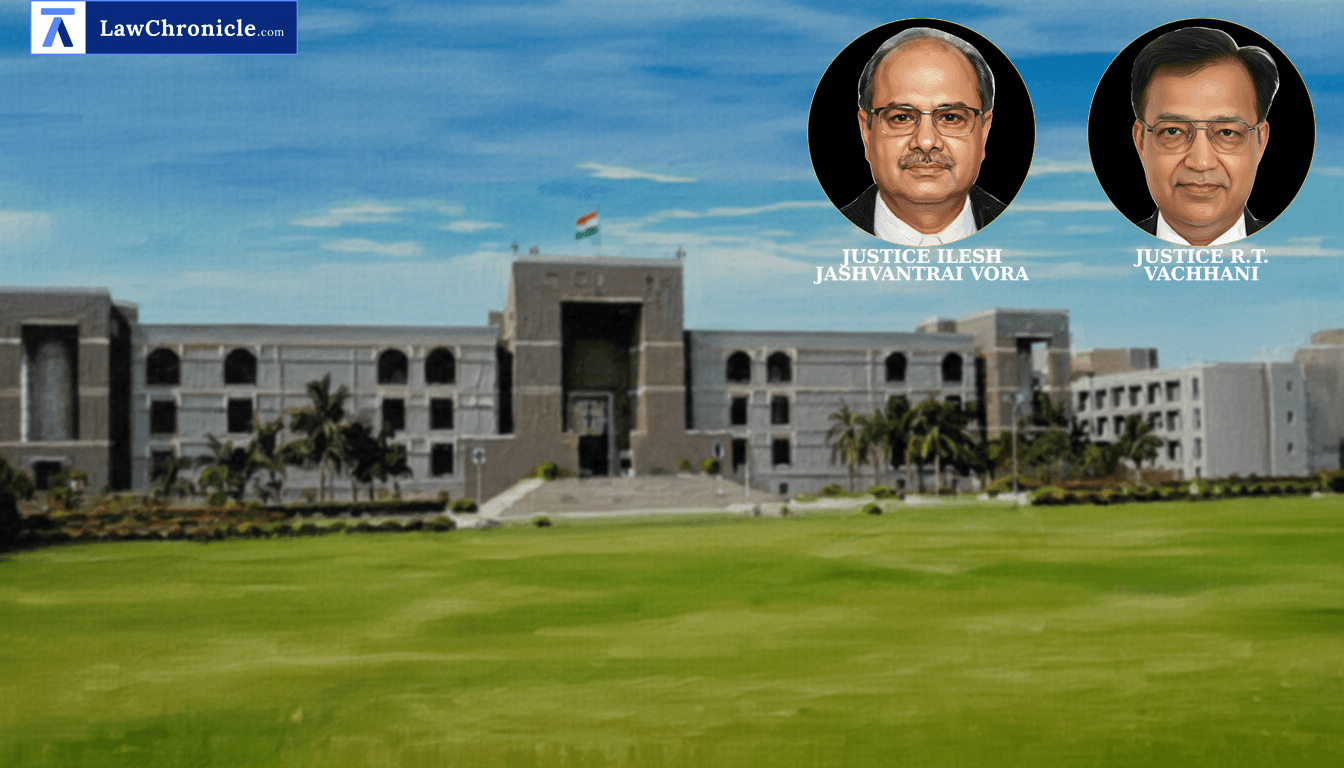
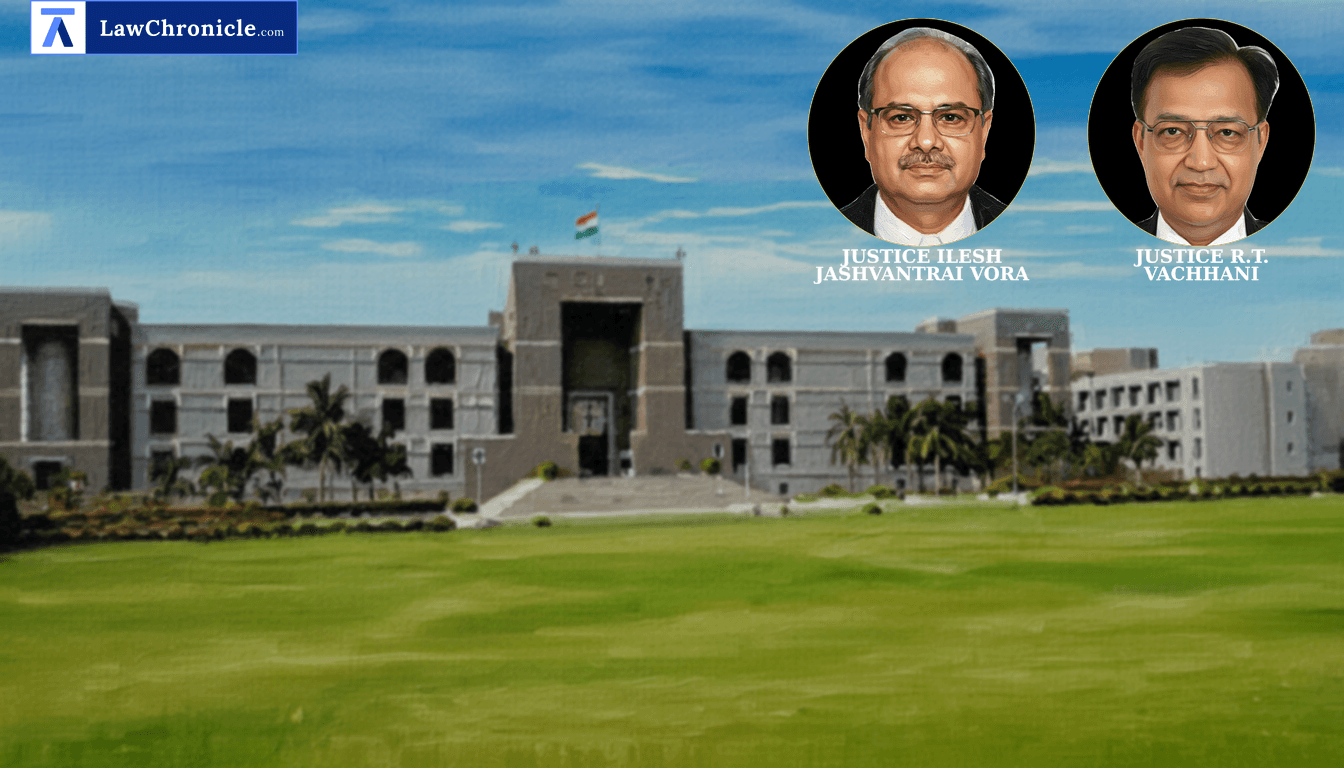
A Division Bench of Justices Ilesh J. Vora and R. T. Vachhani heard the State’s criminal appeal and a revision petition challenging the acquittal of four accused in an alleged murder near Sai Baba Temple, Bhavnagar, arising out of the death of Shaileshbhai Makwana on August 31, 2000. The appeals tested whether the trial court’s benefit of doubt to the accused should be set aside and convictions under Sections 302 read with 34 IPC and Section 135 of the Bombay Police Act should be recorded.
The High Court dismissed the State’s appeal and the complainant’s revision, holding that the prosecution failed to prove the guilt of the accused beyond reasonable doubt. The Court found the sole eye-witness unreliable, the joint recovery of weapons doubtful and not meeting Section 27 Evidence Act requirements, and noted the absence of independent corroboration from a crowded public place. The Court reiterated the settled principle that there was a “double presumption in favour of the accused” in appeals against acquittal and that interference was appropriate only if the trial court’s view was perverse or untenable on the evidence. The Court, in its reasoning, observed: “In the light of the above discussion, the detailed appreciation of evidence by the learned Sessions Court, and the settled legal position regarding appeal against acquittal—double presumption in favour of the accused, and interference only if the view taken is perverse or impossible on the evidence—the prosecution has miserably failed to prove the guilt of the respondent-accused beyond reasonable doubt. The sole eye-witness Bharat Dabhi’s testimony is unreliable due to unnatural conduct, material contradictions, and lack of corroboration; the complainant’s evidence is purely hearsay and dependent on the same unreliable source; no independent witness from the crowded public place has been examined; the joint discovery or recovery of weapons from an open, accessible public spot does not satisfy Section 27 of the Evidence Act or inspire confidence; and the chain of circumstances remains broken at vital links. The impugned judgment and order of acquittal dated 17-8-2001 passed by the learned Sessions Judge, Bhavnagar in Sessions Case No. 217 of 2000 is well-reasoned, based on proper appreciation of evidence, and does not call for any interference by this Court.”
Background The prosecution case was that the deceased had a love relationship with the sister of accused No.1, Hardev Chandu, and that alleged enmity culminated in the four accused lying in wait near Sai Baba Temple and assaulting Shailesh with sharp weapons on the evening of August 31, 2000. Police investigation led to charges under Section 302 read with 34 IPC and Section 135 Bombay Police Act, and the matter proceeded to trial in Sessions Court, Bhavnagar.
At trial the Sessions Judge acquitted all accused on August 17, 2001, principally on the grounds that the sole eyewitness, Bharatbhai Rukhadbhai Dabhi, was unreliable, there were material contradictions and “unnatural conduct” in his account, recoveries were doubtful and not in strict compliance with Section 27 of the Evidence Act, and no independent witnesses from the busy temple vicinity supported the prosecution. The State, represented by the APP, and the father of the deceased challenged that acquittal before the High Court, arguing that ocular testimony, medical and FSL reports showing blood of the deceased’s group on recovered weapons, and motive warranted conviction.
The High Court reappreciated the record. It observed that Bharat Dabhi, a close friend of the deceased, claimed to have seen the assault yet did not raise alarm, attempt rescue or remain at the scene—behaviour the Court described as “inconsistent with that of a genuine eye‑witness and close friend.” The Court noted that the complainant’s testimony was hearsay, dependent entirely on Bharat Dabhi’s account; that no independent temple-goer, vendor or passer-by was examined despite the alleged occurrence in a crowded public place; and that panch witnesses’ versions and the circumstances of joint recovery at an open spot did not establish exclusive or reliable connection to any accused. The Court also relied on apex decisions summarising appellate caution in overturning acquittals, including the principles that an appellate court may reappreciate evidence but should not disturb a possible view taken by a trial court and must respect the reinforced presumption of innocence post-acquittal.
Concluding that the chain of circumstantial evidence remained broken at vital links, the Division Bench held the Sessions Court’s acquittal to be a possible and proper view on the evidence and confirmed the judgment and order of acquittal dated August 17, 2001. The appeals were dismissed and records were directed to be remitted to the trial court.
Case Details: Case No.: R/CRIMINAL APPEAL NO. 880 of 2001 with R/CRIMINAL REVISION APPLICATION NO. 550 of 2001 Case Title: State of Gujarat Versus Hardevbhai Chandubhai Vinzuda & Ors. Appearances: For the Petitioner(s): MR J K SHAH, APP for the Appellant(s) No. 1 For the Respondent(s): MR P P MAJMUDAR (5284) for the Opponent(s)/Respondent(s) No. 1–4
Similar Articles
 Breaking News


