


High Court Allows Appeal, Sets Aside Rape Conviction Citing Contradictions, Delay and Inadequate Evidence
 Copy Link
 Share
 Save
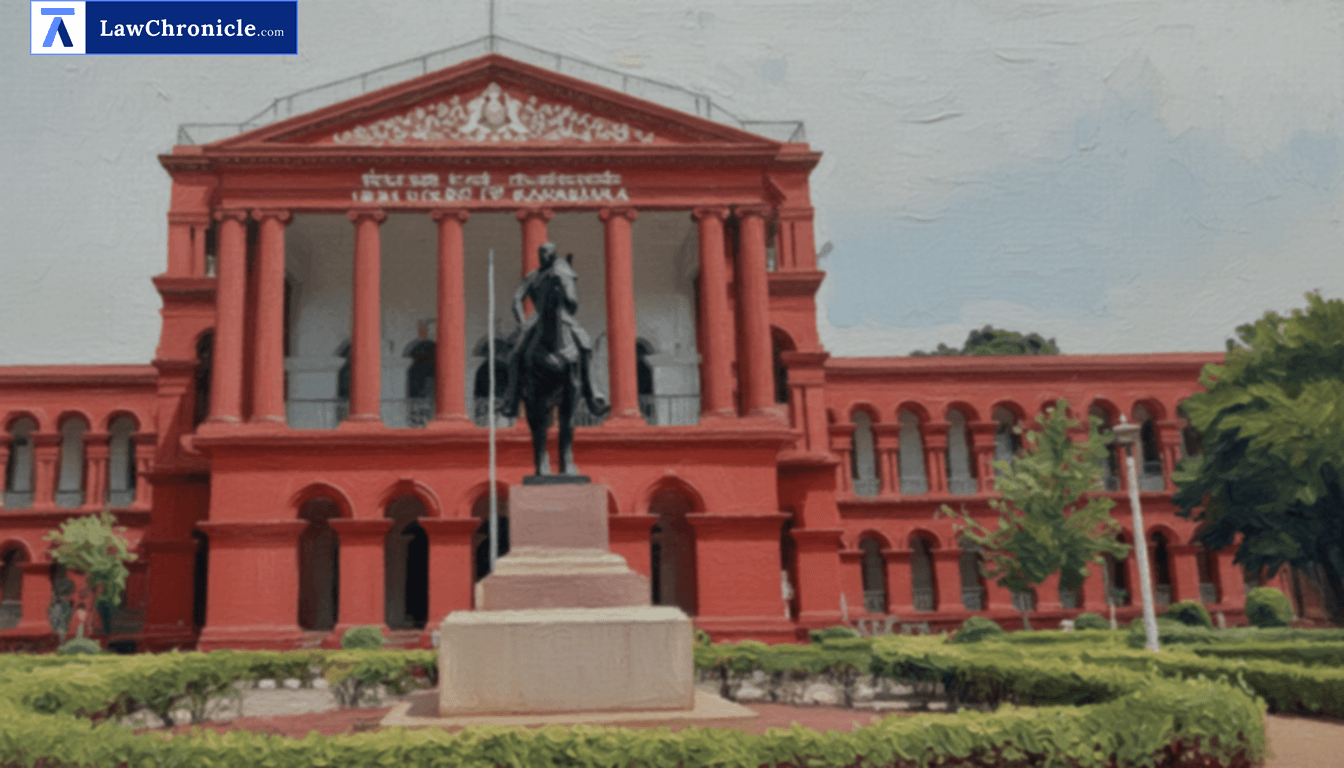
A single-judge bench of Justice G. Basavaraja heard a criminal appeal challenging a conviction under Section 376 IPC and an order on sentence by the Additional Sessions Judge, Chikkamagaluru. The appellant sought setting aside of the conviction and sentence imposed in SC No.90 of 2008, arising from allegations of rape dated 8 March 2008.
The High Court allowed the appeal, set aside the judgment of conviction dated 26 March 2013 and the sentence order dated 27 March 2013, and acquitted the accused of the offence under Section 376 IPC. The court found that the prosecution evidence suffered from inordinate delay in lodging the rape complaint, material contradictions between versions, non-production of hospital case-sheet and absence of corroborative medical or independent eyewitness testimony. The Court emphasised that the prosecution must prove guilt “beyond all reasonable doubt” and held that the material on record did not meet that standard. The Court, in its reasoning, observed: “Viewed from any angle, the evidence of victim as well as other witnesses are not trustworthy and believable. When the credibility of the testimony of the victim and other witnesses create doubt about the alleged incident, it is not safe to convict the accused. ... On careful examination of the entire material evidence on record, I am of the considered opinion that the prosecution has failed to place, cogent, convincing, corroborative or legally acceptable evidence before the Court.” The judgment directed return of any fine deposited by the appellant and ordered transmission of the record to the trial court.
Background The prosecution alleged that on 8 March 2008 the appellant entered the house of an 18‑year‑old girl in Kabbigere village, Chikkamagaluru district, and raped her. An initial complaint by the victim’s father lodged on 10 March 2008 accused the appellant of outraging modesty and led to registration of Crime No.108 of 2008 under Section 354 IPC. The victim’s own statement was recorded on 27 March 2008 and a fresh registration (108(A)/2008) and charge-sheet followed under Section 376 IPC. The trial court convicted the accused and sentenced him to seven years’ simple imprisonment with fine; the appellant appealed.
On appeal, counsel for the appellant highlighted the long delay between the alleged incident and registration of the rape case, contradictions in the prosecutrix’s statements and in the evidence of witnesses, non‑seizure of clothing, the prosecution’s failure to produce the hospital case-sheet (Exhibit D2) and medical evidence inconsistent with forcible sexual intercourse. Defence evidence included the accused’s denial, a complaint by the accused’s mother alleging harassment and a hospital case-sheet recording that the victim had been treated as a medico‑legal case for consumption of poison; the accused himself had been hospitalised after consuming poison. The State relied on the trial court’s assessment of witness testimony.
The High Court examined the prosecution and defence material, observed that witnesses’ accounts were inconsistent and that the investigating officer had not explained the delay or produced relevant hospital records. The court noted the absence of independent corroboration and that some initial complaints did not disclose an allegation of rape. Finding that credibility deficits created reasonable doubt, the High Court concluded that the prosecution failed to prove the charge beyond reasonable doubt, allowed the appeal, set aside conviction and sentence, and ordered return of any fine on proper identification. Registry was directed to send the judgment with trial records to the concerned court.
Case Details: Case No.: CRL.A No.495 of 2013 Case Title: LOHITH v. STATE OF KARNATAKA (represented by the Station House Officer, Chikkamagaluru Rural Police Station) Appearances: For the Petitioner(s): Sri Mohan Bhat, Advocate For the Respondent(s): Sri B. Lakshman, High Court Government Pleader
Similar Articles

 Breaking News


