


High Court Alters Murder Conviction To Culpable Homicide, Directs 10-Year Imprisonment
 Copy Link
 Share
 Save
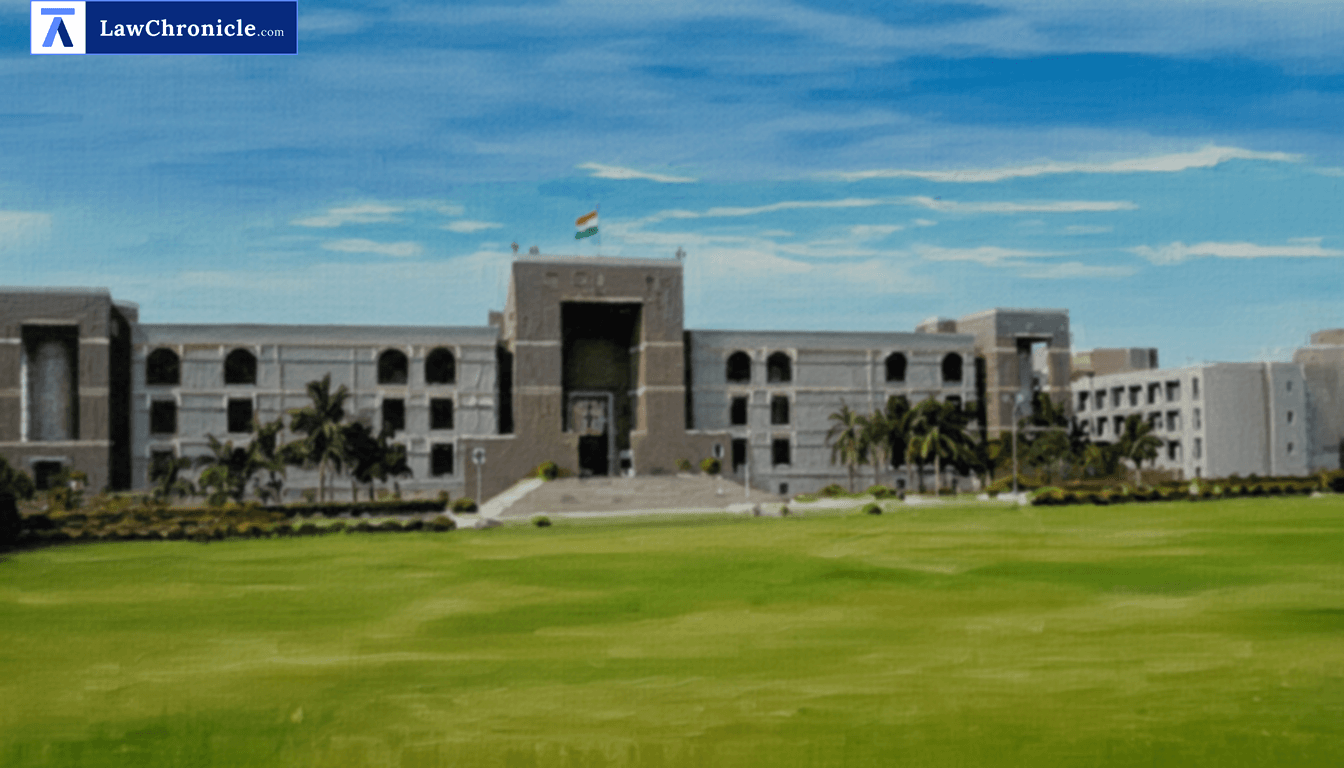
A Division Bench of Justices Ilesh J. Vora and R. T. Vachhani heard an appeal by the convict against his conviction under Section 302 of the Indian Penal Code, challenging the Sessions Court’s finding of murder and the life sentence imposed.
The High Court partly allowed the criminal appeal, held that the offence did not establish the requisite intention for murder but demonstrated knowledge that the act was likely to cause death, altered the conviction from Section 302 IPC to Section 304 Part I IPC and modified the sentence to rigorous imprisonment for 10 years (with the fine and default sentence left intact). The Court observed the prosecution proved authorship of the injuries by reliable medical evidence and dying declarations, but found that the assault arose from a sudden quarrel and heat of passion without premeditation. The Court, in its reasoning, observed: “Sections 302 and 304 of the Code are primarily the punitive provisions. They declare what punishment a person would be liable to be awarded, if he commits either of the offences. An analysis of these two sections must be done having regard to what is common to the offences and what is special to each one of them. The offence of culpable homicide is thus an offence which may or may not be murder. If it is murder, then it is culpable homicide amounting to murder, for which punishment is prescribed in Section 302 of the Code. Section 304 deals with cases not covered by Section 302 and it divides the offence into two distinct classes, that is, (a) those in which the death is intentionally caused; and (b) those in which the death is caused unintentionally but knowingly. In the former case the sentence of imprisonment is compulsory and the maximum sentence admissible is imprisonment for life. In the latter case, imprisonment is only optional, and the maximum sentence only extends to imprisonment for 10 years. The first clause of Section 304 includes only those cases in which offence is really “murder”, but mitigated by the presence of circumstances recognised in the Exceptions to Section 300 of the Code, the second clause deals only with the cases in which the accused has no intention of injuring anyone in particular.” The court also noted the dying declarations in which the deceased stated, “on 20/06/2016 at 1:45 PM near Wide Angle, Shaileshbhai Rawal inflicted knife blows.”
Background The dispute arose on 20 June 2016 on a service road adjacent to Wide Angle Cinema, Mahesana, when an exchange of jesting and abuses between the deceased and the appellant escalated into a quarrel. The prosecution alleged that the appellant produced a folding (muddamal) knife and inflicted multiple stab and cut injuries on vital parts of the deceased, who was initially admitted at Mahesana Civil Hospital and later transferred to Ahmedabad Civil Hospital, where he died after about eight days. The FIR and subsequent chargesheet alleged offences originally under Sections 307, 324 and 504 IPC, with Section 302 IPC added after the death.
Prosecution evidence comprised 23 witnesses, including three treating/post-mortem doctors, FSL reports, panchnamas, recovery of the knife at the appellant’s instance and contemporaneous treatment records. Treating doctors recorded statements by the deceased attributing the attack to the appellant; the High Court described those statements as admissible dying declarations under Section 32(1) of the Indian Evidence Act and found them reliable. The Sessions Court convicted the appellant for murder under Section 302 IPC and sentenced him to life imprisonment.
The appellant denied the charges, claimed a sudden fight and heat of passion arising from mutual provocation, and sought reclassification to culpable homicide not amounting to murder with a reduced sentence, noting he had already undergone about 8 years and 10 months in custody. The High Court carefully re-appreciated medical evidence (post-mortem Exh.‑17) showing multiple penetrating wounds including deep stab tracts and opined that while injuries 3, 4 and 5 were grievous and “sufficient in the ordinary course of nature to cause death,” there was no material to demonstrate premeditation or that the accused took undue advantage or acted in a cruel, planned manner. Applying established precedents on the distinction between murder and culpable homicide and considering the sudden quarrel and heat of passion, the Court held the facts attracted Section 304 Part I IPC rather than Section 302.
Resultantly, the Court altered the conviction to Section 304 Part I IPC, modified the sentence to 10 years’ rigorous imprisonment (fine and default sentence unchanged), ordered that the appellant was to be released only on completion of 10 years’ actual imprisonment from the date of arrest if not required in any other case, and discharged the bail bonds.
Case Details: Case No.: R/CR.A/1456/2018 Case Title: RAVAL SHAILESHBHAI RAMESHBHAI VIRCHANDBHAI Versus STATE OF GUJARAT Appearances: For the Petitioner(s): MR PRATIK B. BAROT (Advocate) For the Respondent(s): MR RONAK B. RAVAL (Additional Public Prosecutor)
Similar Articles
 Breaking News


