High Court Cannot Bypass KSAT in Recruitment Disputes; Supreme Court Directs Tribunal Adjudication within Six Months
 Copy Link
 Share
Share Save
Save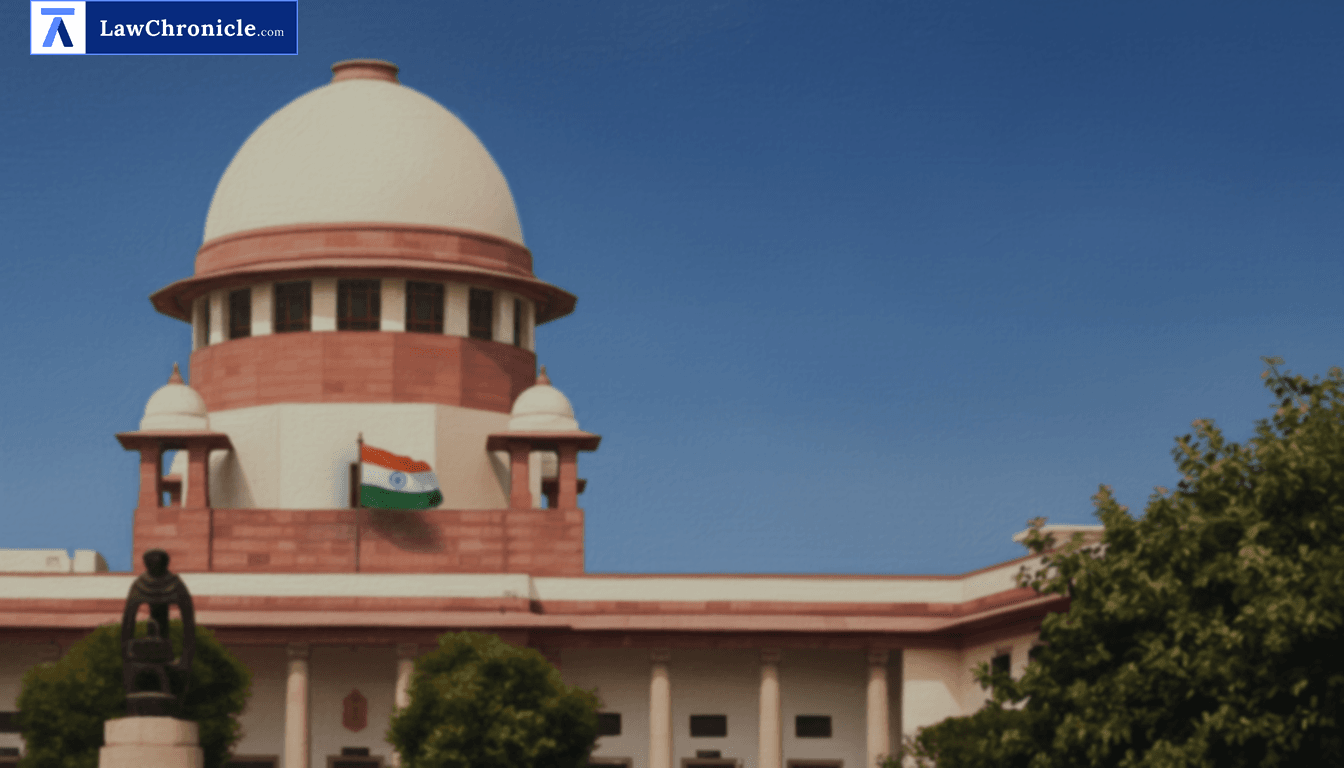
A bench of Justices J.K. Maheshwari and Vijay Bishnoi heard appeals challenging a Karnataka High Court Division Bench order that had set aside a Single Judge's judgment in recruitment litigation and relegated disputes to the Karnataka State Administrative Tribunal (KSAT). The appeals arose from multiple writ petitions concerning withholding or rejection of caste-cum-income certificates of married women applicants in recruitment for Graduate Primary Teachers (Classes 6–8).
The Court held that service and recruitment disputes falling within the scope of the Administrative Tribunals Act, 1985 ordinarily required adjudication by the Tribunal as the court of first instance, and that the High Court should not entertain writ petitions where an effective alternate remedy before the Tribunal existed. The Court noted that exceptions to this rule were confined to “exceptional circumstances” such as breaches of fundamental rights, denial of natural justice, ultra vires action or challenges to the parent legislation. The Court, in its reasoning, observed: “Nevertheless, a writ petition under Article 226 may still be maintainable notwithstanding the existence of such an alternative remedy in exceptional circumstances, including the enforcement of fundamental rights guaranteed under Part III of the Constitution; instances of ultra vires or illegal exercise of power by a statutory authority; violation of the principles of natural justice; or where the vires of the parent legislation itself is under challenge. While these exceptions have been carved out and reiterated by this Court in a catena of decisions, the facts of the present case do not fall within any of these exceptions so as to warrant the maintainability of the writ petitions before the High Court.” The Court also reiterated the binding principle from L. Chandra Kumar that “the Tribunals will, however, continue to act as the only courts of first instance in respect of the areas of law for which they have been constituted.”
Background The dispute arose from a recruitment notification dated 21 March 2022 for 15,000 Graduate Primary Teacher posts across 35 educational districts in Karnataka. Examinations were conducted on 21–22 May 2022 and a provisional select list was published on 18 November 2022. Several married women applicants who had applied under OBC categories were not treated as OBC because they produced caste-cum-income certificates in the name of their father rather than their husband; consequently those applicants were listed in the general merit list and some challenge was mounted to their exclusion from the OBC list.
A Single Judge of the Karnataka High Court allowed certain writ petitions on 30 January 2023, quashed parts of the provisional select list and directed the State to treat affected candidates as belonging to the OBC category on the basis of the certificates filed. The Single Judge relied on T.K. Rangarajan to hold writ petitions maintainable in view of the large number of affected persons and the disruption caused. The State issued fresh provisional and final lists in February–March 2023; several candidates lost their places on account of re‑ranking once certificates were re‑considered. The Division Bench of the High Court, however, on 12 October 2023 set aside the Single Judge’s order and held that matters concerning recruitment and certificate validity had to be raised before the KSAT, observing that the facts did not present the “unprecedented extraordinary situation having no parallel” contemplated in T.K. Rangarajan.
The petitioners approached this Court, which dismissed the batch of appeals: it upheld the Division Bench’s conclusion on maintainability and declined to revive the provisional list of 18 November 2022. The Supreme Court made absolute its interim orders of 3 January, 22 January and 4 October 2024, clarified that 500 posts reserved by the State remained to be filled in accordance with the KSAT’s final decision, and directed that any applications before KSAT by affected candidates be decided expeditiously, preferably within six months of filing. The Court expressly limited its determination to maintainability and did not adjudicate the merits of eligibility or certificate validity.
The Court recorded interim arrangements previously made: appointment letters issued earlier were to remain subject to the outcome of these proceedings; thousands who had been provisionally appointed remained governed by prior interlocutory directions; and the KSAT was reinforced as having comprehensive jurisdiction, powers to regulate procedure, to pass interim orders and to decide disputes on documents and representations.
Case Details: Case No.: 2025 INSC 1242 Case Title: Leelavathi N. and Ors. v. The State of Karnataka and Ors. Appearances: For the Petitioner(s): (Names of learned counsel for appellants were not specified in the reported judgment) For the Respondent(s): Mr. Tushar Mehta, Solicitor General for India (for the State); Mr. D.L. Chidananda, Advocate-on-Record (accepted notice on behalf of caveator/respondent)
 Breaking News