High Court Cannot Reject Plaint in Exercise of Article 227 When Civil Code Provides Remedy, Supreme Court Holds
 Copy Link
 Share
Share Save
Save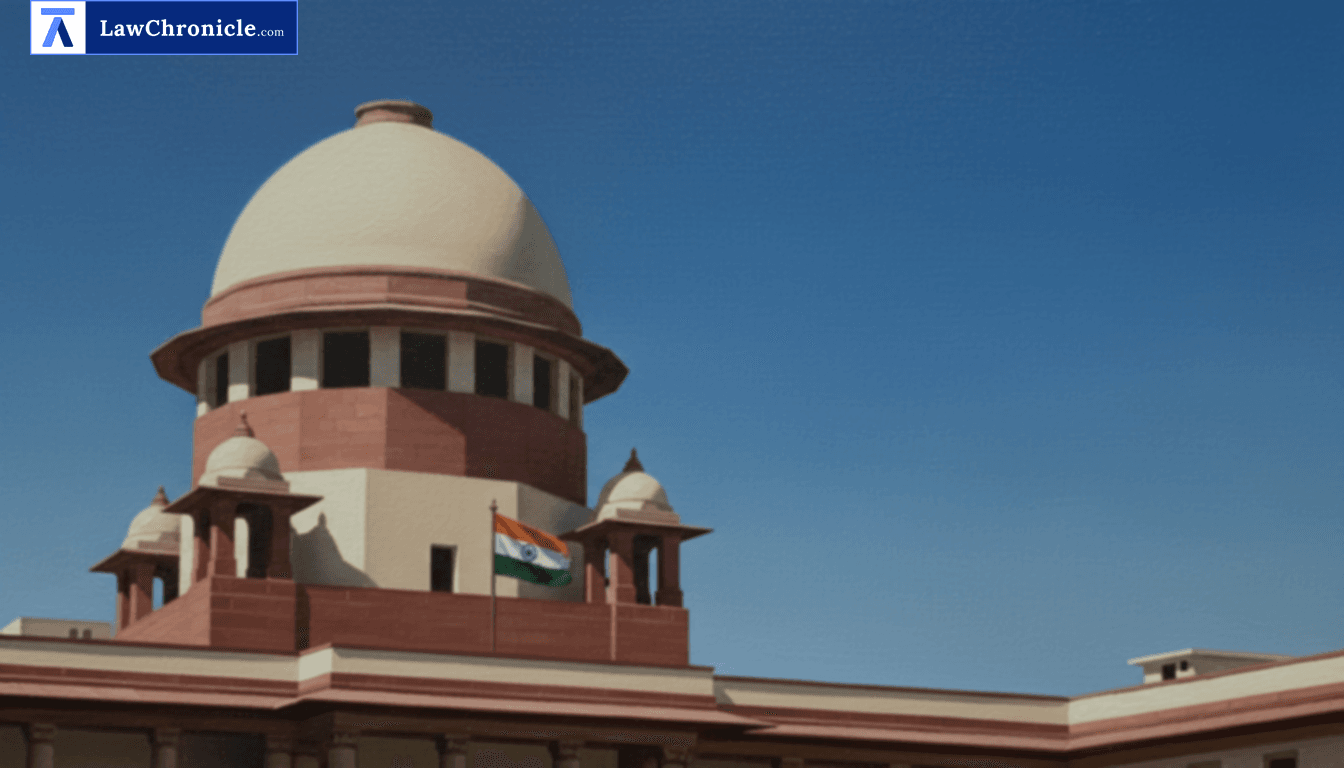
A Bench of Justices Pamidighantam Sri Narasimha and Joymalya Bagchi heard an appeal challenging the Madras High Court's order rejecting a plaint under its supervisory jurisdiction under Article 227 of the Constitution. The central question was whether a High Court in exercise of Article 227 could reject a plaint where the Code of Civil Procedure provided a statutory remedy by way of appeal.
The Court allowed the appeal and set aside the High Court's order. It held that the power under Article 227 was “supervisory” and must be “sparingly exercised” to correct jurisdictional errors apparent on the face of the record, but it could not be used to usurp the original jurisdiction of the trial court or to supplant statutory remedies under the Civil Procedure Code. The Court reiterated that the Code was a self-contained scheme and that rejection of a plaint under Order VII Rule 11 amounts to a deemed decree appealable under Section 96, so that the High Court could not short-circuit that remedy by rejecting a plaint in exercise of Article 227. The Court, in its reasoning, observed: "Civil Procedure Code is a self-contained Code and Order VII Rule 11 therein enumerates the circumstances in which the trial court may reject a plaint. Such rejection amounts to a deemed decree which is appealable before the High Court under Section 96 of the Code. This statutory scheme cannot be upended by invoking supervisory jurisdiction of the High Court under Article 227 to entertain a prayer for rejection of plaint." The Court further noted that the impugned exercise “substituted itself as the court of first instance” and thereby rendered nugatory the appellants' statutory right of appeal.
Background
The dispute arose after Kathiresan purchased a parcel of land (the suit land) from his own funds in the name of his nephew, the respondent, reportedly on astrological advice. Kathiresan remained in possession during his lifetime and, after his death, his legal heirs — the appellants (his wife and daughters) — claimed possession and title. When the respondent initiated negotiations to sell the suit land, the appellants filed O.S. No. 1087 of 2018 seeking a declaration of title and an injunction against encumbrance; other properties were the subject of O.S. No. 201 of 2018. The respondent filed petitions under Article 227 before the High Court seeking rejection of the plaints. The High Court, by an order dated 11.07.2024, rejected the plaint in the present suit on the ground that it was barred by the Prohibition of Benami Property Transactions Act, 1988 (Benami Act), while refusing similar relief in the other suit.
The appellants challenged the High Court’s jurisdiction to reject the plaint under Article 227, contending that the Code of Civil Procedure provided the manner and remedy for rejection and appeal. The Supreme Court observed that Article 227’s supervisory power ensured subordinate courts acted within their jurisdiction but could not be invoked to "upend" statutory remedies. The Court distinguished earlier dicta permitting writ petitions where a revisional court had rejected a plaint, noting that in the present case the High Court had not corrected a jurisdictional error of the trial court but had effectively usurped original jurisdiction. The Court set aside the High Court judgment, allowed the appeal, and did not express any opinion on the merits of the respondent's contention that the plaint was barred by law. The appellants were granted liberty to pursue appropriate remedies before the trial court in accordance with law.
Case Details: Case No.: 2025 INSC 606 (Arising out of SLP (C) No.21466 of 2024) Case Title: K. Valarmathi & Ors. v. Kumaresan Appearances: For the Petitioner(s): Mr. M. Gireesh Kumar, Advocate For the Respondent(s): Mr. R. Baskaran, Senior Counsel Amicus Curiae: Mr. V. Prabhakar, Senior Counsel
 Breaking News