High Court's Second-Appeal Interference With Concurrent Findings Is Set Aside; Tenant Directed To Vacate Within Three Months
 Copy Link
 Share
Share Save
Save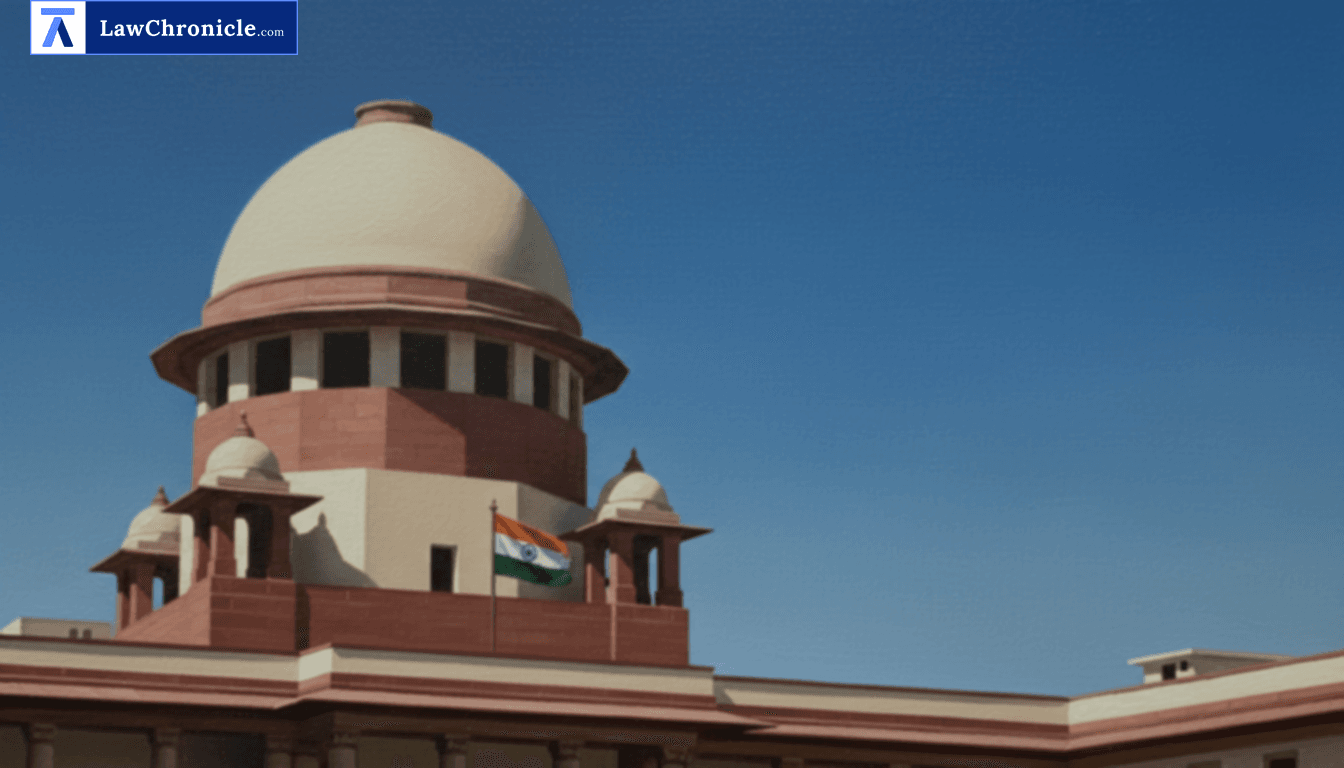
A bench of Justices Sanjay Karol and Prashant Kumar Mishra heard the civil appeal arising out of SLP(C) No. 19182 of 2022 that challenged the judgment of the High Court of Orissa which had allowed a second appeal under Section 100 CPC and overturned concurrent findings of fact on title, tenancy and adverse possession. The core issue was whether the High Court was justified in treating questions arising from the factual record as “substantial questions of law” warranting interference in concurrent factual findings.
The Supreme Court allowed the appeal, set aside the High Court's judgment and restored the concurrent findings of the trial and first appellate courts. The Court held that the High Court erred in reappraising evidence under the guise of answering substantial questions of law and that the first appellate court had adequately considered and applied the evidence. The Court observed that a High Court should not disturb findings of fact in a second appeal unless the findings were perverse and that the questions framed by the High Court did not meet the test for being “substantial” in law. The Court, in its reasoning, observed: “21. …‘[W]hen a question of law is fairly arguable, where there is room for difference of opinion on it or where the Court thought it necessary to deal with that question at some length and discuss alternative views, then the question would be a substantial question of law. On the other hand if the question was practically covered by the decision of the highest Court or if the general principles to be applied in determining the question are well settled and the only question was of applying those principles to the particular fact of the case it would not be a substantial question of law.’” The Court further noted that “the findings of perversity, in our view, are in themselves perverse.”
Background The dispute concerned two shop rooms at ‘Madhu Mandir’, Main Road, Berhampur. The plaintiff-appellant, who claimed to be the adopted son of the original owner Late Smt. Ashalata Devi, asserted ownership and alleged that the defendant-respondent had been his tenant since 1974 at a monthly rent of Rs.1,000, but defaulted in payment from July 2001. The plaintiff issued a notice under Section 106 Transfer of Property Act in January 2003 and filed C.S. No. 276 of 2003 for eviction and arrears. The trial court decreed the suit in October 2007, finding the plaintiff to be the lawful owner and the defendant to be a permissive occupant who had not proved adverse possession. The first appellate court affirmed in January 2011, holding that permissive possession could not ripen into adverse possession without hostile animus.
The High Court in RSA No. 131 of 2011 reversed those concurrent findings and framed two substantial questions of law, observing that “the settled position of law is that once a suit for recovery of possession against the Defendant who claims to be in adverse possession is filed, the period of limitation for perfecting title by adverse possession comes to a grinding halt.” It therefore held that the plaintiff was not entitled to eviction and permitted the plaintiff to institute a fresh suit for title within three months. The Supreme Court found that the High Court had exceeded the scope of Section 100 CPC by reappraising facts and that the questions it framed were not open substantial questions of law. Consequently, the Court set aside the High Court's order, directed the tenant to hand over vacant and peaceful possession within three months and to clear all arrears (rent, utilities and other dues) within the same period, and directed the Registry to communicate the order to the Registrar General of the Orissa High Court.
Case Details: Case No.: 2025 INSC 333 Case Title: Rabindranath Panigrahi v. Surendra Sahu Appearances: For the Petitioner(s): Mr. Yasobant Das, Senior Counsel For the Respondent(s): Mr. S. Debabrata Reddy, Counsel
 Breaking News