High Speed Alone Does Not Constitute Criminal Rashness or Negligence: Delhi High Court
 Copy Link
 Share
Share Save
Save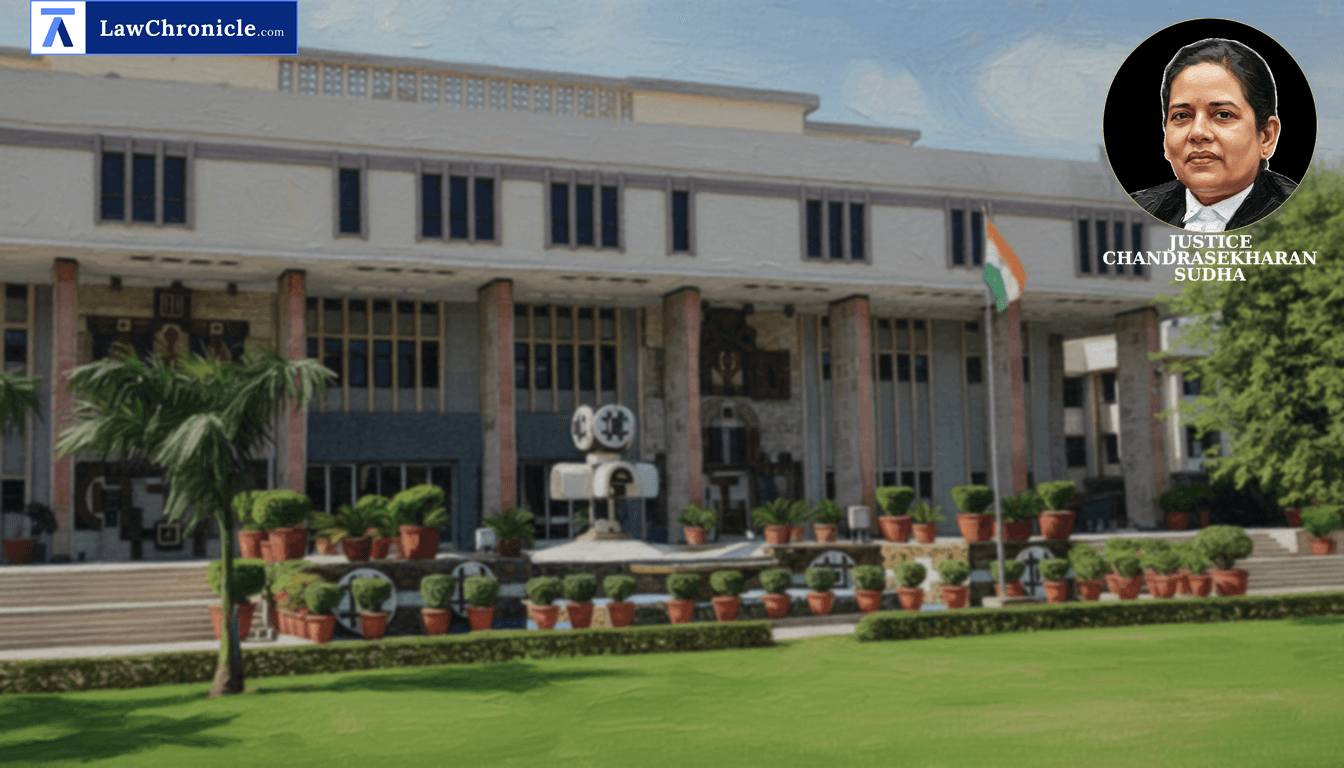
Criminality cannot be presumed through the mere lens of 'high speed' in road accidents, as the Delhi High Court has affirmed that the burden remains squarely on the prosecution to establish the exact nature of rashness or negligence. Reaffirming the double presumption of innocence in acquittal cases, the Court held that the maxim of 'res ipsa loquitur' cannot be blindly invoked to bridge evidentiary gaps in criminal trials.
In an appeal challenging a trial court's acquittal, Hon'ble Ms. Justice Chandrasekharan Sudha reviewed the State's challenge against an order exonerating an individual charged with causing death by negligence. The case arose from a 2011 motorcycle collision at the Moti Bagh flyover which resulted in the death of a rider.
Establishing the Bounds of Criminal Negligence
The Court delved into the essential components required to satisfy a conviction under Section 304A of the Indian Penal Code, 1860. It emphasized that negligence is the omission to do something which a reasonable man would do, or the doing of something which a prudent and reasonable man would not do.
The Court, in its reasoning, observed: "Criminality is not to be presumed, subject of course to some statutory exceptions. In the absence of any material(s) on record, no presumption of 'rashness' or 'negligence' could be drawn against the accused by invoking the maxim 'res ipsa loquitur'."
Prosecution Fails to Establish Specific Negligent Act
Analyzing the testimony of the sole eyewitness, the Court found a lack of descriptive detail regarding the accused's conduct. Relying on the principle established in State of Karnataka vs. Satish ( "(1998) 8 SCC 493": 1996 CaseBase(SC) 2197), the Court noted that 'high speed' is a relative term and does not inherently prove rashness.
The Court has the following directions:
"In the result, the appeal sans merit is dismissed. Application(s), if any, pending, shall stand closed."
Key Takeaways
Relative Nature of Speed
High speed or over speeding is a relative term and the prosecution must specifically establish how the speed in a given context amounted to a rash or negligent act.
Inapplicability of Res Ipsa Loquitur
In criminal motor accident trials, the principle of 'the thing speaks for itself' cannot replace the requirement for concrete evidence of the accused's culpability.
Standard for Reversing Acquittals
Appellate courts will not disturb an acquittal if the trial court's view is a 'reasonable and plausible' conclusion, even if another view is possible.
Ratio
A finding of rashness or negligence under Sections 279 and 304A of the Indian Penal Code, 1860 cannot be sustained solely on the basis of a witness stating a vehicle was at 'high speed'; the prosecution must lead evidence to prove the specific failure of care or the reckless nature of the act that directly caused the injury or death.
Background:
The State preferred this appeal under Section 378(1) of the Code of Criminal Procedure, 1973 against the judgment of the Metropolitan Magistrate, New Delhi. The prosecution alleged that on July 4, 2011, the accused rode his motorcycle rashly and dashed against another bike, leading to the death of Vijay Lal. The accused maintained his innocence, claiming the deceased was riding while intoxicated and hit his bike instead.
The trial court acquitted the accused under Section 255(1) of the Code of Criminal Procedure, 1973, noting the lack of evidence regarding the specific manner of negligence. The High Court, while considering the appeal, referred to Bani Singh & Ors. vs. State of U.P. ( "(1996) 4 SCC 720": 1996 CaseBase(SC) 1562) to proceed on merits despite the absence of the respondent's counsel. Following the guidelines in Babu Sahebogouda Rudragoudar and others vs. State of Karnataka ( "(2024) 8 SCC 149": 2024 CaseBase(SC) 191) and Ram Kumar vs. State of Haryana ( "1995 Supp (1) SCC 248": 1994 CaseBase(SC) 569), the Court reassessed the evidence and found that the site plan and witness statements failed to prove the accused jumped a traffic light or acted with gross neglect. Consequently, the High Court upheld the acquittal.
Case Details:
Case No.: CRL.A. 804/2017
Case Title: State (Govt Of NCT Of Delhi) V. Ram Prakash
Appearances:
For the Petitioner(s): Ms. Manjeet Arya, APP for the State.
For the Respondent(s): None.
Source: 2026 CaseBase(DEL) 1826
 Breaking News