Himachal Pradesh HC Clarifies Tortfeasor Liability In Motor Accident Claims
 Copy Link
 Share
 Save
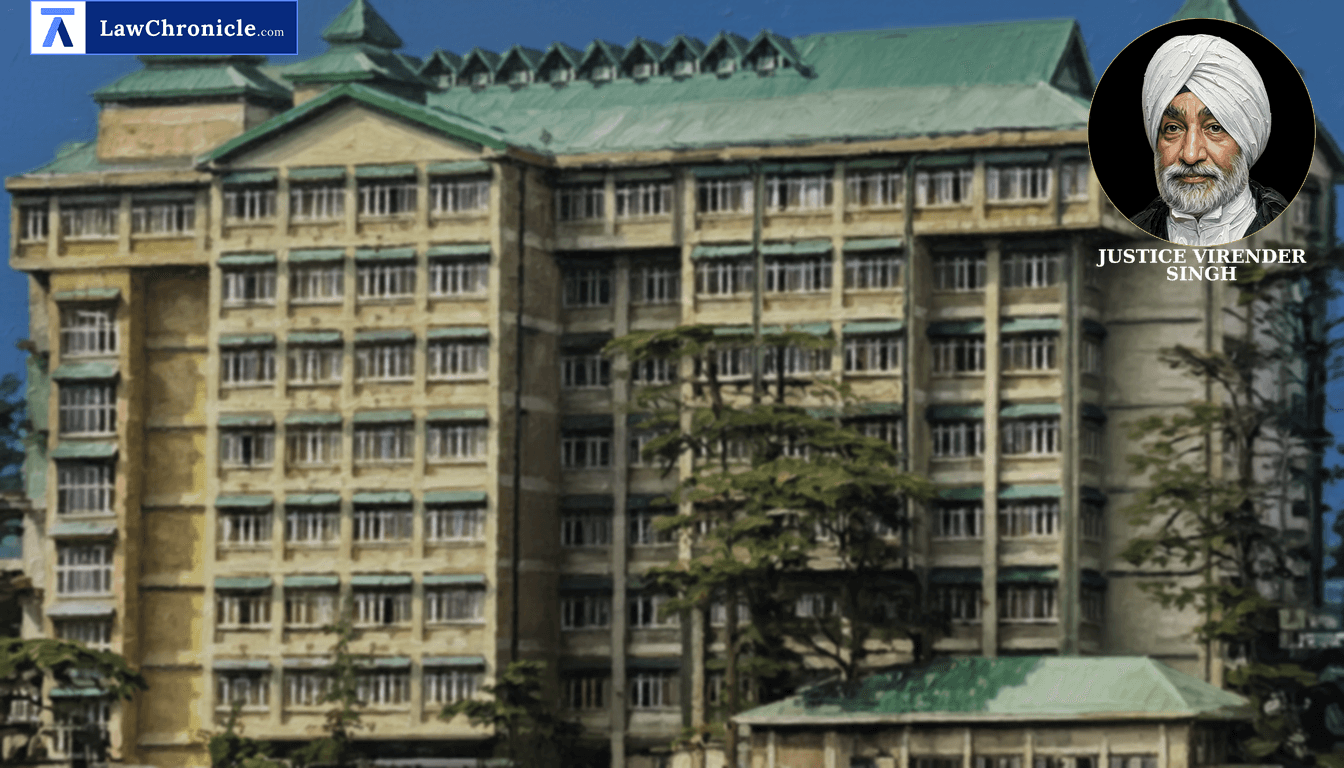
The Himachal Pradesh High Court has reinforced the primacy of oral testimony over police closure reports in motor accident claims, ruling that a petitioner's right to compensation cannot be extinguished merely by a non-adjudicative cancellation report. In a significant clarification of the 'preponderance of probabilities' standard, the Court held that sworn evidence from an eyewitness carries greater evidentiary weight than investigative findings not recorded on oath.
A single-judge bench of Justice Virender Singh adjudicated the appeal filed by the insurer challenging a Tribunal's award. The Court was tasked with determining whether the deceased was a 'tortfeasor' and if the compensation awarded followed the established legal principles for unorganized sector workers.
Key Takeaways
Primacy of Sworn Testimony
Investigative closure reports or cancellation reports by the police do not automatically override oral evidence given on oath before a Tribunal.
Standard of Proof
Liability in Motor Vehicles Act cases is fixed based on the preponderance of probabilities, not the strict 'beyond reasonable doubt' standard used in criminal trials.
Future Prospects for Unorganized Sector
Victims working as daily wagers or in the unorganized sector are entitled to a 40% addition for future prospects if they are below 40 years of age.
Interest Rate Calibration
Interest rates on compensation awards should align with the prevalent rates of nationalized banks, leading to a reduction from 9% to 7.5% in this instance.
Court Rejects Insurer's 'Self-Tortfeasor' Plea
The appellant insurance company contended that the deceased rider was himself the tortfeasor, citing a police cancellation report that attributed negligence to the victim. However, the High Court observed that the eye-witness, who was also the informant in the IPC FIR, categorically testified to the rash driving of the offending vehicle.
The Court, in its reasoning, observed: "Merely, the police after the investigation has submitted the closure report, does not mean that the evidence of PW 3, on oath, is liable to be discarded. Admittedly, the statements of witnesses, which had been relied by the police while submitting the cancellation report, were not recorded on oath."
Adjustment of Compensation and Future Prospects
While upholding the finding of negligence against the driver of the offending vehicle, the Court modified the quantum of compensation. It noted that the Tribunal erred by granting a 50% increase for future prospects. Referring to National Insurance Company Ltd. Versus Pranay Sethi & Others ( "(2017) 16 Supreme Court Cases 680": 2017 CaseBase(SC) 551), the Court reduced this to 40% as the deceased was self-employed/working in the unorganized sector.
Furthermore, the Court adjusted the 'conventional heads' of compensation and the multiplier application in line with Sarla Verma Vs Delhi Transport Corportation ( "2009 (6) SCC 121": 2009 CaseBase(SC) 380). The interest rate was also scaled down to reflect current banking realities.
The Court has following directions:
"The appeal of the Insurance Company is partly allowed, by reducing the amount of compensation from Rs. 10,68,000/- to Rs. 9,26,800/-, and the rate of interest is also reduced from 9% to 7.5% per annum, from the date of filing of the petition, till the deposit of award amount. The ultimate liability to pay the compensation is on the Insurance Company. The award passed by the learned Tribunal is modified accordingly."
Ratio
In summary proceedings under the Motor Vehicles Act, the testimony of an eye-witness given on oath before the Tribunal prevails over a police closure report or cancellation report filed under Section 173(2) of the Cr.P.C., especially when the findings in the police report are not substantiated by sworn evidence. Furthermore, for deceased individuals under 40 years in the unorganized sector, the addition for future prospects must be 40% of the established income.
Background
The dispute arose from a fatal accident on February 10, 2016, involving a motorcycle and an 'offending vehicle' owned by Pritika Autocost Ltd. The mother of the deceased filed a claim under Section 166 of the Motor Vehicles Act. The Tribunal originally awarded Rs. 10,68,000, finding the driver of the offending vehicle negligent. The Insurance Company appealed, arguing that the police had filed a cancellation report (Ext. R1) blaming the deceased for the accident. The High Court dismissed the insurer's primary liability challenge but adjusted the mathematical calculation of the award and interest rates.
Case Details:
Case No.: FAO (MV) No. 379 of 2017
Neutral Citation: 2026:HHC:47842
Case Title: United India Insurance Company Ltd. Versus Champa Devi & Others
Appearances:
For the Petitioner(s): Mr. P.S. Chandel, Advocate.
For the Respondent(s): Mr. Gaurav Sharma, Advocate, for respondent No. 1.
Source: 2026 CaseBase(HP) 11160
 Breaking News