Himachal Pradesh HC: Conflict Between Medical Evidence and Oral Testimony Fatal to Prosecution
 Copy Link
 Share
Share Save
Save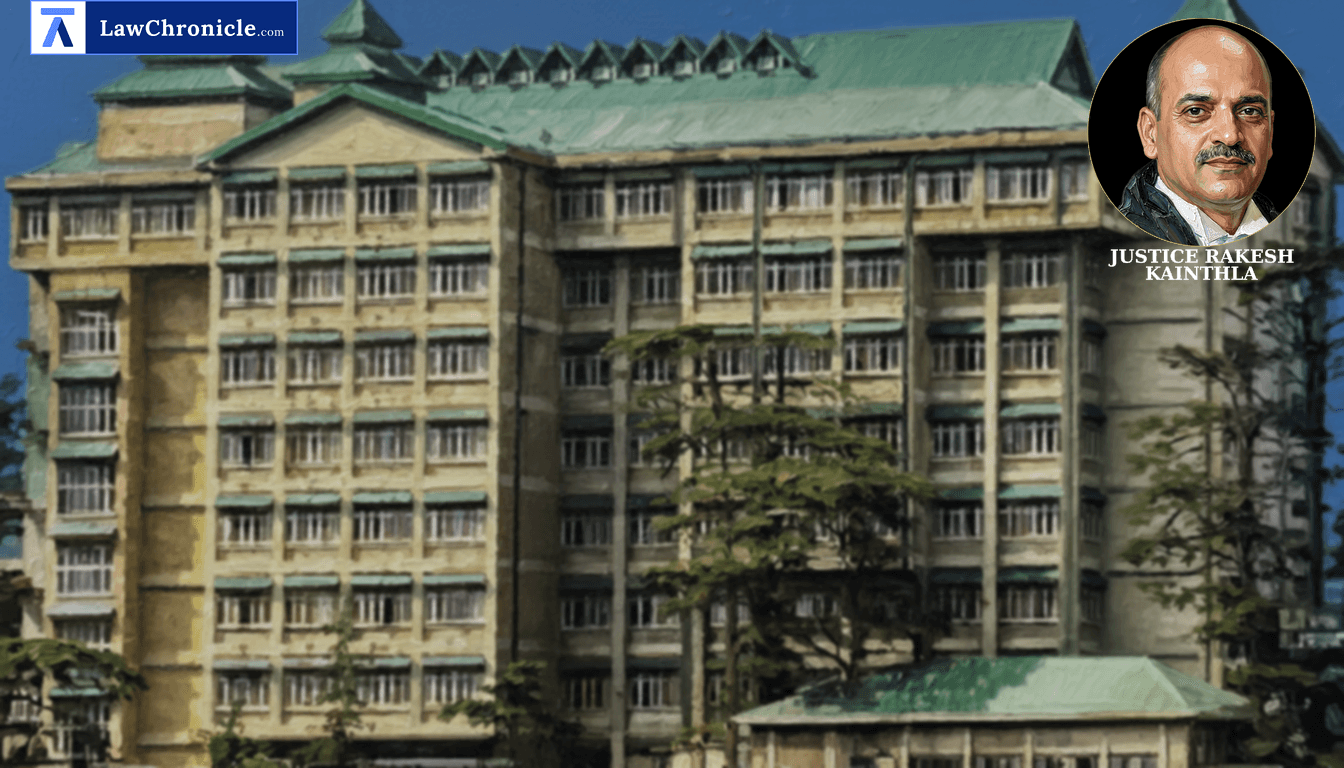
The High Court of Himachal Pradesh has reaffirmed that a fundamental discrepancy between oral testimony and medical evidence, particularly regarding the nature of the weapon used, creates a serious defect that can justify an acquittal. The Court ruled that when witnesses describe an assault with a sharp-edged weapon but medical reports only reveal blunt-force injuries, the entire prosecution case becomes suspect.
Mr Justice Rakesh Kainthla, sitting as a single judge bench, delivered the verdict while hearing an appeal filed by the State of Himachal Pradesh against an order of the learned Additional Sessions Judge-1, Kangra. The State challenged the acquittal of the respondents, who were originally convicted by the Trial Court for causing grievous hurt during a localized field dispute.
Assessing the Inconsistency Between Medical and Ocular Evidence
The Court scrutinized the testimony of the victim who claimed to have been struck by the sharp side of a 'darat'. However, medical records only showed a contused lacerated wound caused by a blunt object. The Court noted that such a gap in evidence is not a minor contradiction but a fundamental flaw. Relying on Amar Singh v. State of Punjab ( "(1987) 1 SCC 679": 1987 CaseBase(SC) 841), the Court observed that when the medical report shows only contusions and fractures instead of the alleged incised wounds from sharp weapons, it discredits the entire prosecution narrative.
Similarly, citing Raj Pal v. State of Haryana ( "(2007) 13 SCC 554: 2007 SCC OnLine SC 600": 2007 CaseBase(SC) 1406) and Thaman Kumar v. State (UT of Chandigarh), the Court emphasized that if medical evidence shows a total absence of injuries that are normally caused by the particular weapon described by witnesses, the oral testimony is deemed untruthful.
The Requirement of Explaining Injuries Sustained by the Accused
A critical factor in the Court's decision was the prosecution's failure to explain bleeding injuries sustained by the accused party during the same incident. The Court observed that such an omission suggests the prosecution suppressed the true genesis of the occurrence. Relying on Parshuram v. State of M.P. ( "2023 SCC OnLine SC 1416": 2023 CaseBase(SC) 702), the Court highlighted that the non-explanation of injuries on the person of the accused is a vital circumstance that makes the testimonies of interested or inimical witnesses unreliable.
The Court also took note of the pending civil litigation between the parties, which suggested a possible motive for false implication. The Court held that the Appellate Court had taken a reasonable view in acquitting the accused, as there was no corroboration from independent witnesses and the medical evidence contradicted the oral version.
Observations and Rationale
The Court, in its reasoning, observed: "In the present case also, the opinion of the Medical Officer that injury could have been caused by means of a blunt weapon and absence of the incised wound, which are likely to be caused by the sharp side of darat would make the prosecution's case highly suspect and the learned Appellate Court was justified in doubting the prosecution's case."
The Court has following directions:
"In view of the provisions of Section 481 of Bhartiya Nagarik Suraksha Sanhita, 2023 the respondents/accused are directed to furnish bail bonds in the sum of ₹25,000/- each with one surety each in the like amount to the satisfaction of the learned Trial Court within four weeks, which shall be effective for six months with stipulation that in the event of Special Leave Petition being filed against this judgment, or on grant of the leave, the respondents/accused on receipt of notice thereof, shall appear before the Hon’ble Supreme Court."
Key Takeaways
Supremacy of Medical Consistency
If the ocular version of a weapon's use is medically impossible, the court is duty-bound to doubt the witness integrity.
Prosecution's Duty to Disclose Accused Injuries
Failing to explain how the accused was injured suggests a biased narrative and can lead to the dismissal of the entire case.
Appellate Restraint in Acquittals
High Courts will not interfere with an acquittal unless the lower court’s view is patently perverse or ignores material evidence.
Ratio
A judgment of acquittal cannot be disturbed unless it is patently perverse; specifically, where there is a total inconsistency between ocular testimony describing a sharp-edged assault and medical evidence showing only blunt injuries, and where the prosecution fails to explain injuries on the accused, the acquittal is a 'possible view' that must be upheld.
Background:
The case originated from a 2008 dispute in District Kangra where the informant alleged that the accused attacked her and her husband with a 'darat' after a quarrel over cattle grazing in wheat fields. The Trial Court convicted the accused under Sections 323, 325, and 504 of the Indian Penal Code. However, the first Appellate Court reversed this conviction citing civil litigation between the parties, the failure to explain injuries on the accused, and the conflict between the weapon described and the injuries found. The State appealed to the High Court, arguing that minor contradictions should not invalidate the victims' testimony. The High Court dismissed the State's appeal, holding that the cumulative discrepancies regarding the nature of injuries and the suppression of the cross-incident made the prosecution's case unreliable under the principles established in Surendra Singh v. State of Uttarakhand ( "(2025) 5 SCC 433: 2025 SCC OnLine SC 176": 2025 CaseBase(SC) 354), State of M.P. v. Ramveer Singh ( "2025 SCC OnLine SC 1743": 2025 CaseBase(SC) 797), and Tulasareddi v. State of Karnataka.
Case Details:
Case No.: Cr. Appeal No. 8 of 2014
NeutralCitation: 2026:HHC:29467
Case Title: State of H.P. v. Raj Kumar & Ors.
Appearances:
For the Petitioner(s): Mr Jitender K. Sharma, Additional Advocate General.
For the Respondent(s): Mr Adarsh K. Vashista, Advocate.
Source: 2026 CaseBase(HP) 64
 Breaking News