Hindu Converted to Islam cannot enjoy Backward Class Status: Supreme Court
 Copy Link
 Share
 Save
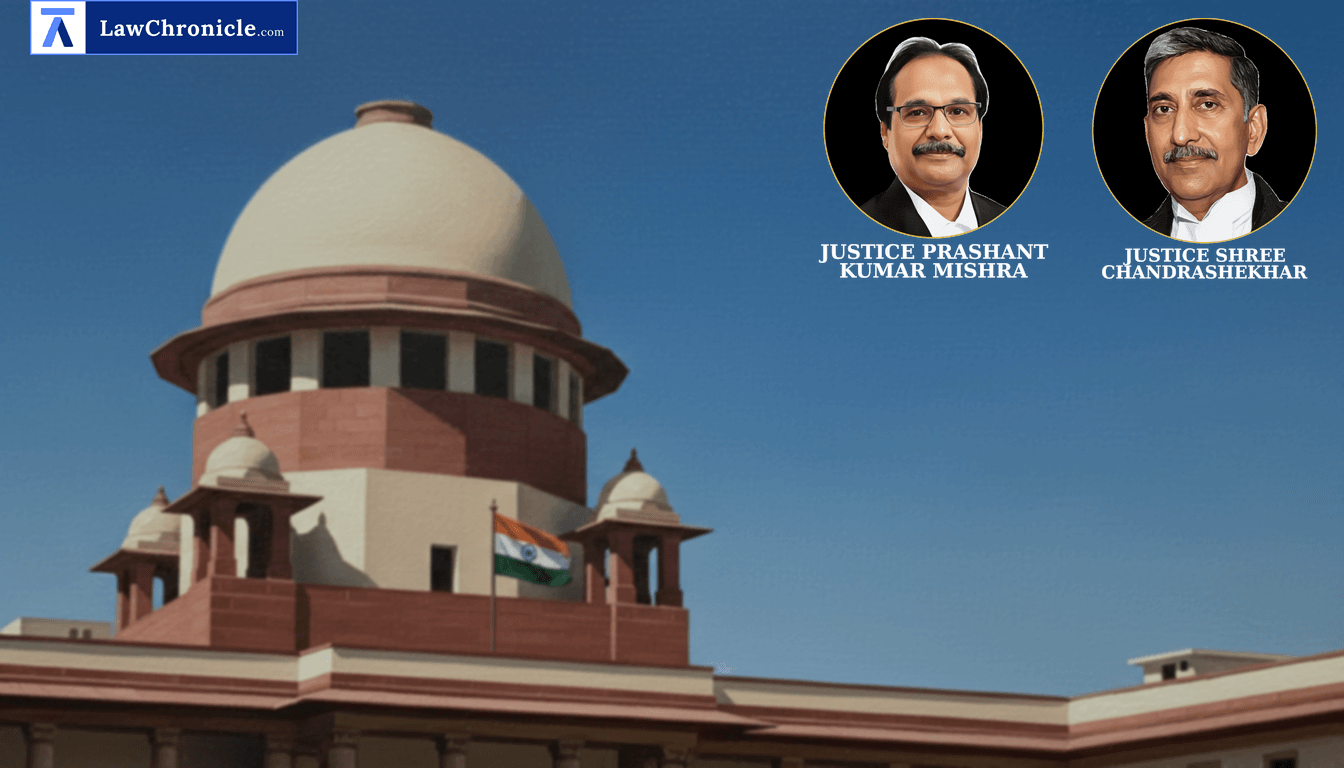
On Hindu converted to Islam, the Supreme Court enunciated that religious conversion cannot serve as a portal to transfer antecedent caste disabilities into a post-conversion faith that does not recognize caste-based social stratification. Striking down an executive order that granted backward class reservation to proselytes embracing Islam, the Supreme Court has ruled that a person's pre-conversion backward class or Scheduled Caste status automatically lapses upon embracing a non-Hindu faith. Justice Prashant Kumar Mishra and Justice Shree Chandrashekar affirmed a High Court ruling invalidating a State Government Order that allowed converts to Islam to claim membership in notified Backward Class Muslim communities.
Key Takeaways
-
Severance of Caste Entitlements
Pre-conversion social backwardness cannot be carried forward to claim affirmative action in a non-Hindu religion.
-
Absence of Automatic Community Membership
Religious conversion to Islam establishes faith affiliation but does not automatically confer membership in a historically recognized Backward Class Muslim community.
-
Inapplicability of SC Status Post-Conversion
By operation of Paragraph 3 of the Constitution (Scheduled Castes) Order, 1950, Scheduled Caste status is immediately eclipsed upon conversion to Islam.
-
Exclusive Public Function for Verification
Private religious bodies like Jamaths cannot conclusively determine statutory backward class status for government reservation.
Status of Hindu Converted to Islam
Summarizing the core holding, the Supreme Court held that executive instructions cannot alter statutory framework or create artificial pathways to statutory backward class membership without an independent, constitutional rationale.
The Bench observed that "A person who converts from a Hindu social order to a non-Hindu social order cannot claim affirmative action under Article 16(4) of the Constitution of India, 1950 merely on the basis of the social backwardness associated with his pre-conversion status; the backwardness suffered in the antecedent social order cannot, by itself, be carried forward so as to confer upon him the status of a backward class in the religion to which he has converted."
The Apex Court further emphasized that_"Conversion to a non-Hindu social order does not, by itself, confer membership of any particular notified Backward Class community. A person's pre-conversion caste or community status cannot, merely by reason of conversion, be transposed into membership of a distinct notified Backward Class community in the post-conversion social order."_
Addressing the delegation of public powers to private bodies, the Supreme Court observed: "A private religious body cannot be vested with the authority to conclusively determine the community status of an individual for the purposes of statutory reservation... A Jamath may certify that a person has embraced Islam... however, it cannot, merely by issuing a testimonial, create or conclusively determine a statutory backward-class status."
Ratio
Affirmative action entitlements under Article 16(4) of the Constitution of India, 1950 rooted in the Hindu caste hierarchy cease upon conversion to a non-Hindu faith. An executive order attempting to transpose pre-conversion caste-based backwardness into membership of pre-existing, notified post-conversion social communities without establishing an independent socio-historical link violates Articles 14, 15(4), and 16(4) of the Constitution of India, 1950.
Background
The controversy originated when Respondent No. 1, who was born to Hindu parents, embraced Islam in September 2015 and officially changed his name. Subsequently, the Hindu converted to Islam applied for a Backward Class (Muslim) community certificate as "Muslim Labbai" before state authorities. The application was rejected on the ground that he had converted only to the religion of Islam and not to the specific caste or community.
Challenging the rejection, Respondent No. 1 filed a writ petition under Article 226 of the Constitution of India, 1950 before the High Court of Judicature at Madras. During the pendency of the petition, the State Government issued G.O.(Ms.) No. 314 dated 09.03.2024, acting upon recommendations from the Tamil Nadu Backward Class Commission. The G.O. enabled proselytes to Islam from Backward Classes, Most Backward Classes, Denotified Communities, and Scheduled Castes to obtain Backward Class Muslim community certificates under any of the seven recognized Muslim communities under Section 3(a) of the Tamil Nadu Backward Classes, Scheduled Castes And Scheduled Tribes (Reservation Of Seats In Educational Institutions And Of Appointments Or Posts In The Services Under The State) Act, 1993 and the Tamil Nadu Backward Class Muslims (Reservation Of Seats In Educational Institutions Including Private Educational Institutions And Of Appointments Or Posts In The Services Under The State) Act, 2007.
The High Court suo motu examined the constitutional validity of the G.O., declared it unconstitutional, and sustained the rejection of the community certificate. Assailing the judgment, the State Government preferred a Special Leave Petition before the Supreme Court, arguing that the High Court traveled beyond the scope of the pleadings and that the G.O. merely preserved pre-existing backwardness under principles outlined in Indra Sawhney and Others vs. Union of India and Others ( "1992 Supp (3) SCC 217": 1992 CaseBase(SC) 156).
Rejecting the State's contentions, the Supreme Court relied on the ruling in G. Michael vs. S. Venkateswaran, Additional Secretary to Government, Public (Elections) Department to reiterate that a convert to Islam becomes a Muslim and ceases to belong to any caste. The bench further cited Kailash Sonkar vs. Maya Devi and C. Selvarani vs. Special Secretary-cum-District Collector and Others ( "(2024) 16 SCC 537": 2024 CaseBase(SC) 919) to stress that SC status ends upon conversion. Relying on Chinthada Anand vs. State of Andhra Pradesh and Others ( "2026 SCC OnLine SC 466": 2026 CaseBase(SC) 250), the court affirmed that statutory benefits cannot be predicated on loss of status under Paragraph 3 of the SC Order, 1950. Drawing upon Kumari Madhuri Patil and Another vs. Addl. Commissioner, Tribal Development and Others ( "(1994) 6 SCC 241": 1994 CaseBase(SC) 333) and Vishwa Lochan Madan vs. Union of India and Others ( "(2014) 7 SCC 707": 2014 CaseBase(SC) 339), the bench held that private bodies cannot usurp public authority in verifying legal rights, nor can arbitrary groupings bypass the requirements of class homogeneity stated in Ashoka Kumar Thakur vs. Union of India and Others ( "(2008) 6 SCC 1": 2008 CaseBase(SC) 406).
Consequently, the Supreme Court dismissed the Special Leave Petition, sustaining the High Court's order invalidating the G.O.
Case Details:
Case No.: SPECIAL LEAVE PETITION (CIVIL) NO. 25507 OF 2026
Neutral Citation: 2026 INSC 1129
Case Title: THE SECRETARY TO GOVERNMENT v. SAMEER AHAMED N. AND OTHERS
Appearances:
For the Petitioner(s): Shri Mukul Rohatgi (Senior Counsel), Shri Sidharth Luthra (Senior Counsel)
Source: 2026 CaseBase(SC) 8269
 Breaking News