


IBC Moratorium Does Not Shield Directors & Promoters From Consumer Case: SC
 Copy Link
 Share
 Save
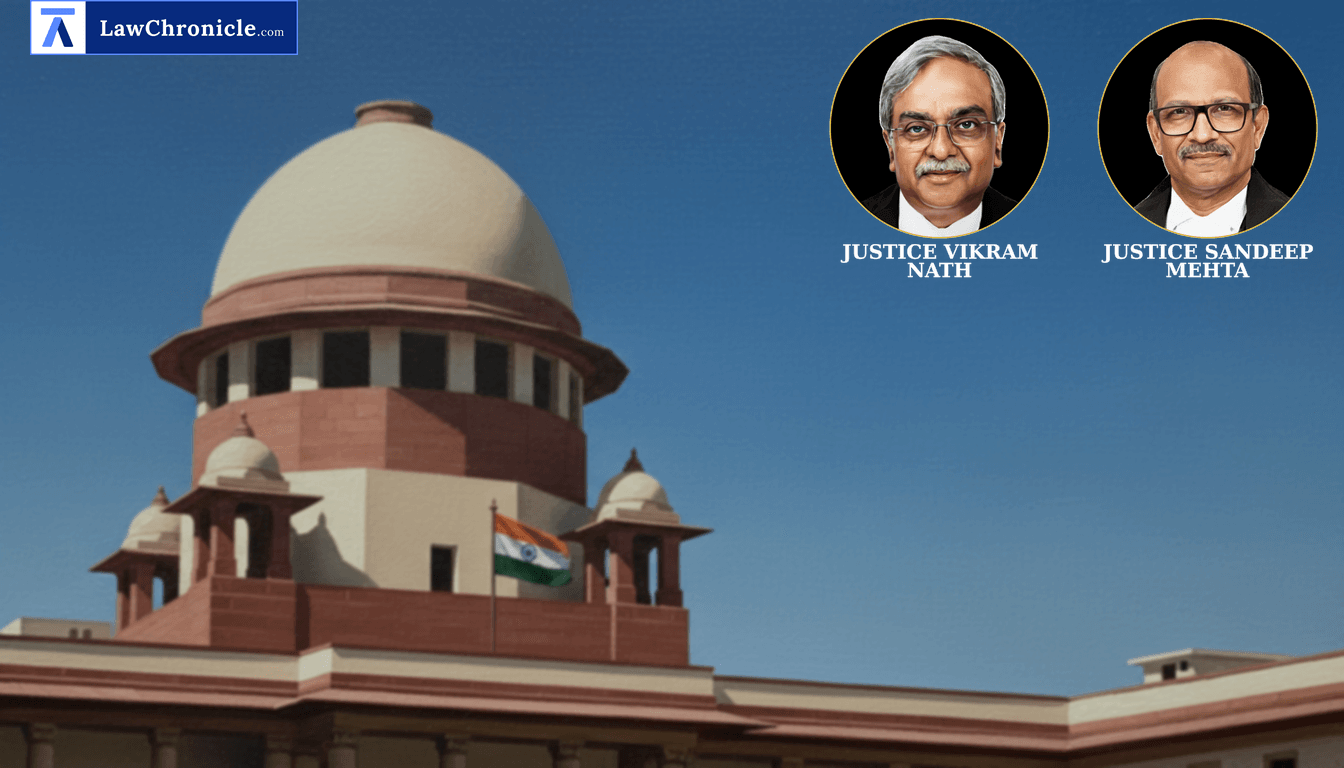
In a decisive clarification shielding homebuyers from procedural limbo, the Supreme Court ruled that an insolvency moratorium protecting a real estate company cannot automatically freeze ongoing consumer court proceedings against its promoters, directors, or associated entities.
A bench comprising Justice Vikram Nath and Justice Sandeep Mehta partly allowed civil appeals against an order of the National Consumer Disputes Redressal Commission (NCDRC), which had adjourned a homebuyer complaint sine die against all respondents after Corporate Insolvency Resolution Process (CIRP) was initiated against the primary builder company.
NCDRC Cannot Freeze Actions Against Non-Corporate Debtors
The Supreme Court held that the NCDRC erred in shutting down proceedings against co-respondents merely because the principal corporate entity entered insolvency. The Court observed that Section 14 of the Insolvency and Bankruptcy Code, 2016 is statutory in scope and strictly confined to the corporate debtor alone.
The Court cited landmark precedents, including P. Mohanraj v. Shah Brothers Ispat Pvt. Ltd. ( "(2021) 6 SC 258": 2021 CaseBase(SC) 891), where it was held that Section 14 applies only to corporate debtors and not to natural persons. Similarly, relying on Ansal Crown Heights Flat Buyers Association v. Ansal Crown Infrabuild Pvt. Ltd., the Court reiterated that an IBC moratorium does not grant immunity to promoters and directors. The bench also pointed to Saranga Anilkumar Aggarwal v. Bhavesh Dhirajlal Sheth & Ors. ( "2025 INSC 314": 2025 CaseBase(SC) 151) to highlight that protective statutory shields under insolvency law cannot expand beyond statutory boundaries to stultify consumer remedies provided under the Consumer Protection Act.
The Court, in its reasoning, observed: "In the present case, Respondent No.1 alone is the corporate debtor against whom the CIRP has been initiated. No independent moratorium or independent protection operates in favour of Respondent Nos. 2 to 7. In the absence of any legal bar against continuation of proceedings qua the said respondents, the NCDRC was not justified in rejecting appellants’ prayer to proceed with the complaint against the rest of the respondents."
The Court issued the following directions:
"Accordingly, we set aside the rejection of I.A. No. 15656 of 2024 and I.A. No. 14200 of 2024. The said applications are hereby allowed. The NCDRC shall proceed to hear the Consumer Complaint No.13 of 2023. Needless to clarify, the proceedings against Respondent No.1 shall continue to remain governed by the moratorium under Section 14 of the IBC. The NCDRC shall dispose of the complaint, insofar as Respondent Nos.2 to 7 are concerned, in accordance with law."
Key Takeaways
- Statutory Scope Preserved: Section 14 IBC moratorium is strictly person-centric to the corporate debtor and cannot be extended to directors or land owners.
- Remedies Unfrozen for Litigants: Homebuyers can pursue consumer claims against promoters and non-debtor entities even during ongoing CIRP against the primary builder.
- Procedural Discipline for Tribunals: Consumer courts cannot prematurely decide liabilities or refuse to split proceedings at interlocutory stages.
Ratio
The statutory moratorium under Section 14 of the Insolvency and Bankruptcy Code, 2016 operates strictly against the corporate debtor alone, and consumer proceedings against non-debtor co-respondents, including promoters, directors, and landowners, must continue independently in the absence of an explicit statutory bar.
Background:
The dispute arose from the 'Mantri Manyata Energia' residential project developed by Respondent No. 1 (Mantri Technology Constellations Pvt. Ltd.). Homebuyers who booked apartments in 2016 alleged failure to deliver possession within the promised timeframe of December 2018. Aggrieved by non-delivery despite substantial payments, buyers filed Consumer Case No. 13 of 2023 before the NCDRC against the developer, its associated company (Mantri Developers Pvt. Ltd.), promoters/directors, and landowners.
During the pendency of the consumer complaint, NCLT Bengaluru admitted a Section 9 Insolvency and Bankruptcy Code, 2016 application against Respondent No. 1, triggering CIRP and a moratorium under Section 14. The complainants moved interlocutory applications before NCDRC seeking to continue the consumer case against the remaining respondents (Respondent Nos. 2 to 7). However, the NCDRC rejected the applications and adjourned the matter sine die, reasoning that liability was yet to be determined and deficiency was primarily linked to Respondent No. 1.
Setting aside NCDRC's order, the Supreme Court held that the tribunal wrongly foreclosed adjudication against non-debtor parties at an interlocutory stage, while leaving the merits of maintainability and privity of contract to be decided by the NCDRC.
Case Details:
Case No.: Civil Appeal Nos.4289-4290 of 2025
NeutralCitation: 2026 INSC 746
Case Title: Tejas J. Shah & Amisha T. Shah & Ors. v. Mantri Technology Constellations Pvt. Ltd. & Ors.
Appearances:
For the Petitioner(s): Mr. D. Seshadri Naidu, Sr. Adv.
For the Respondent(s): Mr. Sajan Povayya, Sr. Adv., Mr. Shekhar G Devasa, Sr. Adv., Mr. Ashutosh Dubey, Adv.
Source: 2026 CaseBase(SC) 694
Similar Articles
 Breaking News


