Indian Independence Act 1947: Act which formally partitioned British India into India and Pakistan
 Copy Link
 Share
Share Save
Save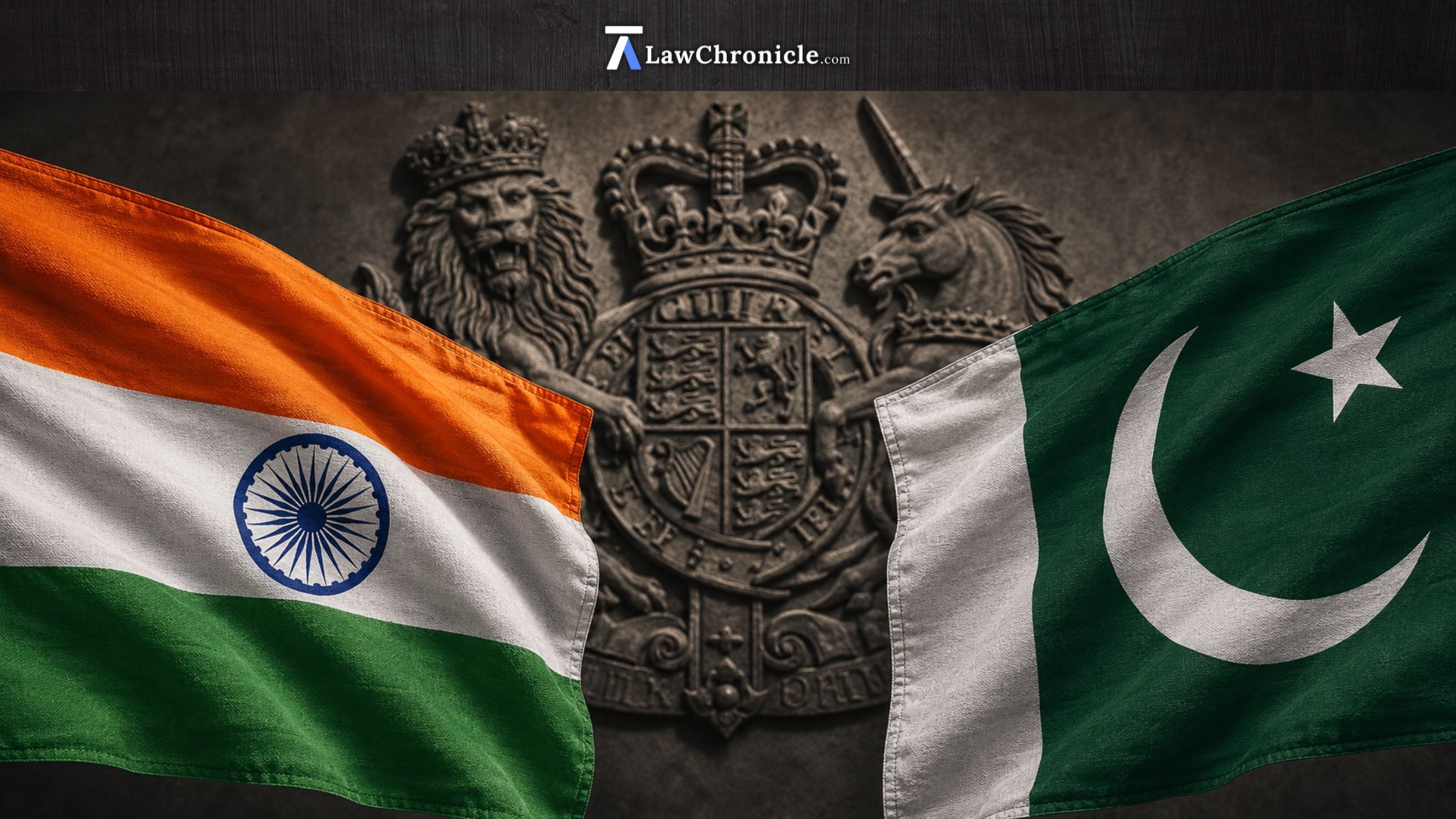
Had the title not been as it happens to be, the first question would have been “Do you know Which act partitioned India and Pakistan?” Now that it is already there, it’s better to formally introduce the Act which formally partitioned British India into India and Pakistan. The Indian Independence Act 1947 is the British legislation that ended colonial rule created two independent Dominions: India and Pakistan. It was formally enacted by the Parliament of the United Kingdom on 18th July 1947. The 1947 Chapter 30 of the Indian Independence Act 1947 is the essence to a commonly asked question: “which act partitioned India and Pakistan?" for it came with a formal, legal end to British control over India.
Preamble to the Indian Independence Act, 1947
Preamble to an Act states the objective of why the specific statute was enacted. It was this very Act, formally titled "An Act to make provision for the setting up in India of two independent Dominions, to substitute other provisions for certain provisions of the Government of India Act, 1935 which apply outside those Dominions, and to provide for other matters consequential on or connected with the setting up of those Dominions."
When the Act Came into Force?
The Indian Independence Act 1947 came into force on the fifteenth day of August 1947, described throughout the Act as "the appointed day." Section 1(1) of the Act states that as from that date, two independent Dominions would be set up in India, to be known respectively as India and Pakistan. These are referred to in the Act as "the new Dominions."
Which Act formally partitioned British India into India and Pakistan? The Answer
The Indian Independence Act 1947 is the Act which formally partitioned British India into India and Pakistan. Section 2 of the Act lays out how the territories of the two Dominions were determined:
- The territories of India would comprise the territories under the sovereignty of the King that, immediately before the appointed day, were included in British India, except for the territories assigned to Pakistan.
- The territories of Pakistan would comprise the Provinces of East Bengal and West Punjab (as constituted under the Act), the Province of Sind, the Chief Commissioner's Province of British Baluchistan, and, depending on the outcome of a referendum, the North West Frontier Province.
- Section 2(3) clarified that no area could be added to or removed from either Dominion without that Dominion's consent, and Section 2(4) preserved the ability of Indian States to accede to either Dominion.
Partition of Bengal and Punjab
Sections 3 and 4 of the Indian Independence Act deal specifically with the partition of two provinces along communal lines.
Bengal: As from the appointed day, the Province of Bengal, as constituted under the Government of India Act, 1935, ceased to exist. In its place, two new Provinces were constituted: East Bengal and West Bengal. If a referendum in the District of Sylhet favoured joining the new Province of East Bengal, then part of the Province of Assam would also become part of East Bengal. The boundaries of these Provinces were to be determined by the award of a boundary commission, but until that determination, the First Schedule to the Act specified which Bengal districts (including Chittagong, Noakhali, Tippera, Dacca, Faridpur, Mymensingh, Jessore, Rajshahi, and others) would provisionally form part of East Bengal, with the remainder treated as West Bengal.
Punjab: Similarly, the Province of the Punjab ceased to exist, and two new Provinces were constituted: West Punjab and East Punjab. Pending a boundary Commission's award, the Second Schedule listed the districts (including Lahore, Gujranwala, Sialkot, Rawalpindi, Multan, and others) that would provisionally form West Punjab, with the remaining Punjab territory treated as East Punjab.
Main Provisions of the Indian Independence Act 1947
For readers asking what the main provisions of the Indian Independence Act 1947 are, the Act's twenty sections cover the following key areas:
Governance of the New Dominions
- Section 5 provided for a Governor-General for each Dominion, appointed by the King, with the proviso that the same person could hold the office for both Dominions unless a Dominion's own legislature provided otherwise.
- Section 6 gave the Legislature of each Dominion full power to make laws, including laws with extra-territorial operation. No law made by either Dominion's legislature could be treated as void merely for being repugnant to English law or to any Act of the UK Parliament, and each Dominion's legislature could repeal or amend such laws, orders, or rules as applied within its territory. It also provided that no UK Act of Parliament passed on or after the appointed day would extend to either Dominion unless the Dominion's own legislature extended it.
- Section 8 provided that, pending a new constitution, each Dominion would be governed, as nearly as possible, in accordance with the Government of India Act, 1935, with the Constituent Assembly of each Dominion exercising legislative power in the first instance. It expressly stated that no common Central Government or Legislature would continue for both Dominions, and that the UK Government's control over the affairs of the Dominions would not continue after the appointed day.
End of British India
Section 7 is central to answering what was the role of the Indian Independence Act in 1947 with respect to the princely states. It provided that, as from the appointed day (15th August, 1947):
- His Majesty's Government in the United Kingdom would have no further responsibility for the government of any territory that had been part of British India.
- The suzerainty of the King over the Indian States would lapse, along with all treaties, agreements, obligations, and powers exercisable by the King in relation to those States.
- Similarly, treaties and agreements with persons having authority in the tribal areas would lapse, subject to a proviso that arrangements relating to customs, transit, communications, posts, and telegraphs would continue until denounced or superseded by new agreements.
Section 7(2) also gave Parliament's assent to the removal of the words "Indiae Imperator" and "Emperor of India" from the Royal Style and Titles.
Orders for Bringing the Act into Force
Section 9 empowered the Governor-General to make orders necessary for bringing the Act into effective operation, including dividing powers, rights, property, and liabilities between the new Dominions and Provinces, adapting the Government of India Act, 1935 to the new arrangement, and removing difficulties arising from the transition. This power was deemed to have had effect from 3 June 1947, and no such order could be made by the Governor-General after 31st March 1948 (or an earlier date fixed by a Dominion's legislature).
Armed Forces
Sections 11 to 13 addressed the division of the Indian armed forces between the two Dominions, the position of British forces (other than Indian forces) serving in India, and the application of the Army Act, Air Force Act, and Naval Discipline Act after the appointed day.
Civil Services, Judges, and Pensions
Section 10 preserved the service conditions: remuneration, leave, pension, and disciplinary protections, of persons who had been appointed to the civil services or as judges by the Secretary of State or the King before the appointed day, and who continued to serve either Dominion afterward.
Legal Proceedings, Aden, and Divorce Jurisdiction
- Section 15 set out how legal proceedings by or against the Secretary of State concerning rights or liabilities of India would instead be brought by or against a "High Commissioner" or a person designated under the Act.
- Section 16 removed Aden from the scope of the Government of India Act, 1935, applying instead the British Settlements Acts, 1887 and 1945.
- Section 17 restricted the divorce jurisdiction of courts in the new Dominions under the Indian and Colonial Divorce Jurisdiction Acts, 1926 and 1940, to proceedings instituted before the appointed day.
Continuity of Existing Law
Section 18 provided that the law of British India, as it existed immediately before the appointed day of 15th August, 1947, would continue as the law of each new Dominion, so far as applicable, until altered by the Dominion's own legislature or other competent authority. That’s where the force for colonial laws like Indian Penal Code, 1860 (now repealed), Indian Contract Act, 1872, Code of Civil Procedure, 1908, etc. Comes from.
Interpretation Provisions
Section 19 of the Indian Independence Act clarified how references to "the Governor-General" and to the "Constituent Assembly" of each Dominion were to be read under the Act. It included how India's existing Constituent Assembly (first convened on 9 December 1946) would be reconstituted by excluding members representing Bengal, the Punjab, Sind, British Baluchistan, and, depending on developments, the North-West Frontier Province and Assam, while including new members representing West Bengal and East Punjab.
80 Years of Indian Independence Act
As India and Pakistan approach eight decades since the Indian Independence Act 1947 came into force, the Act remains the legal starting point of both nations' independent existence. It was through this Indian Independence Act of the UK Parliament that British control over the subcontinent ended, a new country was created (Pakistan), and the princely states and tribal areas ceased to be bound by treaties and obligations owed to the British Crown.
The boundaries it provisionally drew for Bengal and Punjab, and the transitional framework it set up under the Government of India Act, 1935, shaped the earliest years of governance in both India and Pakistan. This continued till their own Constituent Assemblies framed permanent constitutions: India's in 1950 and Pakistan's in 1956. Eighty years on, the Indian Independence Act continues to be cited as the founding legal instrument of the Partition and of India and Pakistan's transition from Dominion status to fully independent republics.
 Breaking News