


Inordinate 8.5-Year Delay In Passing Service Tax Order Vitiates Proceedings: Meghalaya HC
 Copy Link
 Share
 Save
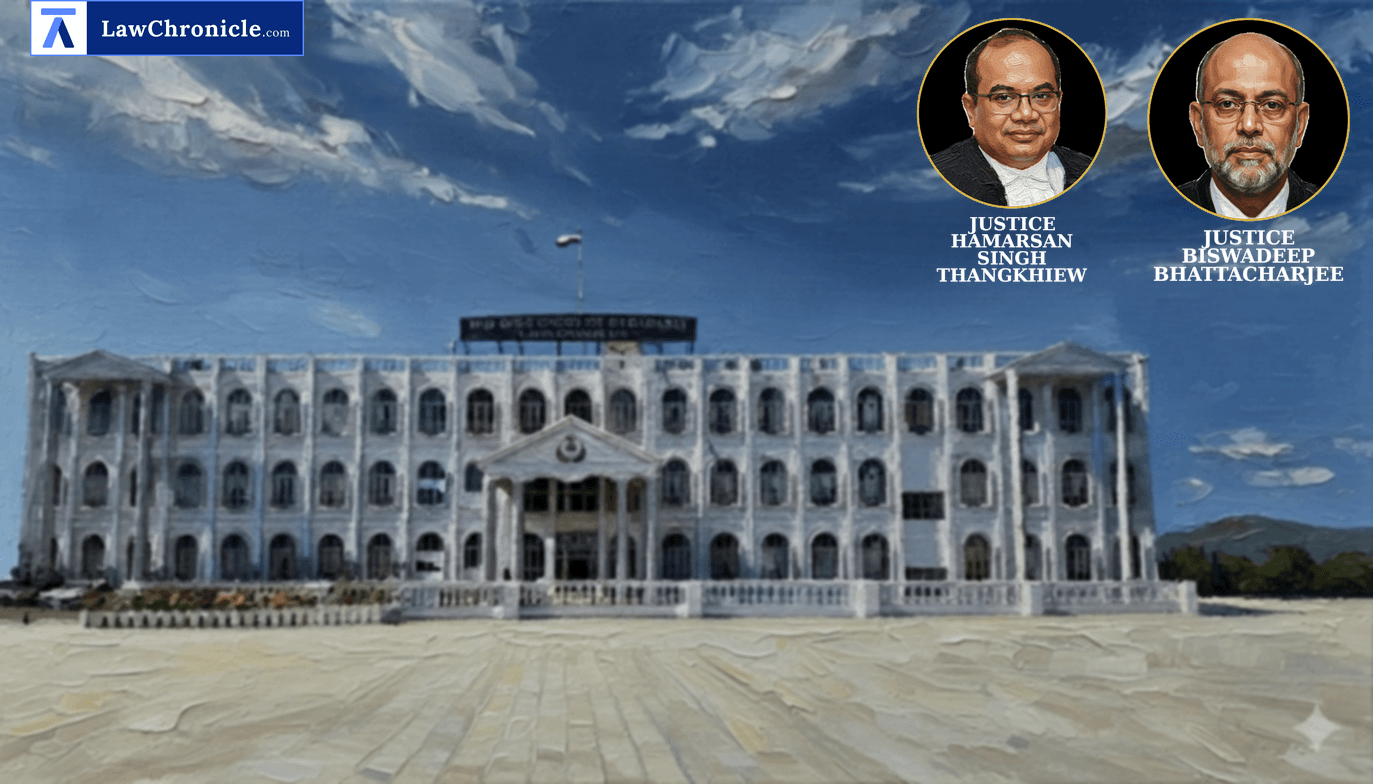
In a decisive check on administrative inertia, the High Court of Meghalaya has quashed a service tax demand order passed after an unexplained delay of nearly eight and a half years from the date of the show cause notice. The Court ruled that statutory tax authorities cannot indefinitely sit on show cause notices and must conclude adjudication within a reasonable timeframe as mandated by law.
A Division Bench comprising Justice H. S. Thangkhiew and Justice B. Bhattacharjee set aside an Order-in-Original issued under Section 74(2) of the Finance Act, 1994. The Court examined whether an extraordinary delay of 3,081 days between the show cause notice and the adjudication order rendered the assessment proceedings time-barred and arbitrary.
Key Takeaways
Strict Adherence to Statutory Timelines: Tax authorities must complete assessment proceedings within prescribed timelines unless legitimate statutory impediments exist.
Limits on Adjournments: Section 33A of the Finance Act, 1994 restricts hearing adjournments to three times, preventing endless delays attributed to taxpayer representations.
Protection Against Inordinate Inaction: Inordinate and unexplained administrative delays violate statutory mandates and offend Article 14 of the Constitution of India, 1950.
Court's Rationale on Inordinate Adjudication Delay
The High Court emphasized that while the phrase "where it is possible to do so" in Section 73(4B) offers limited operational flexibility to adjudicating officers, it cannot be construed as a license to delay adjudication indefinitely.
The Court directions were issued as follows:
"Accordingly, for the reasons aforementioned the procedural challenge to delay being the most compelling reason, the impugned order dated 12.03.2025, on this ground alone, is hereby set aside and quashed. Writ petition stands allowed to the extent indicated above, without deliberating on the other issues and is disposed of."
Evaluating the statutory mechanism, the Court, in its reasoning, observed: "The respondents were therefore duty bound to complete the adjudication as expeditiously as possible, and cannot regard the representations made by the petitioner to be a restraint or a bar under law, or to conclude the adjudication in a timely manner. The respondents therefore from the facts and materials provided, have failed to provide any justifiable cause or reason, that could have prevented them from framing the assessment in the prescribed timeline. The impugned order dated 12.03.2025, therefore being passed after an undue and unexplained delay of nearly 8.5 years, in the considered view of this Court, is violative of Section 73(4B)(b) of the Finance Act, 1994, and is held to be arbitrary and bad in law."
In coming to its decision, the High Court relied upon decisions such as IDFC First Bank vs. Union of India ( "(2023) 10 Centax 256 (Bom)": 2023 CaseBase(DEL) 4474), Sunder System Pvt. Ltd. vs. Union of India ( "2020 (33) GSTL 621 (Del.)": 2019 CaseBase(DEL) 3040), Ms L.R. Sharma and Co. vs. Union of India, M/s Power Spectrum Sarbidipur vs. Union of India, and Sushitex Exports (India) Ltd. & Ors. v. Union of India & Anr., which consistently held that fiscal authorities must exercise jurisdiction within a reasonable period.
Ratio
An unexplained, inordinate delay in adjudicating a show cause notice issued under fiscal statutes defeats the legislative intent of timely tax determination, violates Section 73(4B) of the Finance Act, 1994, and renders the resulting adjudication order arbitrary and unsustainable under Article 14 of the Constitution of India, 1950.
Background
The dispute arose after a show cause notice was issued on October 5, 2016, seeking to recover service tax and impose penalties by invoking the extended period of limitation under Section 73(1) of the Finance Act, 1994. The petitioner contended that as a public authority administering non-commercial mutual benefit schemes for armed forces personnel, its salary deductions did not constitute taxable consideration. It was further argued that the order passed on March 12, 2025, after a delay of 3,081 days, violated Section 73(4B) of the Finance Act, 1994.
Conversely, the Revenue Department contended that the timeline in Section 73(4B) was merely directory and argued that the delay was attributable to the petitioner's requests for exemptions and procedural complexities. The High Court rejected the department's arguments, holding that inter-departmental correspondence or requests for exemption cannot justify sitting tight over show cause notices for over eight years.
Case Details:
Case No.: WP(C) No. 377 of 2025
Neutral Citation: 2026:MLHC:961-DB
Case Title: M/s Assam Rifles Group Insurance Scheme (ARGIS) v. Additional Director General (Adjudication) & Ors.
Appearances:
For the Petitioner(s): Mr. S. Ghosh, Sr. Adv. with Mr. N. Khera, Adv., Ms. A. Syiem, Adv., Mr. A. Behura, Adv., Mr. R. Kharkrang, Adv.
For the Respondent(s): Dr. N. Mozika, DSGI with Ms. M. Myrchiang, Adv.
Source: 2026 CaseBase(MEG) 393
Similar Articles



 Breaking News


