Inside Supreme Court's Gender Handbook: What it brings for Legal Community
 Copy Link
 Share
Share Save
Save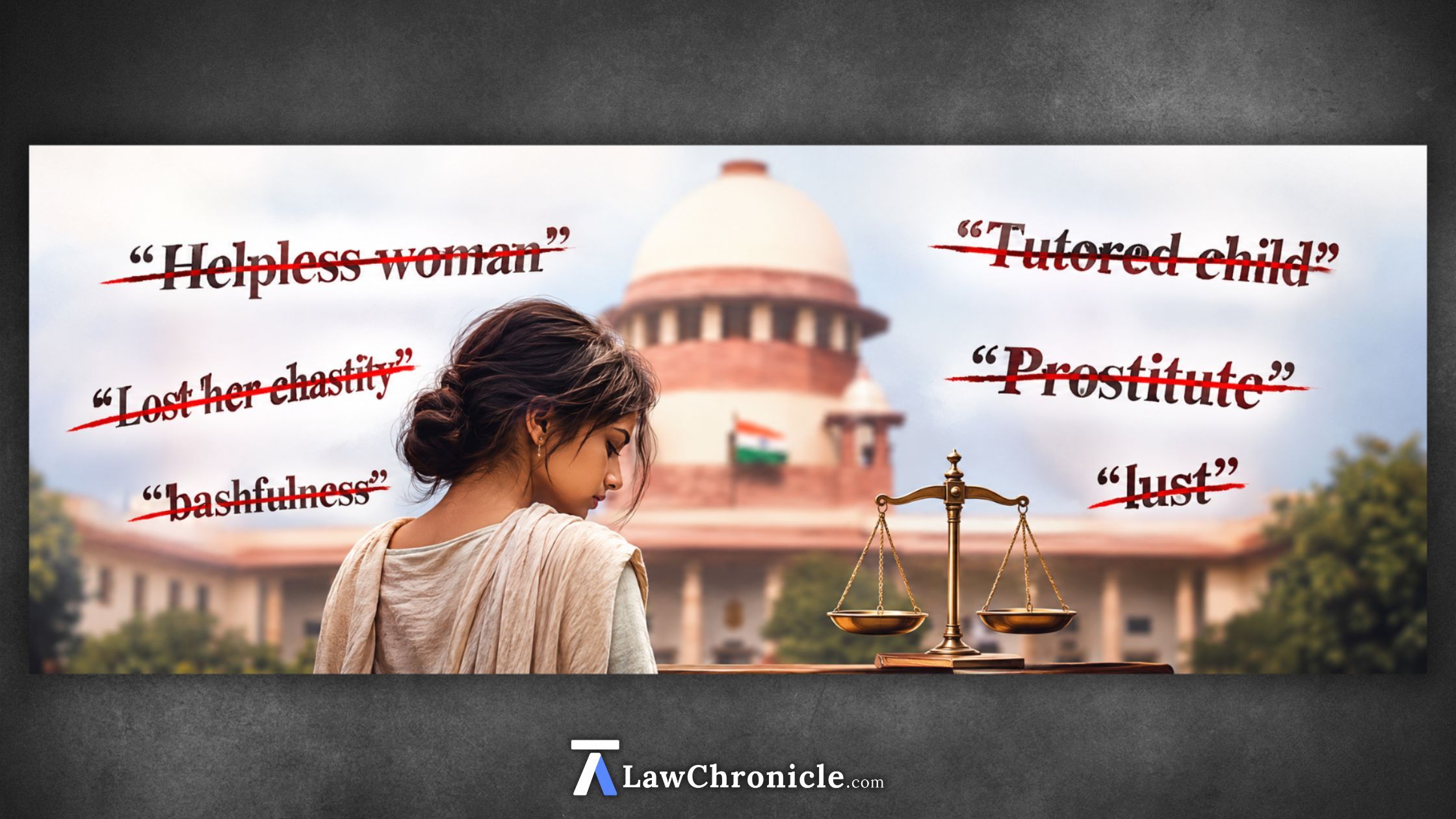
I came across a news piece reporting judgment in a rape case wherein, it purportedly tagged the victim as 'Habituated to Sexual Intercourse'. Such words used in a judgment immediately make one wonder “Is such language warranted in judgments?”
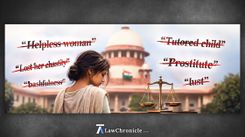
The Supreme Court of India has released a handbook titled "Gender Just Language and Compassionate Court Practices", prepared by a Committee of Experts. The document lists words and phrases used in judgments, such as "helpless woman," "self-respecting woman," and "prosecutrix", that it says should be replaced with neutral, dignity-based alternatives.
This article peeks into the Supreme Court’s Gender Handbook to understand how it may bring a difference in the upcoming judgments.
Committee behind Supreme Handbook on Gender Sensitivity and Compassionate Courts
The Committee constituted pursuant to this order comprised Justice (Retd.) Sonia G. Gokani, former Chief Justice of the High Court of Gujarat; Ms. Anuradha Shankar, former Director General of Police, Madhya Pradesh; Dr. Surat Singh, Advocate, Supreme Court of India; and Prof. Lucy T.V. Zehol, Professor, Department of Anthropology, North-Eastern Hill University, Shillong — with Justice Aniruddha Bose as Chairperson. The Committee was assisted by Dr. Sonam Jain of the National Judicial Academy and Mr. Shrish Kailash Shukul, District Judge, Madhya Pradesh Cadre.
Basis of the Glossary
The handbook states that its glossary of problematic terms and neutral alternatives was compiled after analysing 125 Trial Court judgments from across the country, with inputs collected from State Judicial Academies.
Among the phrases the handbook flags, along with the alternatives it recommends:
| Traditional/Problematic Phrase | Suggested Alternative |
| Helpless woman; helpless female | Survivor / Complainant |
| Self-respecting woman | Women may be used without any adjective |
| Prosecutrix | Victim / Survivor / Complainant |
| Outraged the modesty | Sexual assault / violation of bodily autonomy |
| Lost her chastity | Survivor's bodily autonomy was violated |
| Victim of another person's lust | Victim/survivor of sexual assault/violence |
| Tutored child | Child witness; avoid assumptions about influence |
| Concubine / Kept / Mistress | Partner (or "girlfriend" for women) |
| Prostitute / call girl / fallen woman / escort | Sex worker |
| Homosexual | Gay |
The handbook also recommends the term SOGIESC (an acronym for sexual orientation, gender identity, expression and sex characteristics) and lists region-specific terms for the third gender, such as Hijra in North India, Thirunangai and Thirunambi in Tamil Nadu, and Jogappa in Karnataka. The handbook notes that these terms carry different levels of acceptance and that intersex is the currently preferred, dignity-oriented term in court usage.
Terms to be Avoided in Judgments
Separately from the glossary table, the handbook lists nine categories of language it says judges should avoid, including: all forms of victim-blaming; terms such as "bashfulness," "honour," or "sanctity"; the term "helpless female"; generalisations about how complainants are expected to behave after trauma; "honour/shame" and chastity-based reasoning; assumptions that allegations by women or families are exaggerated; judgmental or sexualised descriptions of victims; the term "lust"; and biased or stereotypical language generally.
Nine Points for Consideration Listed in Supreme Court Gender Handbook
The handbook also sets out nine points it recommends courts bear in mind, including that judicial reasoning should be based on evidence rather than stereotypes; that terms like "outraging modesty" should be used cautiously despite forming part of the statutory framework; that absence of injuries or delayed reporting should not be read as absence of consent; that "victim" or "survivor" should be used instead of "prosecutrix"; and that every person below 18 years should be referred to as a "child" or "minor" in line with the POCSO Act.
Compassionate Court Practices
Beyond terminology, the handbook addresses courtroom practice, referencing the Witness Protection Scheme, 2018 (approved by the Supreme Court in Mahender Chawla v. Union of India), the requirement of in-camera trials in sexual offence cases under Section 366(2) of the Bharatiya Nagarik Suraksha Sanhita, 2023, pre-trial victim counselling, and the direction against disclosure of a sexual assault victim's identity as laid down in Nipun Saxena v. Union of India.
Annexures
The handbook includes two annexures: a report on feedback collected from court users on their experience of court proceedings, and the text of NALSA's Compensation Scheme for Women Victims/Survivors of Sexual Assault/Other Crimes, 2018, which sets out compensation ranges for offences including rape, gang rape, and acid attacks, and the procedure for applying for compensation before State or District Legal Services Authorities.
The Suo Motu Order behind the Handbook
The handbook was prepared in pursuance of directions issued by the Supreme Court in Suo Motu Writ Petition (Criminal) No. 1/2025, decided on 10 February 2026 by a bench of Chief Justice of India Surya Kant and Justices Joymalya Bagchi and N.V. Anjaria. The Court had taken up the matter suo motu (on its own initiative, without a petition) after a High Court order — dealing with allegations under Section 376 of the Indian Penal Code, 1860, and Section 18 of the Protection of Children from Sexual Offences Act, 2012 (POCSO) — was found to contain graphic descriptions of the offending act and to have diluted the charges against the accused.
Senior Counsel appearing before the Court, Ms. Gupta and Mr. Phoolka, had urged it to take cognisance of insensitivity reflected in the High Court's judgment and to lay down guidelines to prevent similar lapses across the judiciary.
In its order, the Supreme Court held that the absence of compassion and empathy "would prevent judicial institutions from properly performing their critical duties," and directed the National Judicial Academy, Bhopal, through its Director, former Supreme Court Judge Justice Aniruddha Bose, to constitute a Committee of Experts. The Committee was tasked with preparing a report titled "Developing Guidelines to Inculcate Sensitivity and Compassion into Judges and Judicial Processes in the Context of Sexual Offences and Other Vulnerable Cases," and Draft Guidelines for judges dealing with such cases. The Court directed that the guidelines be written in simple, comprehensible language, be completed within three months, and specifically asked the Committee to compile offensive words and expressions across Indian languages so that victims are "empowered to give a better and fuller narrative of the trauma undergone by them."
 Breaking News