


Insurance Companies Must 'Pay And Recover' In Gratuitous Passenger Death Claims: Gujarat High Court
 Copy Link
 Share
 Save
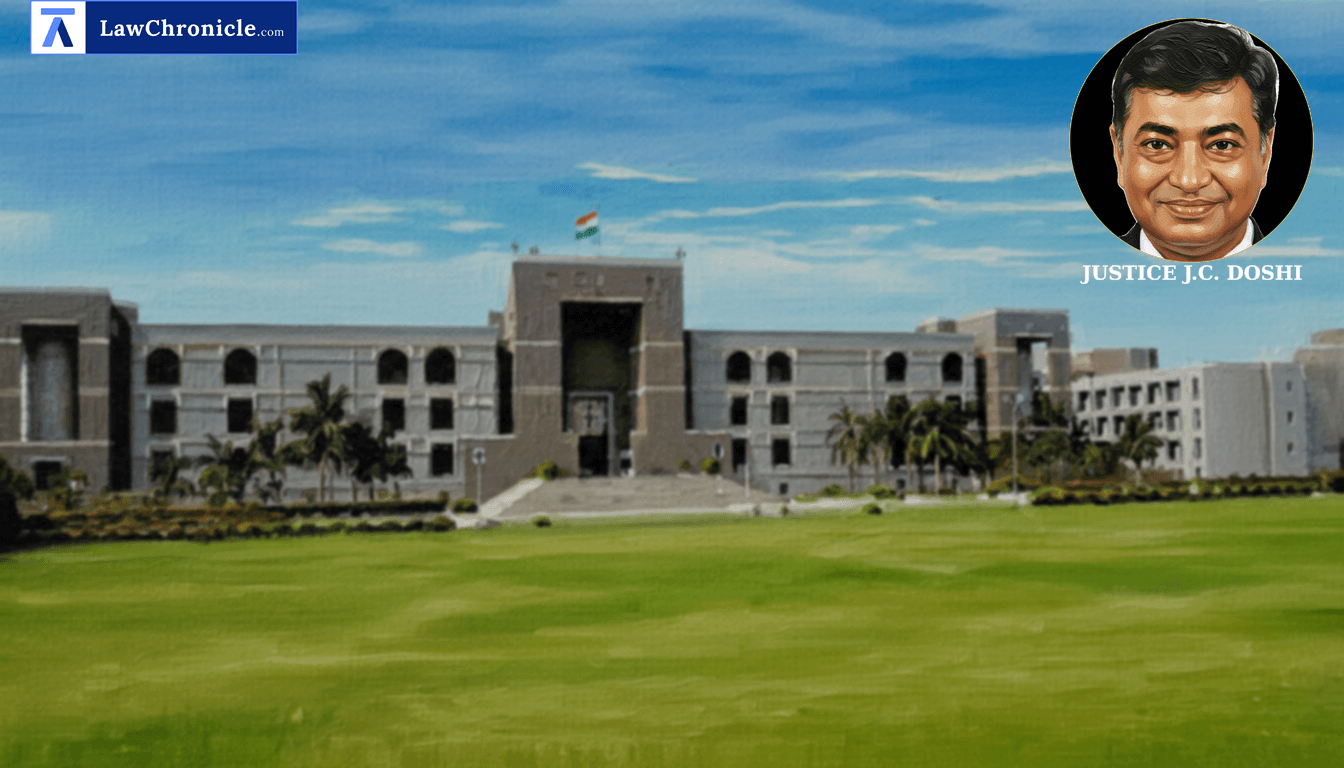
The Gujarat High Court has reinforced the 'pay and recover' principle in motor accident claims, ruling that insurers cannot escape the immediate liability of compensating victims even when statutory policy conditions are breached. By enhancing the compensation for a child's death to a fixed sum of Rs. 5 Lakhs based on Supreme Court precedents, the Court has prioritised the benevolent object of social welfare legislation over technical contractual exonerations.
Justice J. C. Doshi presided over the first appeal challenging a Tribunal's decision that had exonerated the insurance company from liability. The Court was called upon to determine the appropriate quantum of compensation for the death of a minor and whether an insurer could be held liable for a 'gratuitous passenger' in a goods vehicle.
Key Takeaways
Mandatory Pay and Recover
Insurance companies are now explicitly directed to first satisfy the award to third parties or gratuitous passengers and subsequently seek recovery from the owner, ensuring immediate relief to claimants.
Fixed Compensation for Minors
Following the Kishan Gopal Vs. Lala ( "2014(1) SCC 244": 2013 CaseBase(SC) 420) dictum, the Court established that compensation for the death of a child should be a standardized just amount, accounting for the drastic fall in rupee value since 1994.
Shielding the Litigant
By applying the 'pay and recover' doctrine, the Court prevents claimants from being forced into protracted recovery battles against vehicle owners, shifting that burden to the more resourceful insurance entities.
Court Observations and Directions
The Court, in its reasoning, observed: "In the present case, the deceased was travelling in the subject tempo along with Ganesh Idol, which was taken for immersion in Narmada River. Thus, the dominant purpose for hiring the vehicle was not for travelling but for carrying the Ganesh idol for immersion. Travelling in the vehicle was only incidental, therefore, at best, the deceased can be treated as gratuitous passenger travelling with his goods... this Court keeping in view the benevolent object of the Act and other relevant factors arising in the case, issued the directions against the insurance company to pay the awarded sum to the claimants and then to recover the said sum from the insured in the same proceedings by applying the principle of ‘pay and recover’."
The Court has following directions:
"10.2 The judgment of the learned Tribunal is modified to the extent that the claimant/s shall be entitled to the fixed compensation of Rs. 5,00,000/-, together with interest at 7.5% per annum from the date of the claim petition till realization.
10.3 Opponents shall be liable to pay the compensation jointly and severally.
10.4 In the first instance, Opponent No. 3, the insurance company shall first satisfy the award, and shall be entitled to recover the said amount of compensation from Opponent Nos. 1 & 2 by executing this order.
10.5 Rest of the direction(s) of the Tribunal remain same.
10.6 The Tribunal shall disburse the entire awarded amount lying in the FDR and/or with the Tribunal, with accrued interest thereon, if any, to the claimant, by account payee cheque / NEFT / RTGS, after proper verification and after following due procedure."
Ratio
In cases involving the death of a child, the notional income and compensation must be adjusted to reflect modern economic realities as per Kishan Gopal Vs. Lala ( "2014(1) SCC 244": 2013 CaseBase(SC) 420). Furthermore, when a victim is classified as a gratuitous passenger, the insurer is legally bound to satisfy the award in the first instance and subsequently recover the amount from the insured to fulfill the benevolent purposes of the Motor Vehicles Act, 1988.
Background
The dispute arose from a fatal accident on May 6, 1999, when a truck driven in a rash and negligent manner crushed Pravinbhai, who was standing on the roadside. The Motor Accident Claims Tribunal (MACT) had initially granted Rs. 2,65,000/- but exonerated the insurance company, Lata Wadhwa & Ors. V/s. State of Bihar & Ors. ( "(2001) 8 SCC 197": 2001 CaseBase(SC) 276). The appellants challenged this, seeking an enhancement to Rs. 5 Lakhs based on Kishan Gopal Vs. Lala ( "2014(1) SCC 244": 2013 CaseBase(SC) 420) and argued that the insurer must be held liable under the 'pay and recover' principle as established in Kaminiben Versus Oriental Insurance Company Limited ( "2026 LiveLaw (SC) 174": 2026 CaseBase(SC) 4336). The High Court agreed, noting that the deceased was a gratuitous passenger and that the 'pay and recover' doctrine was applicable even if the vehicle was used for a purpose incidental to carrying goods. Consequently, the Court enhanced the award and modified the liability, directing the insurance company to pay the claimants first.
Case Details:
Case No.: R/FIRST APPEAL NO. 2323 of 2017
Neutral Citation: 2026:GUJHC:63193
Case Title: Savitaben Vechatbhai Baria (Koli) & Anr. Versus Ganpatbhai Jhenabhai Chauhan & Ors.
Appearances:
For the Petitioner(s): Mr Makbul I Mansuri
For the Respondent(s): Mr Harshad K Patel for Defendant No. 1, Mr VC Thomas for Defendant No. 3
Source: 2026 CaseBase(GUJ) 29382
Similar Articles
 Breaking News


