Interim Maintenance Can Be Altered Before Trial Completion On Proof Of Change In Circumstances: Kerala High Court
 Copy Link
 Share
Share Save
Save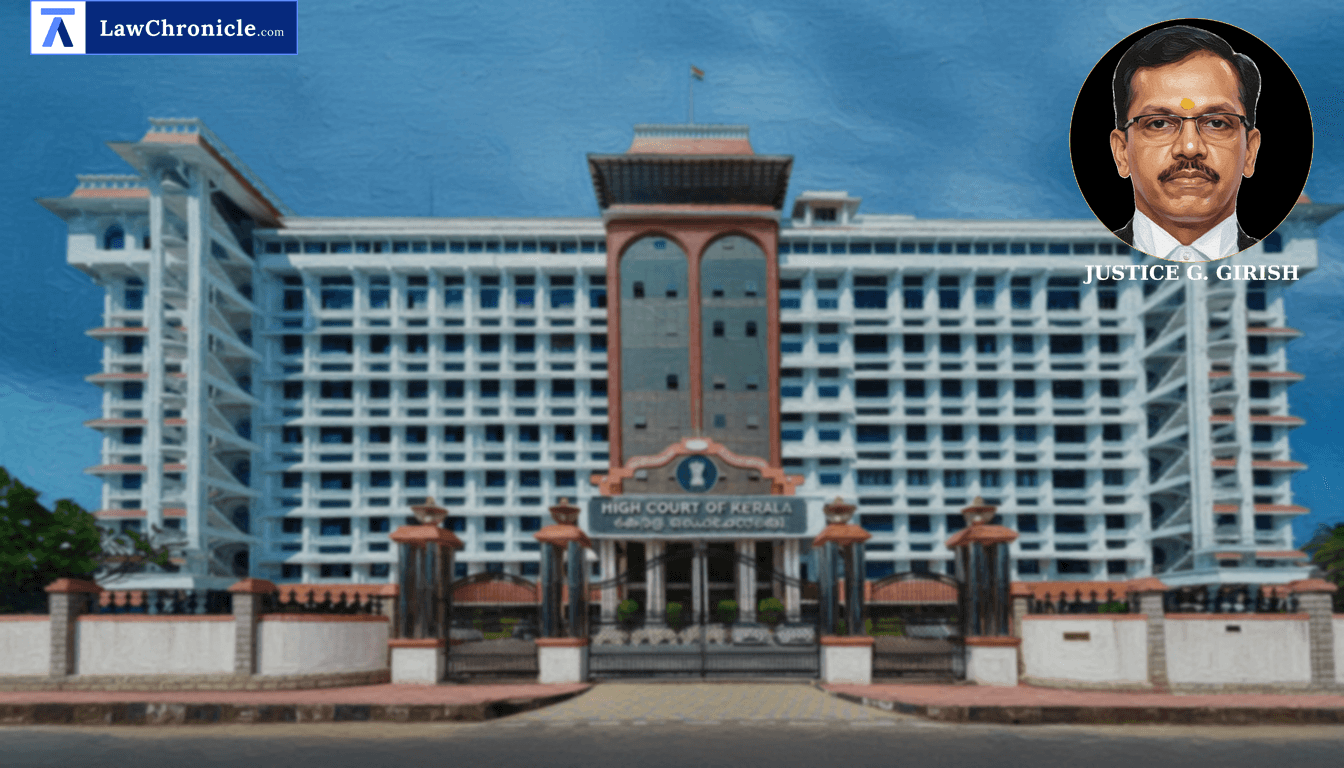
The Kerala High Court has established that there is no legislative embargo on a Family Court to alter interim maintenance allowances before the conclusion of a trial, holding that any clerical error in previous judicial orders cannot override statutory provisions. By correcting a 'piquant situation' where a lower court felt disabled by a previous High Court directive, the Court reaffirmed the flexibility of maintenance laws to respond to shifting financial realities.
Justice G. Girish presided over the hearing, which challenged orders passed by the Family Court, Ernakulam, concerning the enforcement of interim maintenance. The Court scrutinized whether a previous directive requiring payment "until further orders are passed... after trial" could legally preclude a party from seeking modification under Section 127 of the Cr.P.C.
Legal Mandate for Altering Interim Maintenance
During the proceedings, the Court examined the scope of Section 127(1) of the Cr.P.C, noting that the provision explicitly allows for the alteration of allowances for both final and interim maintenance upon proof of change in circumstances. The Family Court had previously dismissed a modification plea, believing itself bound by a High Court order that included the phrase "after trial."
The Court, in its reasoning, observed: "It is clear from the aforesaid provision of law that the alteration of allowance can be made in the case of interim maintenance as well on proof of change of circumstances during the pendency of the proceedings under Section 125 Cr.P.C. When the quantum of interim maintenance is fixed by the Court by looking into the relevant particulars as borne out of the disclosure affidavits and other materials on record, such maintenance will be ordered to be paid to the claimants until that order is modified by the same Court by another order."
Correction of Judicial Error
The High Court clarified that the inclusion of the words "after trial" in the earlier order was likely an accidental error or oversight. It emphasized that such a restriction should not create a situation where statutory rights are curtailed by clerical phrasing.
The Court further noted: "Having regard to the legislative mandate contained in Section 125 Cr.P.C empowering the Court concerned to alter the allowances of interim maintenance subject to the change of circumstances, there cannot be a restriction that such alteration can be done by the Family Court only after trial. Therefore, the restriction in Ext P6 order... which happened due to the inclusion of the words ‘after trial’... can only be taken as an error which accidentally crept in the aforesaid order."
Recovery of Arrears and Limitation Periods
The Bench also addressed the procedural validity of issuing distress warrants for recovery of arrears. Referring to the first proviso to Section 125(3) of the Cr.P.C, the Court reminded the lower judiciary that applications for the levy of maintenance must typically be made within one year from the date the amount becomes due, unless a prior application was already pending.
The Court has the following directions:
"i) Exts.P9 and P14 orders dated 25.01.2019 and 24.02.2026 respectively of the Family Court, Ernakulam, are hereby set aside.
ii) The Court below is directed to afford opportunity to the petitioner to adduce evidence in support of his claim for modification of interim maintenance, and to decide Ext.P7 petition (M.P No.84/2019) afresh, in accordance with law.
iii) Depending on the decision of the Court below on Ext.P7 petition, orders are to be passed in Ext.P10 petition (M.P No.100/2020) on the matter of initiating proceedings for realisation of arrears of interim maintenance.
iv) While deciding Ext.P10 petition, the Family Court shall look into the claim of the first respondent to realise the amounts of interim maintenance, which stood due even beyond the period of one year from the date of that petition, and decide whether it is permissible in view of the interdict contained in the first proviso to Section 125(3) Cr.P.C.
v) Appropriate orders are to be passed by the Court below on realisation of arrears of interim maintenance, if any, from the petitioner, subject to the decision on Exts.P7 and P10 petitions, in accordance with the directions aforesaid."
Key Takeaways
Statutory Primacy Over Clerical Errors
Judicial orders containing inadvertent phrases like "after trial" cannot override the statutory power of courts to alter maintenance under Section 127 of the Cr.P.C.
Change of Circumstances is Paramount
Courts are duty-bound to consider factors like employment of a spouse or the children reaching the age of majority as potential grounds for altering maintenance, even at the interim stage.
Enforcement Subject to Limitation
Distress warrants for maintenance arrears must comply with the one-year limitation period stipulated in Section 125(3) of the Cr.P.C, unless continuity of previous applications is established as per Shanta @ Ushadevi & Anr. v. B.G. Shivananjappa.
Ratio
The power of a Magistrate or Family Court to alter interim maintenance allowances under Section 127(1) of the Cr.P.C on proof of change in circumstances is not restricted to the post-trial stage. Any judicial order purporting to limit this statutory discretion to a post-trial timeframe is to be treated as a correctable error.
Background:
The petitioner, a lawyer, was originally directed to pay Rs. 50,000 each to his wife and daughter. This was later reduced to Rs. 25,000 by the High Court in 2016. The petitioner subsequently sought a modification under Section 127 of the Cr.P.C, alleging that his wife was earning a substantial salary and his own financial position had deteriorated. The Family Court dismissed his plea, asserting that the High Court’s previous order precluded any modification until the trial was complete. Simultaneously, a distress warrant was issued for the recovery of Rs. 4,80,000 in arrears. The High Court, in the present petition, set aside these orders, highlighting the need to interpret maintenance provisions in a manner that allows for adjustments based on factual changes.
Case Details:
Case No.: OP(CRL.) NO. 228 OF 2026
NeutralCitation: 2026:KER:51859
Case Title: Abraham Thomas Puthooran V. Manju Abraham And Anr.
Appearances:
For the Petitioner(s): Shri.M.S.Unnikrishnan, Sri.Aaditya Nair, Smt.M.Ardra Krishnan, Smt.Reshma K., Smt.SmrithI Krishna, Smt.Aysha Abraham
For the Respondent(s): Smt.R.Leela, Shri.Arjun Gopal P., Smt.Aishwarya M. S., Smt.Jahnavi J. Nair, Sri.S.Sreekumar (Sr.)
Source: 2026 CaseBase(KER) 422
 Breaking News