Investigating Agencies Cannot Directly Summon Counsel to Elicit Case Details, Supreme Court Holds
 Copy Link
 Share
Share Save
Save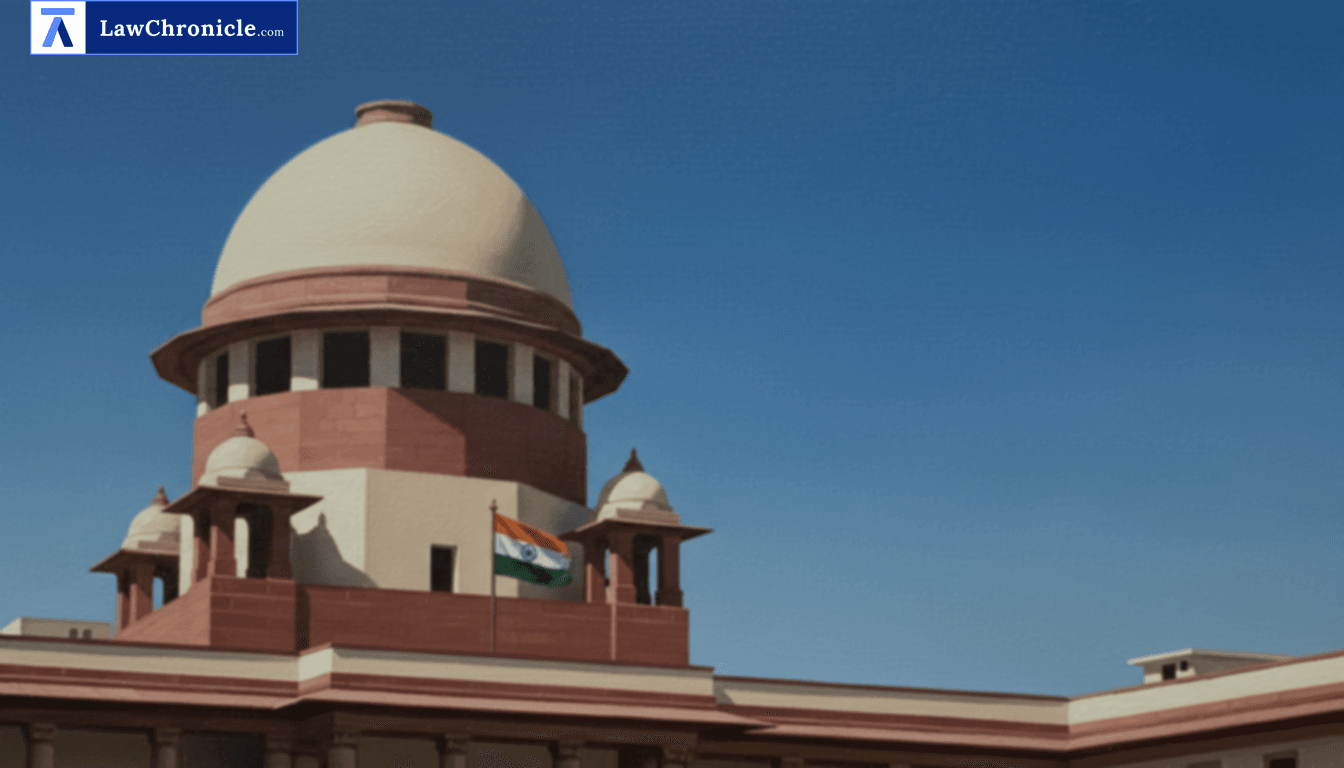
A bench of Chief Justice B. R. Gavai, Justice K. Vinod Chandran and Justice N. V. Anjaria heard a suo motu reference arising from a Special Leave Petition concerning a police notice issued under Section 179 of the Bharatiya Nagarik Suraksha Sanhita, 2023 (BNSS) summoning an advocate who represented an accused. The Court examined whether investigating or prosecuting agencies could directly summon lawyers who gave legal opinions or represented parties during investigation and, if not, what safeguards were necessary.
The Court held that investigating agencies, prosecuting agencies and the police could not directly summon a lawyer appearing in a case to elicit the facts or details of that case except where the facts fell squarely within the statutory exceptions to professional privilege. The Court emphasised the primacy of the advocate–client privilege embodied in the BNSS and aligned with Section 126 of the Evidence Act, and observed that compelling an advocate to disclose privileged communications would impinge on constitutional protections such as the right against self‑incrimination and the right to effective legal representation. The Court, in its reasoning, observed: “On a conspectus of the issues raised, as deliberated upon, we answer the first of the two questions referred to us by a Co‑ordinate Bench of this Court, with an emphatic ‘NO’. The investigating agency/prosecuting agency/the police cannot directly summon a lawyer appearing in a case to elicit the details of the case, unless there is something, the I.O. has knowledge of, which falls under the exceptions, in which case it has to be specifically mentioned in the summons, which the lawyer summoned can challenge under Section 528 of the BNSS.” The Court also quoted the statutory protection: “No Advocate, shall at any time be permitted, unless with his client’s express consent, to disclose any communication made to him in the course and for the purpose of his service as such Advocate…”, and required that any invocation of exceptions be expressly recorded.
Background The dispute arose after an FIR in Ahmedabad led to arrest of an accused; the accused’s counsel obtained regular bail, but the investigating officer issued a notice under Section 179 BNSS directing the advocate’s appearance “to know true details of the facts and circumstances”. The High Court dismissed the advocate’s challenge on the ground that the advocate had not cooperated and the investigation stalled. A two‑judge Bench of this Court referred the matter for consideration of broader questions: whether a lawyer who only had association with a case as counsel could be summoned directly, and whether judicial oversight or a peer‑review mechanism was required before summoning counsel in exceptional cases.
Multiple interventions were filed by the Supreme Court Bar Association, the SCAORA, in‑house counsel associations and the Bar Council of India. Senior counsel for the Bar submitted that Section 132 (BNSS) afforded a client the right to privileged communications and that coercive summons to advocates threatened the administration of justice. The Attorney General and Solicitor General accepted the importance of privilege but argued that statutory provisions already furnished the correct tests and cautioned against creating separate classes or procedures. The Court analysed precedents such as Jacob Mathew and Vishaka, distinguished their factual matrices, and concluded there was no legislative vacuum justifying wholesale guidelines that would derogate from BNSS.
The Court set aside the challenged summons and issued binding directions: (i) an advocate who represented a party could not be summoned to elicit case details unless the summons relied on a specific exception under Section 132; (ii) any such summons required prior written approval of a superior officer not below the rank of Superintendent of Police with recorded reasons; (iii) summonses remained subject to judicial review under Section 528 BNSS; (iv) documents in an advocate’s or client’s custody were not automatically covered by privilege and, where produced, had to be dealt with by the court; (v) production of digital devices required court supervision and the presence of the advocate, client and any technical expert they wished to call; and (vi) full‑time in‑house counsel employed on salary were not entitled to the Section 132 privilege akin to independent advocates.
Case No.: 2025 INSC 1275 (Suo Motu Writ Petition (Criminal) No. 2 of 2025; Writ Petition (Civil) No. 632 of 2025; SLP (Crl.) No. 9334 of 2025) Case Title: In Re: Summoning Advocates who give legal opinion or represent parties during investigation of cases and related issues Appearances: For the Petitioner(s): Mr. Vikas Singh (Senior Counsel, President, Supreme Court Bar Association); Mr. Atmaram N.S. Nadkarni (Senior Counsel, instructed by Mr. Vipin Nair, President, SCAORA); Mr. Siddharth Luthra (Senior Counsel); Mr. Shoeb Alam (Senior Counsel); representatives of the Bar Council of India and various bar associations. For the Respondent(s): Mr. R. Venkataramani (Attorney General for India); Mr. Tushar Mehta (Solicitor General of India); State of Gujarat (through State law officers).
 Breaking News