


Jharkhand High Court Rejects Bid to Review Child Custody Clarification
 Copy Link
 Share
 Save
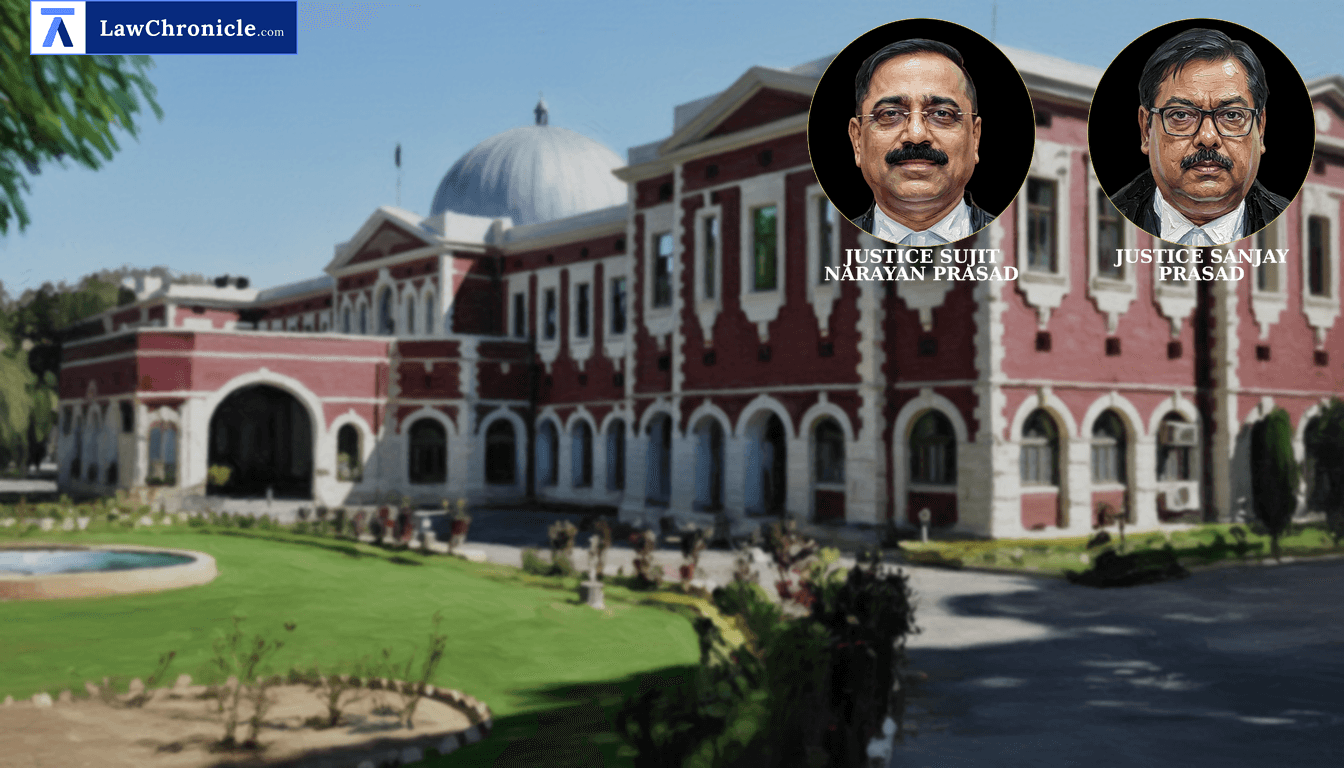
The Jharkhand High Court has slammed the brakes on a husband's attempt to modify an interim custody order, ruling that the filing of repeated applications for the self-same relief under the guise of 'clarification' is legally untenable. The Division Bench emphasized that Constitutional Courts must refrain from imposing rigid time-bound schedules on lower courts, prioritizing the discretion of trial judges in managing their case dockets.
A Division Bench comprising Justice Sujit Narayan Prasad and Justice Sanjay Prasad heard the civil miscellaneous petition filed by the respondent-husband. The petitioner sought a clarification and modification of a previous High Court order that had granted interim custody of his minor daughter to the appellant-mother while guardianship proceedings remained pending.
Key Takeaways
Curbing Procedural Manipulation
Repeatedly filing for the same relief under different labels like 'review' or 'clarification' is not permissible when earlier petitions have been withdrawn without specific leave to re-file for the same cause.
Judicial Restraint in Timelines
Constitutional Courts should generally avoid setting strict time limits for lower courts to dispose of cases, leaving the prioritization of dockets to the concerned trial judges.
Interim Custody Finality
Interim custody arrangements remain binding until the final outcome of the original suit, and parties cannot use alleged non-cooperation as a backdoor to relitigate settled interim issues.
Court Observations and Directions
The Court observed that the husband was essentially seeking a review of the earlier judgment under the garb of Section 151 of the Code of Civil Procedure, 1908. It noted that the petitioner had previously filed and withdrawn a similar petition (C.M.P. No. 597 of 2026) for the same relief, making the current application meritless.
Regarding the petitioner's plea for a time-bound disposal of the pending guardianship suit, the Court reiterated the principles laid down in High Court Bar Association, Allahabad vs. State of Uttar Pradesh & Ors ( "(2024) 6 SCC 267": 2024 CaseBase(SC) 453) and Sangram Sadashiv Suryavanshi Vs. The State Of Maharashtra ( "2024 INSC 899": 2024 CaseBase(SC) 747), which discourage Superior Courts from micro-managing trial schedules.
The Court has the following directions:
"The instant appeal stands allowed. In consequence thereof, the custody of the child is being handed over to the appellant-mother by way of temporary/interim measure, depending upon the final outcome of the suit which is lying pending before the Family Court. Since the suit is pending and, as such, let the learned Additional Family Judge-II, Ranchi decide the suit expeditiously and without granting any unnecessary adjournment. It is made clear that the learned Additional Family JudgeII, Ranchi while adjudicating the issue will not be prejudiced by any part of the order as has been referred herein."
The Court, in its reasoning, observed: "...in the ordinary course, the Constitutional Courts should refrain from fixing a time-bound schedule for the disposal of cases pending before any other Courts. The issue of prioritising the disposal of cases should be best left to the decision of the courts concerned where the cases are pending."
Ratio
Constitutional Courts should refrain from fixing time-bound schedules for sub-ordinate courts except in exceptional circumstances, and a party cannot maintain a second petition for the same relief after withdrawing a prior petition for the self-same cause without obtaining specific liberty to re-approach on the same grounds.
Background
The dispute arose from a matrimonial conflict between the parties married in 2017. A girl child was born in 2021. Following the separation, the mother filed for custody under the Guardians and Wards Act, 1890. Initially, a Family Court in Chapra dismissed the case for lack of territorial jurisdiction under Section 9 of the Guardians and Wards Act, 1890, leading the mother to file Original Suit No. 250 of 2025 in Ranchi.
During the pendency of the suit, the trial court granted only visitation rights to the mother under Section 12 of the Guardians and Wards Act, 1890. The High Court, in an appeal filed under Section 19(1) of the Family Courts Act, 1984, set aside that order on May 15, 2026, granting interim custody to the mother. The husband challenged this before the Supreme Court, which declined to interfere but granted liberty to seek clarification. After withdrawing a previous clarification petition, the husband filed the current C.M.P. No. 994 of 2026, which the Court dismissed as having no merit.
Case Details:
Case No.: C.M.P. No. 994 of 2026
Neutral Citation: 2026:JHHC:30305-DB
Case Title: Ankit Kumar Singh vs. Smt. Megha Singh
Appearances:
For the Petitioner(s): Mr. Rohit Sinha, Advocate; Md. Imran Hassan, Advocate; Mr. Vijay Shankar, Advocate; Mr. Paritosh Rai, Advocate
Source: 2026 CaseBase(JHKD) 3192
Similar Articles
 Breaking News


