Karnataka HC Refuses To Quash FIR For Deceitful Sexual Intercourse Under Section 69 BNS
 Copy Link
 Share
Share Save
Save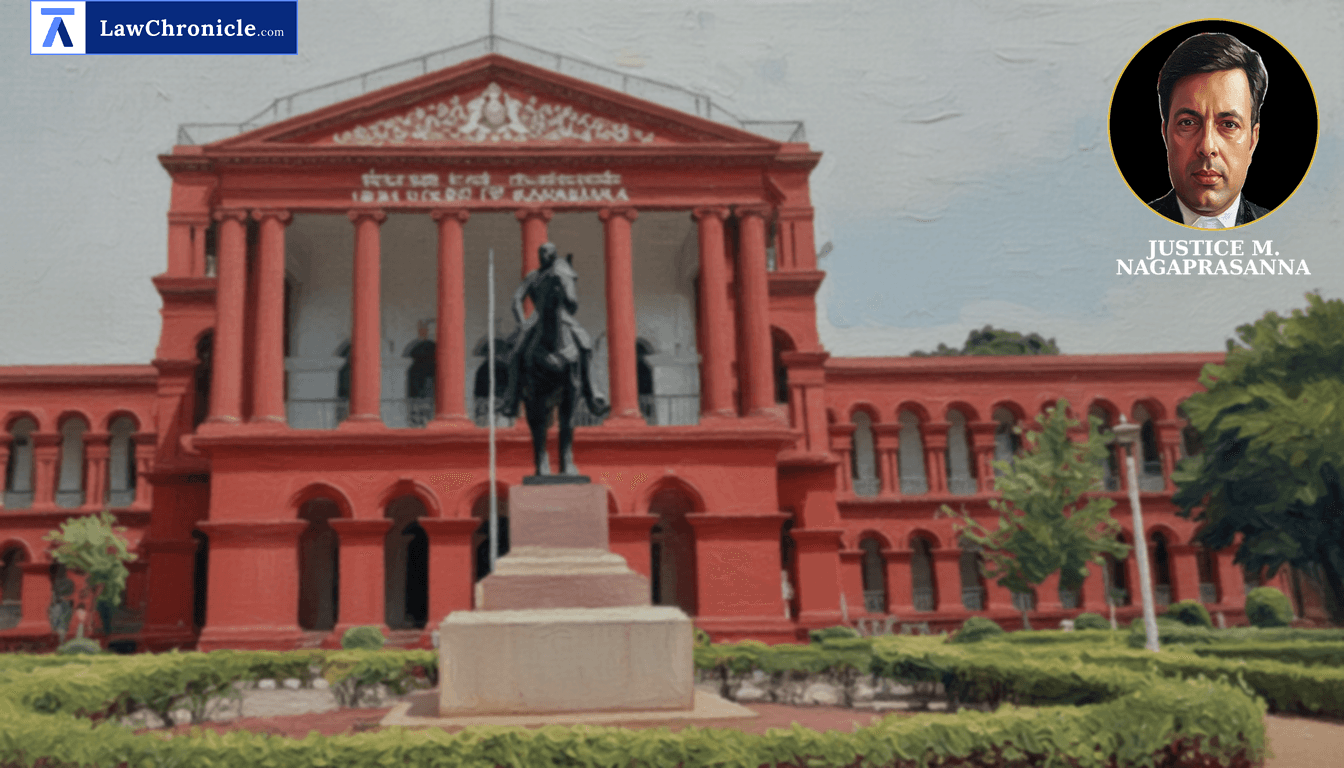
The Karnataka High Court has cleared the path for a full-scale criminal investigation into allegations of sexual intercourse obtained through a false promise of marriage, ruling that seriously contested narratives of deception and consent under the newly introduced Bharatiya Nyaya Sanhita cannot be summarily dismissed. In a significant refusal to exercise its quashing powers, the court emphasized that the veracity of claims involving alleged bait-and-switch marriage promises is a triable issue that must be probed by investigating agencies rather than adjudicated prematurely in writ proceedings.
In a verdict delivered by Justice M. Nagaprasanna, the Court heard a challenge to the registration of a crime for offences punishable under Section 69 and Section 351(2) of the BNS, 2023. The petitioner sought to quash the proceedings initiated by a former colleague, alleging that their relationship was entirely consensual and had merely turned sour after he decided to marry someone else.
The Newly Minted Section 69 of BNS Under Scrutiny
The case marks an early judicial engagement with Section 69 of the BNS, 2023, which specifically criminalizes sexual intercourse by employing deceitful means or by making a promise to marry without the intention of fulfilling it. The Court noted that unlike the old penal regime, this section explicitly recognizes such acts as a distinct offence.
The Court, in its reasoning, observed: "Section 69 of the BNS which is now newly introduced, punishes the person who indulges in sexual intercourse with a woman by employing deceitful means of false promise of marriage. Deceitful means is explained which would include inducement for, or false promise of employment or promotion, or marrying by suppressing identity."
Conflicting Narratives and ‘Sakhi’ Counselling
The Bench examined the sharp contradictions between the parties, particularly noting the complainant's allegations that the petitioner induced her to change jobs with promises of a higher salary and marriage, only to block her after his family opposed the union on caste grounds. Conversely, the petitioner alleged harassment and extortion, claiming the complainant demanded ₹10 lakhs after he rejected her marriage proposal.
The Court found that the involvement of a women’s organization called ‘Sakhi’ and subsequent audio recordings of conversations between the complainant and the petitioner’s parents transformed the case into one involving deeply disputed facts.
Judicial Refusal to Nip Crime in the Bud
Highlighting the limitations of powers under Section 528 of the B.N.SS., the Court relied on the principles laid down in PRADEEP KUMAR KESARWANI v. STATE OF UTTAR PRADESH and KAPTAN SINGH V. STATE OF UTTAR PRADESH ( "(2021) 9 SCC 35": 2021 CaseBase(SC) 1392). It held that when a case is shrouded in seriously disputed questions of fact, the High Court should not interfere at the nascent stage of the crime.
The Court has the following directions:
"Finding no merit in the petition, the petition stands dismissed. Interim order, if any operating, shall stand dissolved. Consequently, I.A.No.2 of 2026 stand disposed. It is made clear that the observations made during the course of this order are only for the purpose of consideration of the case of the petitioner under Section 528 of the BNSS and the same would not bind or influence the FIR and further proceedings pending before the concerned Court."
Key Takeaways
Prima Facie Scrutiny of Deceit
For Section 69 BNS to apply, the court must see if there is evidence of a 'mala fide' motive or a false promise made solely to satisfy lust from the inception.
Limits of Quashing Power
High Courts will not exercise inherent powers to quash an FIR when the case involves contested audio transcripts and conflicting affidavits that require police investigation.
BNS vs IPC Transition
The judgment highlights the shift from the Indian Penal Code 1860 to the BNS, 2023, noting that having sexual intercourse on a false promise is now a specifically recognized statutory offence.
Evidentiary Value of Post-FIR Conduct
Conduct during the pendency of a petition, such as participation in conciliation or subsequent physical encounters, becomes a material factor in determining whether to allow an investigation to continue.
Ratio
Where a criminal complaint alleging deceitful sexual intercourse under Section 69 of the BNS, 2023 is supported by contested facts, audio recordings, and conflicting narratives regarding the genuineness of a marriage promise, the High Court shall not invoke its inherent powers to quash the FIR, as such matters constitute triable issues requiring formal investigation.
Background:
The dispute arose from a relationship between two former colleagues. The complainant alleged that the petitioner promised marriage, leading to a physical relationship, but later reneged and got her terminated from her job. The petitioner countered by filing an NCR alleging extortion and claiming the relationship was consensual without a promise of marriage. While the petitioner relied on his impending marriage to another woman as evidence of his clean hands, the complainant produced audio transcripts suggesting the marriage invitation might not be genuine. The Court concluded that these factual disputes could only be resolved through a thorough probe by the Investigating Officer.
Case Details:
Case No.: Criminal Petition No.743 Of 2026
Case Title: Chetan M.N. V. The State Of Karnataka And Another
Appearances:
For the Petitioner(s): Smt. Keerthi Krishna Reddy, Advocate
For the Respondent(s): Smt.Waheeda M.M., HCGP For R-1; Sri Shravan Madhav K.P., Advocate For R-2
Source: 2026 CaseBase(KAR) 243
 Breaking News