Karnataka Hijab Ban Ends: Govt Takes a U-Turn on Religious Attire
 Copy Link
 Share
Share Save
Save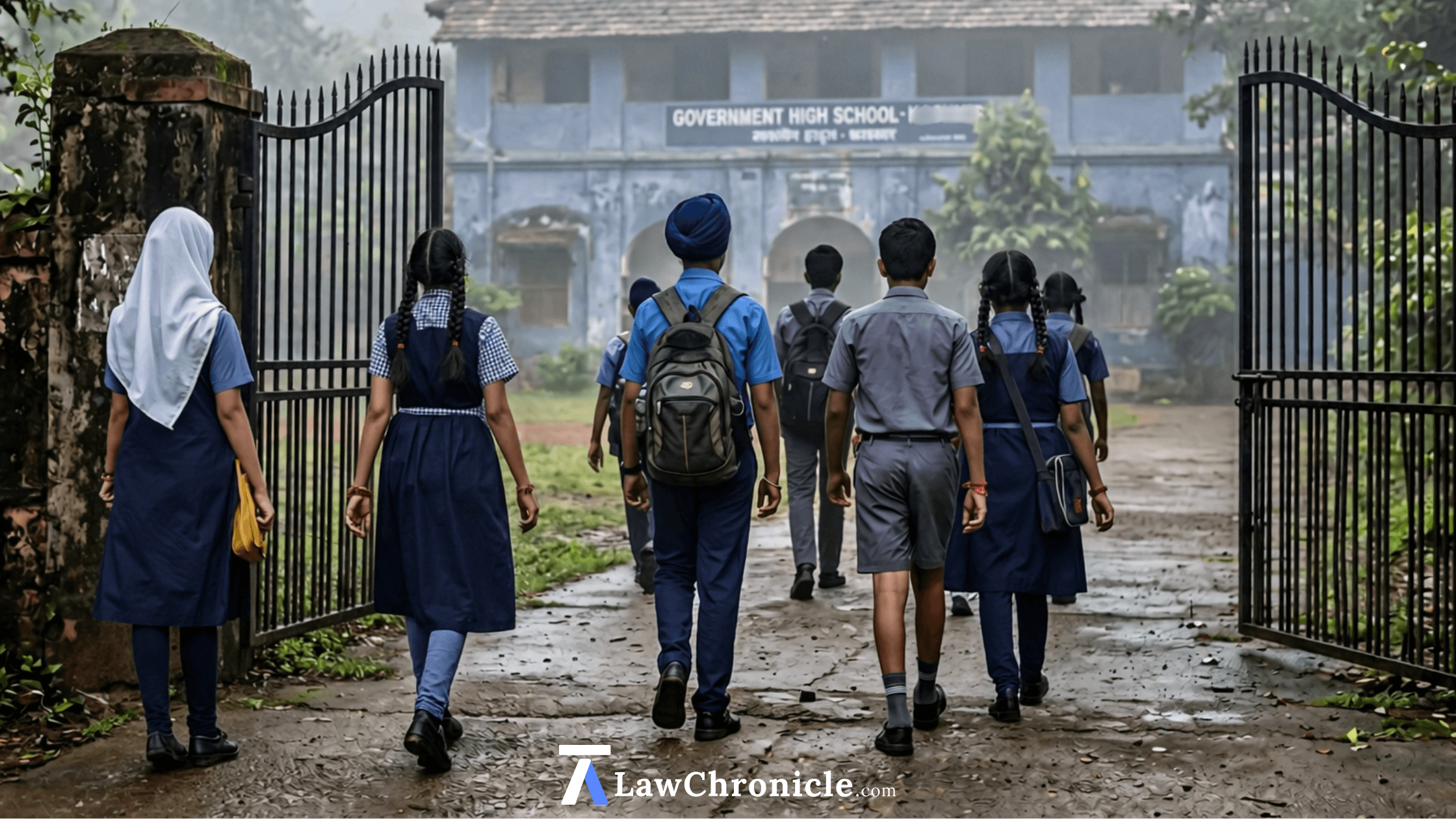
The Government of Karnataka has issued a crucial order dated 13th May, 2026, signaling a major policy shift regarding the dress code in the state's educational institutions. This marks a reversal from Karnataka Hijab ban in 2022, which had paved the way for a deeper controversy in Karnataka and other places as well. This new directive officially moves away from previous restrictions on religious attire, focusing instead on inclusivity and the constitutional right to education.
2022 Uniform Mandate Withdrawn
The major policy change communicated on 13th May is the formal withdrawal of the Government Order issued on 5th February, 2022 (Order No. ED 141 LGE 2022). The previous 2022 order had served as the basis for Hijab ban in Karnataka schools and pre-university colleges, citing the need for uniformity and public order. By withdrawing that order, the government has effectively removed the legal barrier that prevented students from wearing religious headscarves.
Karnataka Order on religious Attire: Key Directions
1. Rescission of the Order
- The Government Order No. ED 14 SHH 2022 dated 05.02.2022 stands withdrawn with immediate effect.
2. Prescribed Uniform to Continue
- All government schools, government-aided educational institutions, private schools, pre-university colleges, and other such institutions must continue to enforce the prescribed uniform as directed by the competent authority. Institutions must not relax or abandon the prescribed uniform requirement.
3. Religious and Traditional Markers Permitted, With Conditions
- Students are permitted to wear limited religious or tradition-based markers in addition to the prescribed uniform. However, such markers:
- Must complement the prescribed uniform, not replace or undermine it.
- Must not conceal the student's face, obstruct identification, or compromise security.
- Must not be used as a ground or pretext to deviate from the prescribed uniform.
4. Specifically Permitted Items
The order explicitly lists the categories of markers that are permitted under this dispensation:
- Peta / Turban (headgear)
- Janivara / Sacred Thread (janivara is the sacred thread worn by some Hindu communities)
- Shivadara (a thread or cord worn in certain Hindu traditions)
- Rudrakshi (beads associated with Hindu religious practice)
- Headscarf / Hijab (headscarf worn by Muslim women)
- Any other religious or traditional marker of a similar nature
5. No Student to Be Denied Entry or Participation
- No student wearing any of the above permitted markers shall be denied:
- Admission to an educational institution,
- Entry to the classroom or campus,
- Access to examinations or any academic assessment, or
- Participation in any curricular or co-curricular activity.
6. No Coercion Either Way
- No student shall be compelled to wear any such religious or traditional marker against their will. Equally, no student shall be compelled not to wear a permitted marker. However, the order clarifies that for examinations, the applicable dress code rules prescribed by the State and national-level examination authorities shall apply, and the relevant authorities may enforce those rules during examination settings.
7. Non-Discrimination and Uniform Implementation
- The order directs that its implementation must be uniform across all institutions, free from any religious, communal, or caste-based discrimination. School Development and Monitoring Committees (SDMCs), College Development Committees (CDCs), management bodies, heads of institutions, and all concerned officials are directed not to discriminate against any student on grounds of religion, caste, or community. All such bodies are directed to adopt an inclusive, non-prejudicial approach — the order specifically invokes the principle of treating all students as "ours" (Iva Nammave).
8. Earlier Contrary Directions Cancelled
- Any circular, order, resolution, or institutional direction that is inconsistent with this order stands cancelled.
Specific Provisions for Hijab and Headscarves
The 2026 order provides explicit instructions regarding the wearing of religious garments, reversing Karnataka Hijab ban of 2022:
- Permit for Hijab: Students are now permitted to wear religious or cultural attire, specifically mentioned as the Hijab or Headscarf, in addition to the prescribed school uniform.
- Prohibition of Discrimination: The order strictly forbids educational institutions from discriminating against, harassing, or humiliating students who choose to wear such attire.
- Ensuring Access to Education: School authorities are directed to ensure that no student's education is hindered due to their choice of religious or cultural dress.
Focus on Constitutional Values and Inclusivity
The Karnataka government emphasizes that this policy change is designed to uphold the constitutional values of equality, fraternity, dignity, and secularism. The order references the inclusive philosophy of the social reformer Basavanna, specifically the sentiment of "Iva Nammava" (He/She is one of us), to encourage an environment where every student feels welcome.
Compliance and Implementation
To ensure the new policy is enacted effectively:
- Nullification of Previous Rules: Any institutional rules, circulars, or notices that contradict this new government order are declared null and void. This particularly includes the order of Hijab ban in Karnataka in 2022.
- Administrative Oversight: The Commissioner of the Department of School Education and Literacy and the Director of Pre-University Education are responsible for overseeing the implementation of these instructions throughout the state.
- Role of Management Committees: School Development and Monitoring Committees (SDMCs) and College Development Committees (CDCs) are tasked with ensuring that the transition is smooth and that students are not subjected to any form of bias.
This development marks a significant turn in Karnataka's educational policy, prioritizing the integration of diverse cultural identities within the academic framework.
Background: Karnataka Hijab Ban 2022 Controversy
The government order dated 5th February, 2022 required students in government schools, aided institutions, private schools, and pre-university colleges to adhere strictly to the prescribed uniform. This resulted in effectively prohibiting religious attire such as the hijab in classrooms. The order ignited a sharp public and legal controversy across Karnataka, with Muslim students and their families challenging the restriction.
The matter was taken up by the Karnataka High Court, which upheld the ban in March 2022. The High Court held that wearing the hijab was not an essential religious practice. The case subsequently reached a two-judge bench of the Supreme Court of India in Aishat Shifa vs The State Of Karnataka & Ors. (2022 CaseBase(SC) 453).
The Bench was presided over by then Chief Justice of India D.Y. Chandrachud, which in October 2022 delivered a split verdict, leaving the High Court's order in force pending further consideration. The controversy remained unsettled until the present order.
 Breaking News