Landlord's Bona Fide Need to Install Ultrasound Machine Upheld; Eviction Decree Restored
 Copy Link
 Share
Share Save
Save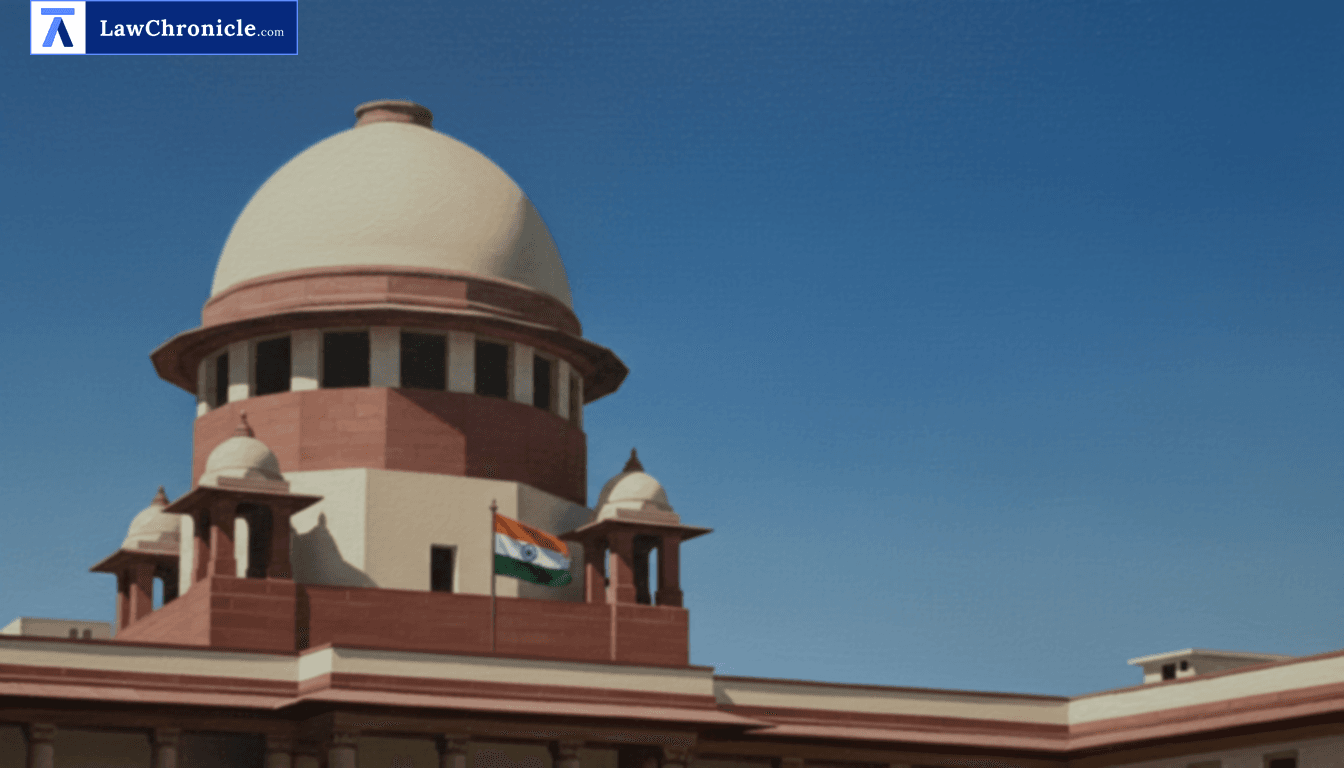
A bench of Justices Pankaj Mithal and Nongmeikapam Kotiswar Singh heard an appeal arising out of an order of the Jharkhand High Court in a dispute concerning eviction of tenants from a house in Chatra Municipality. The appeal challenged the High Court’s affirmation of the First Appellate Court’s refusal to uphold the trial court’s decree of eviction based on the landlord’s pleaded bona fide need to establish an ultrasound machine for his two unemployed sons.
The Supreme Court allowed the appeal and restored the trial court’s finding on bona fide need, set aside the judgments of the High Court and the First Appellate Court, and decreed the suit for eviction. The Court held that the landlord had established both capacity and a real need for the premises, observing that the property was “the most appropriate place” for the proposed medical installation due to its proximity to a clinic and pathology centre, and that the landlord had proved his ability to procure the equipment and that his sons were unemployed. The Court, in its reasoning, observed: "The law with regard to eviction of a tenant from the suit premises on the ground of bona fide need of the landlord is well settled. The need has to be a real one rather than a mere desire to get the premises vacated. The landlord is the best judge to decide which of his property should be vacated for satisfying his particular need. The tenant has no role in dictating as to which premises the landlord should get vacated for his need alleged in the suit for eviction." The Court further noted that it was not necessary for the landlord’s sons themselves to possess technical expertise to run an ultrasound machine, since such machines were ordinarily installed and operated with the help of technicians or medical experts.
Background
The dispute arose when the appellant-landlord filed Eviction Suit No.25/2001 seeking possession on grounds of default of rent and, principally, bona fide need to set up an ultrasound machine for his two unemployed sons. The trial court on 15.07.2006 decreed eviction on the ground of bona fide need, while dismissing the suit insofar as default of rent was concerned; the landlord did not challenge the latter dismissal, leaving only the bona fide need issue before the Supreme Court. The First Appellate Court reversed the trial court’s decree and the High Court at Ranchi affirmed that reversal in Second Appeal No.317/2006 (order dated 18.08.2022), prompting the present appeal.
At trial the landlord adduced oral and documentary evidence of annual income (stated at Rs.4,00,000), proof of capacity to purchase the equipment, and the suitability of the suit premises because of adjacency to medical establishments. The respondents-tenant contended that an earlier proceeding — Eviction Suit No.11/1981 culminating in a compromise in Second Appeal No.40/1983 (compromise dated 20.03.1988) — had secured their tenancy of three reconstructed pucca rooms “in perpetuity,” and argued that the landlord had other available accommodation and had misapplied an earlier partial eviction by re-letting the vacated portion. The respondents also pointed to the absence of proof that the landlord’s sons had expertise to run an ultrasound machine.
The Supreme Court examined settled principles on bona fide need, held that the landlord was the best judge to choose which of his properties to seek to vacate for his need, and found the trial court’s factual findings — regarding proximity to a clinic and pathology centre and the landlord’s capacity to procure equipment — to be plausible. The Court rejected the submission that the earlier compromise barred subsequent eviction proceedings, noting that the compromise contained “no clause in the compromise deed which stipulates that the appellant-landlord will not initiate any proceeding for eviction against the respondents-tenant in future.” The Court concluded that the landlord’s need had to be assessed as on the date of filing (28.11.2001) and that the appellant had established a bona fide need. Consequently, the appeal was allowed and the suit was decreed; no interim directions or further liberties were recorded.
Case Details: Case No.: 2025 INSC 271 (Arising out of SLP (C) No. 21965 of 2022) Case Title: Kanahaiya Lal Arya v. Md. Ehshan & Ors. Appearances: For the Petitioner(s): Smt. Reshmi Rea Sinha, learned counsel For the Respondent(s): Shri Ardhendumauli Kumar Prasad, learned senior counsel
 Breaking News