Licensing Authorities Cannot Refuse Orchestra Permits On Vague Law And Order Grounds: Bombay HC
 Copy Link
 Share
Share Save
Save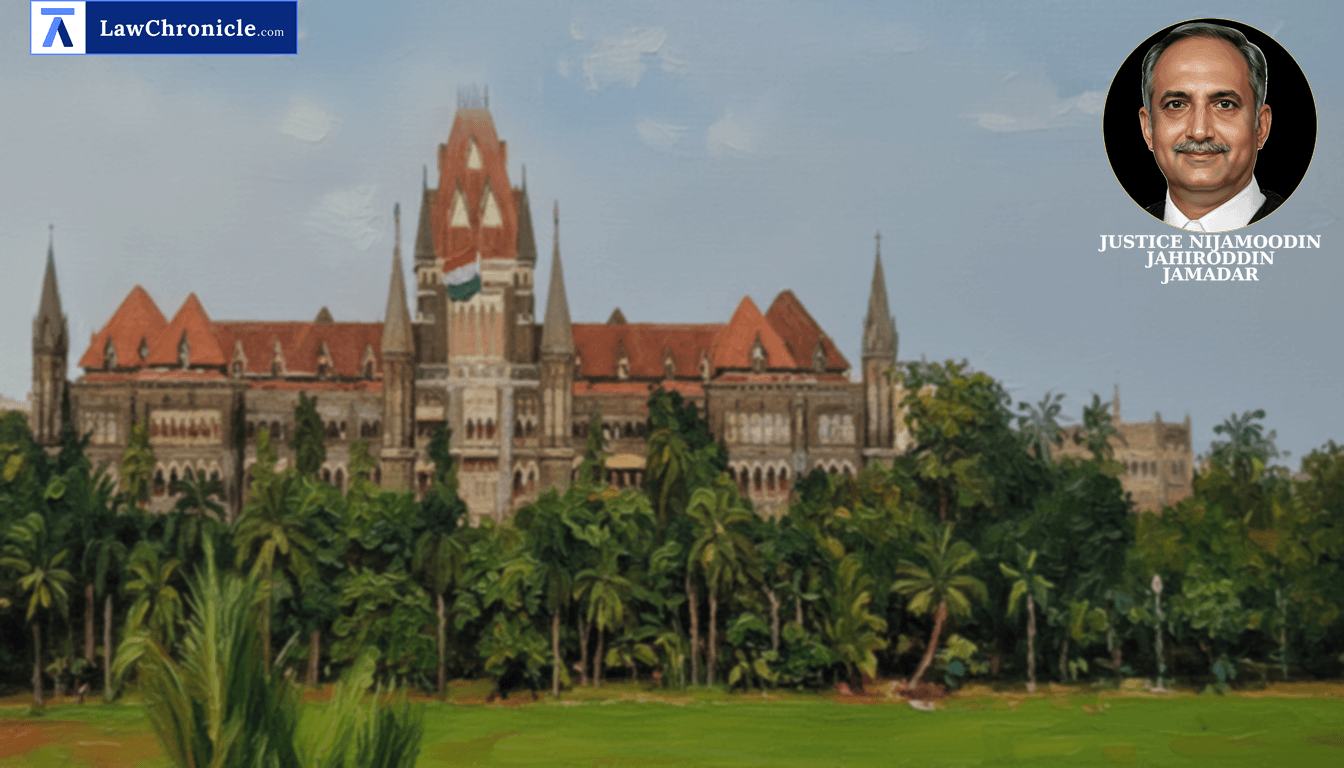
The Bombay High Court has delivered a stinging rebuke to executive overreach, ruling that the State cannot throttle the fundamental right to business by citing unsubstantiated 'law and order' concerns to deny orchestra licences. Striking down a 'bald' refusal order, the Bench established that police discretion must be anchored in objective material, effectively preventing authorities from using subjective morality to bypass statutory frameworks.
Justice N. J. Jamadar heard a challenge against the concurrent refusal of an entertainment licence for a Mumbai-based hospitality firm. The Petitioner, a private limited company incorporated under the Companies Act, 2013, sought to operate a live music orchestra at its establishment under the Maharashtra Police Act, 1951 and the Rules for Licensing And Controlling Places of Public Amusements (Other Than Cinemas) And Performances For Public Amusement, Including Cabaret Performances, Discotheque, Games, Pool Game Parlours, Amusement Parlours Providing Computer Games, Virtual Reality Games, Cyber Cafes, Games With Net Connectivity Bowling Alleys, Card Rooms, Social Clubs, Sports Clubs, Melas And Tamashas Rules, 1960.
Key Takeaways
Curbing Administrative Arbitrariness
Authorities cannot reject licence applications based on mere ipse dixit or vague apprehensions without disclosing specific adverse material.
Supremacy of Statutes Over Circulars
Executive instructions or government circulars cannot be used to supplant or override existing statutory rules and licensing regimes.
Fundamental Right to Trade
As long as an activity like live music is regulated and not declared criminal by the legislature, the State cannot prohibit it under the guise of 'social control' or subjective morality.
Mandatory Reasoned Orders
Refusal of performance licences under residuary grounds necessitates recorded, objective reasons to satisfy the requirements of Article 14.
The Requirement of Objective Material for License Refusal
The Bombay High Court analyzed the Rules for Licensing And Controlling Places of Public Amusements (Other Than Cinemas) And Performances For Public Amusement, Including Cabaret Performances, Discotheque, Games, Pool Game Parlours, Amusement Parlours Providing Computer Games, Virtual Reality Games, Cyber Cafes, Games With Net Connectivity Bowling Alleys, Card Rooms, Social Clubs, Sports Clubs, Melas And Tamashas Rules, 1960, particularly Rule 110 and Rule 120, which grant the Licensing Authority power to refuse permits. It noted that while the Deputy Commissioner of Police (R1) claimed the grant of a licence would disturb 'social harmony,' no evidence was provided to support this claim, especially when the local police station's site report was favorable. The Bench observed that the exercise of discretion is not unbridled and must be regulated by the rules.
The Bombay High Court observed that "A mere ipse dixit of the Competent Authority that the grant of licence may lead to a law and order problem, without anything more, cannot be sustained. The refusal of licence without there being objective material to bring the case within the categories under which the Competent Authority is empowered to refuse the licence, would thus fall foul of the principles of reasonable and non-arbitrary exercise of power by the instrumentalities of the State."
Constitutional Protection and State Morality
Referring to the precedent in Shivaji Sambu Waghralkar Vs Commissioner of Police, Navi Mumbai, Maharashtra and Anr and State of Punjab Vs Devans Modern Breweries Ltd ( "(2004) 11 SCC 26": 2003 CaseBase(SC) 652), the Court reiterated that once a business is permitted under statutory enactments, the State cannot take exception to it based on evolutionary societal norms. The Bombay High Court emphasized that health, safety, and welfare are matters for the legislature to define, and regulatory statutes must conform to Clause (6) of Article 19 of the Constitution of India. The Bench also relied on Hotel Priya, A Proprietorship Vs State of Maharashtra and Ors ( "2022 SCC OnLine SC 204": 2022 CaseBase(SC) 585) to set aside gender-based or stereotypical restrictions on performers.
Ratio
The Licensing Authority's discretion to refuse a premises or performance licence under the Rules for Licensing And Controlling Places of Public Amusements (Other Than Cinemas) And Performances For Public Amusement, Including Cabaret Performances, Discotheque, Games, Pool Game Parlours, Amusement Parlours Providing Computer Games, Virtual Reality Games, Cyber Cafes, Games With Net Connectivity Bowling Alleys, Card Rooms, Social Clubs, Sports Clubs, Melas And Tamashas Rules, 1960 is not absolute; any refusal based on 'law and order' concerns must be supported by objective, disclosed material. Executive instructions or circulars cannot supplant statutory rules, and the State cannot impose its own notions of morality to restrict the fundamental right to carry on a lawful trade or occupation under Article 19(1)(g) of the Constitution of India.
Background
The dispute began when Alanzo Trademart Pvt Ltd applied for a performance licence for its 'Magmus Bar and Restaurant' in Khar. Despite a 'No Objection Certificate' from the Senior Police Inspector confirming compliance with all safety and zoning norms, the Deputy Commissioner of Police rejected the application on October 10, 2025. This was upheld by the Divisional Commissioner, Konkan Division, who cited a government circular dated July 27, 2026, which restrained the issuance of fresh orchestra licences.
The State also attempted to justify the refusal by citing past criminal cases against the directors, which the Bombay High Court found had already been quashed by the High Court. The Bench concluded that the authorities had progressively 'invented' reasons to justify an initially arbitrary decision. Consequently, the High Court quashed both the original and appellate orders, directing the immediate issuance of the licence.
Case Details:
Case No.: WRIT PETITION NO. 8118 OF 2026
Neutral Citation: 2026:BHC-AS:37966
Case Title: Alanzo Trademart Pvt Ltd Vs The Deputy Commissioner of Police & Anr.
Appearances:
For the Petitioner(s): Mr. Bernardo Reis, with Pratik Dixit, i/b Parampara Mistry
For the Respondent(s): Smt. V. R. Raje, AGP for State
Source: 2026 CaseBase(BOM) 5660
 Breaking News