Liquidated Damages Clause in Contract doesn't bar Specific Performance: Himachal Pradesh HC
 Copy Link
 Share
Share Save
Save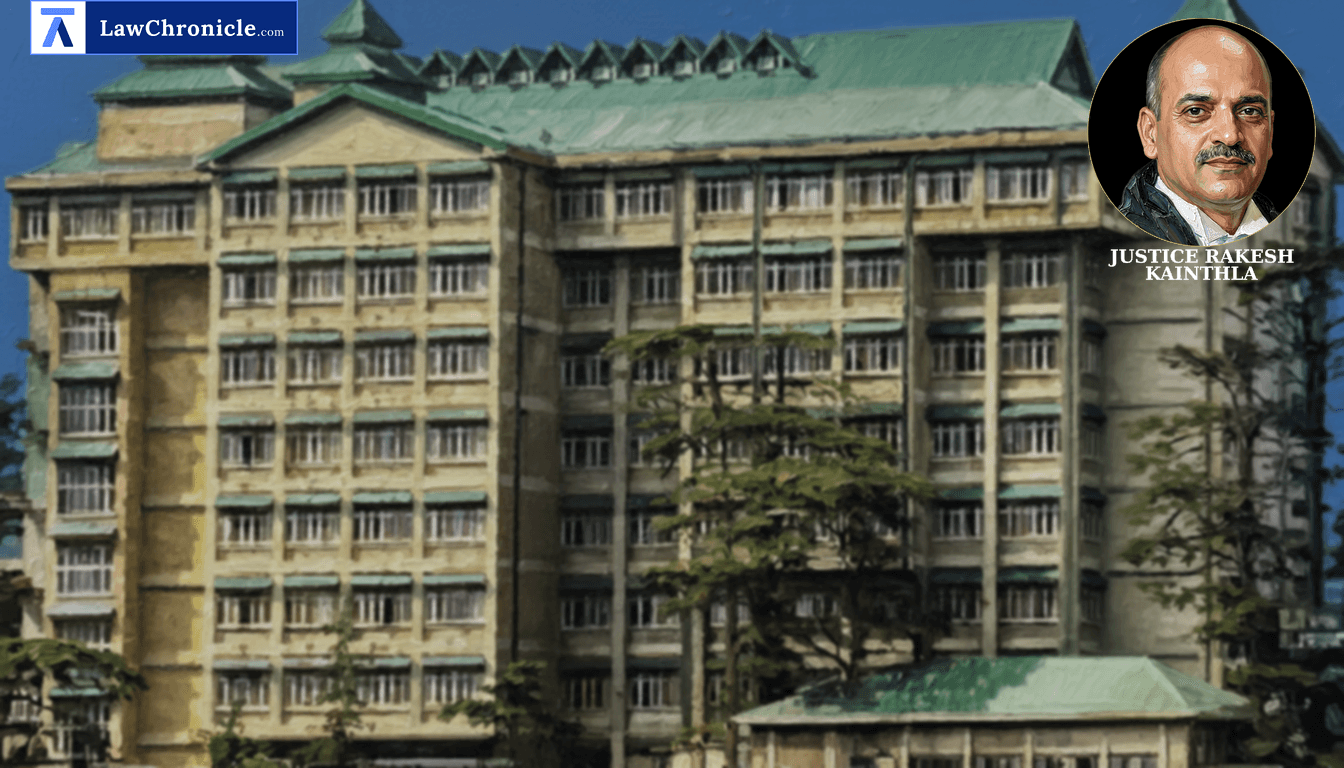
Liquidated damages clause in contract provide for payment of damages or double earnest money. Himachal Pradesh Court has clarified that upon default, Courts cannot decline specific performance of contract due to liquidated damages clause, unless it explicitly grants an option to pay money in lieu of performance.
In a matter challenging concurrent findings of the lower courts, Justice Rakesh Kainthla upheld the decree of specific performance granted to the prospective buyers, reiterating that a penal clause for breach is meant to secure performance rather than extinguish equitable rights.
Specific Performance vs Liquidated Damages Clause in Contract
The HP High Court examined whether a liquidated damages clause in contract/agreement to sell disentitles a buyer from enforcing specific performance under the Specific Relief Act, 1963.The Court reasoned that "...for a plaintiff to seek specific performance of a contract of sale relating to immovable property, and for a court to grant such specific performance, it is not necessary that the contract should contain a specific provision that in the event of breach, the aggrieved party will be entitled to specific performance. The Act makes it clear that if the legal requirements for seeking specific enforcement of a contract are made out, specific performance could be enforced as provided in the Act even in the absence of a specific term for specific performance in the contract. It is evident from Section 23 of the Act that even where the agreement of sale contains only a provision for payment of damages or liquidated damages in case of breach and does not contain any provision for specific performance, the party in breach cannot contend that in view of specific provision for payment of damages, and in the absence of a provision for specific performance, the court cannot grant specific performance."
Understanding Liquidated Damages Clause
Analyzing Section 23 of the Specific Relief Act, 1963, the Court held that naming a sum in case of breach serves to secure performance, relying on Man Kaur v. Hartar Singh Sangha ( "(2010) 10 SCC 512 : (2010) 4 SCC (Civ) 239: 2010 SCC OnLine SC 1125": 2010 CaseBase(SC) 1401), Kamal Kant Jain v. Surinder Singh, and Jaspal Singh v. Ashwani Kumar ( "2026 SCC OnLine SC 1332": 2026 CaseBase(SC) 656). Distinguishing cases where parties explicitly reserve an option to substitute money for performance, the Himachal Pradesh High Court reaffirmed that mere mention of liquidated damages clause in contract cannot bar statutory relief.
On procedural aspects, the Himachal Pradesh HC observed that clubbing interconnected issues together for discussion does not vitiate a judgment, referencing Hiru vs. Mansa Ram and Jagat Singh vs. Shanti Swaroop under Order 20 Rule 5 of the Code of Civil Procedure, 1908. Furthermore, relying on Russi Fisheries (P) Ltd. v. Bhavna Seth and A. Shahul Hameed v. N. Malligarjuna ( "2026 SCC OnLine SC 969": 2026 CaseBase(SC) 491), the Court reiterated that concurrent findings of fact recorded by lower courts cannot be re-appreciated in a second appeal under Section 100 of the Code of Civil Procedure, 1908 unless shown to be perverse.
Key Takeaways
- Security vs Option: Liquidated damages clause in contract for sale of property are construed as deterrents against breach, not as exit options, unless explicitly stated.
- Absence of Specific Clause: The lack of an express term granting the right to seek specific performance does not disentitle a party from claiming equitable relief under the Specific Relief Act, 1963.
- Order 20 Rule 5 CPC Compliance: Courts are permitted to club interconnected issues during trial without rendering the judgment legally defective.
- High Court's Limited Scope in Second Appeal: Concurrent findings on factual claims like fraud cannot be re-examined under Section 100 of the Code of Civil Procedure, 1908 without demonstrated perversity.
Ratio
Under Section 23 of the Specific Relief Act, 1963, a stipulation in an agreement to sell providing for payment of liquidated damages or forfeiture of double earnest money upon breach is presumed to be added to secure performance of the contract. Liquidated damages clause does not bar a suit for specific performance unless the agreement explicitly gives the defaulting party an option to pay money in lieu of performance.
Background:
The dispute originated from an agreement to sell executed on November 10, 2003, where the defendant agreed to transfer suit land to the plaintiffs for ₹2,75,000/-, receiving ₹75,000/- as earnest money. Execution of the sale deed was subject to approval from the Town and Country Planning Department, which was granted on February 8, 2005. Upon the defendant's refusal to execute the deed for the agreed sum and demand for ₹3,75,000/-, the plaintiffs filed a civil suit for specific performance.
The trial court decreed the suit in favor of the plaintiffs, holding that the agreement was duly proved and the plaintiffs were ready and willing to perform their obligations. The First Appellate Court affirmed this decree. In the second appeal before the High Court, the defendant argued that the liquidated damages clause in contract providing for double the earnest money excluded specific performance. It was claimed that issues were improperly clubbed, and that the contract was obtained fraudulently. Rejecting all contentions, the High Court dismissed the Regular Second Appeal.
Case Details:
Case No.: RSA No. 46 of 2013
Neutral Citation: 2026:HHC:31965
Case Title: Ratto Ram (since deceased) through his LRs. v. Manmohan Lal (since deceased) through his LRs and another
Appearances:
For the Petitioner(s): M/S Mohinder Verma and Sumit Sharma, Advocates.
For the Respondent(s): M/S Atul Aggarwal and Anu Tuli, Advocates.
Source: 2026 CaseBase(HP) 3652
 Breaking News