


Litigants Cannot Throw Entire Blame On Lawyer For Delay: Gujarat HC
 Copy Link
 Share
 Save
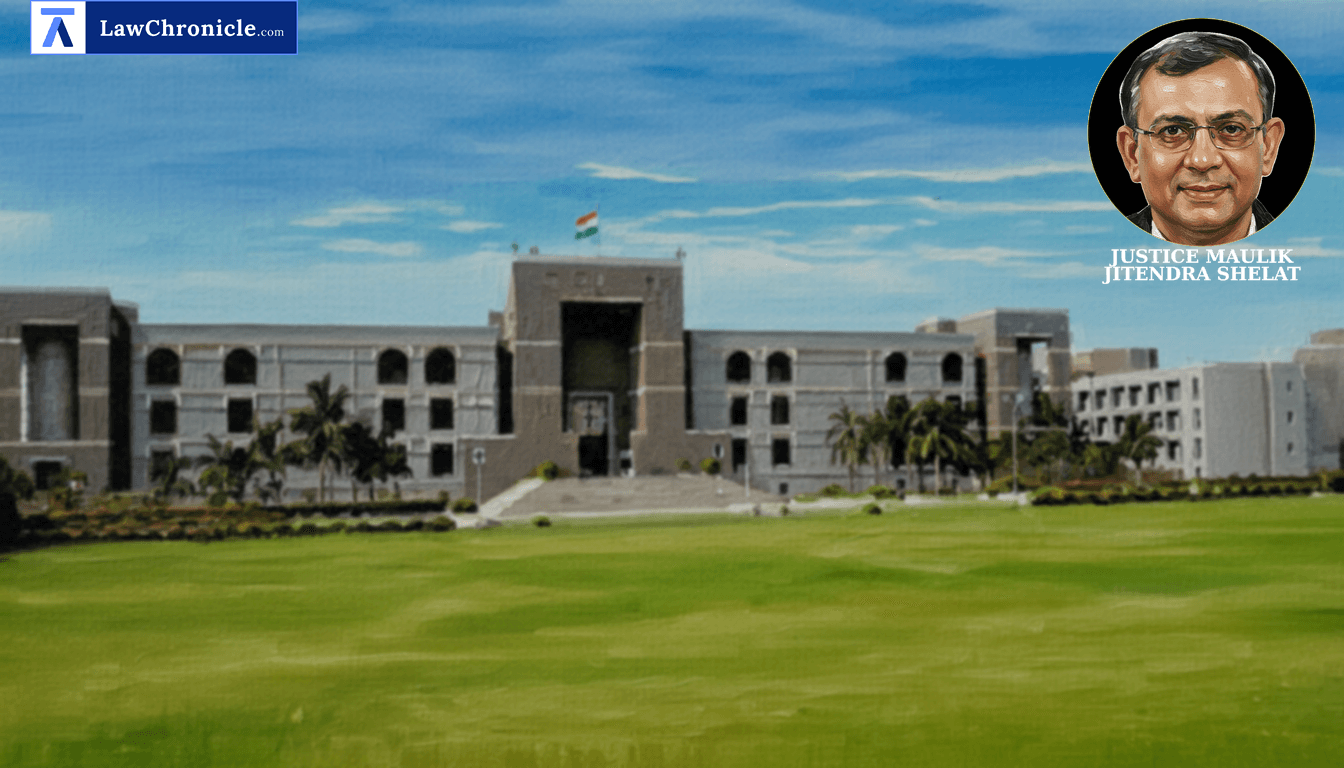
The High Court of Gujarat has reinforced the principle that litigants owe a duty to be vigilant of their own rights and cannot escape the consequences of inordinate delay by merely blaming their legal counsel. The court held that while the term 'sufficient cause' warrants a liberal construction, it cannot be invoked to rescue a party guilty of gross negligence and a lack of due diligence in pursuing judicial remedies.
Justice Maulik J. Shelat presided over the matter, which challenged an order passed by the 4th Additional District Judge, Patan. The lower court had previously refused to condone a delay of 712 days in filing a Regular Civil Appeal against a judgment and decree dated July 10, 2019. The High Court, exercising its jurisdiction under Article 227 of the Constitution of India, examined whether the appellate court had erred in its refusal to entertain the delayed appeal.
Key Takeaways
Litigant Responsibility
Parties cannot disown their lawyers or blame them for negligence to bypass the law of limitation when they themselves failed to remain vigilant.
Sufficient Cause vs. Negligence
Discretionary power to condone delay under Limitation Act is not available where there is gross inaction or lack of bona fides.
Impact of Abatement
If an appeal abates against one respondent with common interests, the entire appeal may stand abated against all respondents to avoid conflicting decrees.
COVID-19 Limitations
Reliance on pandemic disruptions is unsustainable if the party had ample opportunity to act before or during the phases when courts functioned virtually.
Judicial Scrutiny of 'Sufficient Cause'
The petitioners argued that their lawyer failed to inform them of the trial court's judgment and that the COVID-19 pandemic prevented them from obtaining certified copies timely. However, the Court observed that the petitioners admittedly knew of the judgment in February 2020, yet only applied for a certified copy in September 2022. The Court noted that in February 2020, no COVID-19 restrictions were prevailing, and even thereafter, courts were functioning through virtual and physical modes.
In its reasoning, the Court relied on Rajneesh Kumar & Anr V/S Ved Prakash ( "2024 (14) SCALE 406": 2024 CaseBase(SC) 853) to highlight the growing tendency of litigants to blame their advocates. The Court, in its reasoning, observed: "Even if we assume for a moment that the concerned lawyer was careless or negligent, this, by itself, cannot be a ground to condone long and inordinate delay as the litigant owes a duty to be vigilant of his own rights and is expected to be equally vigilant about the judicial proceedings pending in the court initiated at his instance. The litigant, therefore, should not be permitted to throw the entire blame on the head of the advocate and thereby disown him at any time and seek relief."
The Court further referred to Bharat Barrel & Drum MFG Go. v. The Employees State Insurance Corporation ( "1971 2 SCC 860": 1971 CaseBase(SC) 95) and K.B. Lal (Krishna Bahadur Lal) v. Gyanendra Pratap & Ors. ( "2024 (4) Scale 759": 2024 CaseBase(SC) 154) to emphasize that the law of limitation is based on public policy to ensure litigation comes to an end. It reiterated the maxim 'vigilantibus, non dormientibus, jura subveniunt' the laws give help to those who are watchful and not to those who sleep.
Ratio
Condonation of delay under Section 5 of the Limitation Act is a discretionary power that must be exercised judiciously; it cannot be granted in cases of gross negligence, inaction, or lack of bona fides, even by imposing costs. A litigant is duty-bound to be vigilant, and the negligence of a counsel does not automatically constitute 'sufficient cause' for inordinate delays.
Background
The dispute originated from a judgment and decree passed on July 10, 2019, by a trial court. The petitioners sought to challenge this before the District Court, Patan, but filed the appeal with a delay of 712 days. The appellate court dismissed the application for condonation of delay on October 13, 2025. The High Court noted that during the pendency, the appeal had also abated against one of the deceased respondents who shared common interests with others, further complicating the maintainability of the challenge. Following the principles in Pathapati Subba Reddy (Died) BY L RS & ORS V/S Special Deputy Collector (LA) ( "2024 INSC 286 : 2024 (4) SCR 241 : 2024 (4) Scale 846": 2024 CaseBase(SC) 24) and Basawaraj and Another v. Special Land Acquisition Officer ( "2013 (14) SCC 81": 2013 CaseBase(SC) 411), the High Court found no merit in the petition, observing a 'lackadaisical approach' by the petitioners.
Case Details:
Case No.: R/Special Civil Application No. 4495 of 2026
Neutral Citation: 2026:GUJHC:66207
Case Title: Thakor Jadiben Chaturji & Ors. Versus Legal Heirs Of Late Thakor Kunvarji Laxmanji & Ors.
Appearances:
For the Petitioner(s): Mr. Amit R Joshi, Advocate; Mr. P B Velani, Advocate
For the Respondent(s): None mentioned.
Source: 2026 CaseBase(GUJ) 31082
Similar Articles
 Breaking News


