Live-In Relationships in the nature of Marriage Attract Section 498A IPC: Supreme Court
 Copy Link
 Share
Share Save
Save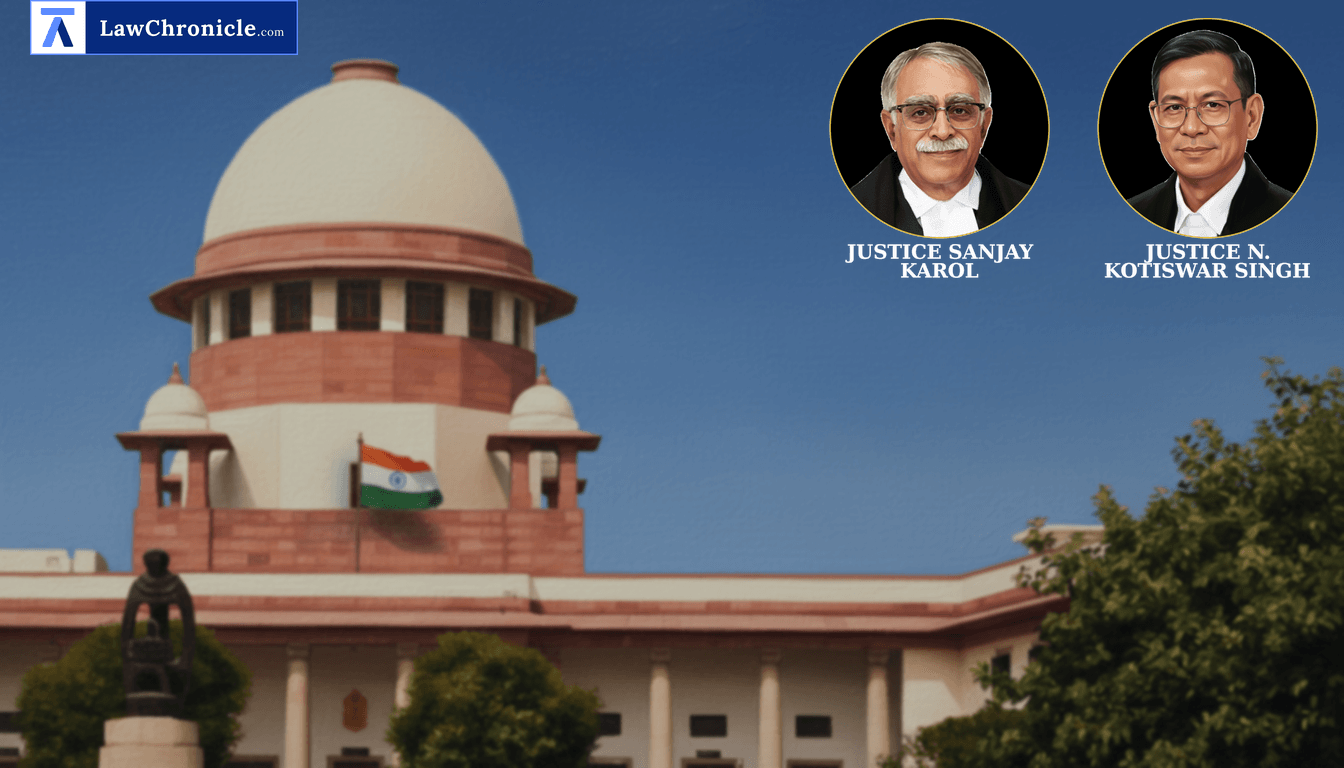
As per Supreme Court’s recent ruling, men in Live-In Relationships in the nature of Marriage are not immune from criminal prosecution for subjecting their female partners to domestic cruelty. Expanding the protective ambit of criminal law, the Supreme Court has ruled that excluding cohabiting partners from statutory protections against cruelty creates an unconstitutional distinction violating guaranteed rights of equality.
A bench of Justice Sanjay Karol and Justice Nongmeikam Kotiswar Singh adjudicated the pivotal appeal questioning whether a man cohabiting in a live-in relationship can be prosecuted under Section 498A of the Indian Penal Code, 1860. The legal issue reached the apex court after the High Court of Karnataka refused to quash criminal proceedings initiated by a woman against her live-in partner alleging cruelty, dowry harassment, and non-disclosure of a prior marriage.
IPC 498A and Live-In Relationships in the nature of Marriage
Taking a expansive view of anti-cruelty provisions, the Supreme Court held that the word "husband" under Section 498A of the Indian Penal Code, 1860 must be assigned a purposive interpretation to include live-in partners where the relationship is in the nature of marriage with an established intent to marry. The Court issued specific directions to prevent arbitrary law enforcement and safeguard procedural liberty. The Court has following directions:
"(i) Section 498A is held to be applicable to “live-in relationships” that qualify as “relationships in the nature of marriage” with the intent to marry being established as an intrinsic part thereof;
(ii) The “live-in relationships” protected by Section 498A, it is stated for ample clarity, are those that are between two consenting adult individuals;
(iii) The proposition of law as laid down shall be limited to Section 498A IPC only, and this extended interpretation shall not affect any other provision;
(iv) The safeguards against arrest and other factors as laid down in Arnesh Kumar supra shall be strictly applied and no person in a relationship in the nature of marriage having been accused of committing cruelty against a woman, being either the live-in partner “in the nature of marriage” or his relative, shall be arrested without preliminary enquiries."
Evaluating the interplay between statutory purpose and constitutional equality, the Court, in its reasoning, observed: "The distinction between “married” and “live-in relationship in the nature of marriage”, in as much as it relates to the protection envisaged by Section 498A, has no rational nexus with the object of preventing domestic violence and is as such offensive to Article 14 of the Constitution of India."
Key Takeaways
Expansion of Criminal Liability: Men in live-In relationships in the nature of marriage who intend to marry can be prosecuted for cruelty under penal law.
Mandatory Intent Criterion: The initial burden rests on the aggrieved female partner to demonstrate a clear mutual intention to marry.
Protection Against Arbitrary Arrests: Strict preliminary inquiry and compliance with arrest guidelines are mandatory before taking enforcement action in live-in cruelty complaints.
Civil-Criminal Legal Distinction: Civil remedies for domestic violence remain distinct from criminal prosecution, which demands a higher threshold of proof.
Ratio
The term "husband" under Section 498A of the Indian Penal Code, 1860 extends via purposive construction to cover a male cohabitant in a live-In relationship in the nature of marriage with a demonstrable intent to marry. Excluding women in such cohabiting setups from criminal law protection against cruelty lacks an intelligible differentia, violating Article 14 of the Constitution of India.
Background
The dispute originated from complaints filed by Respondent No. 2 alleging that she cohabited with the appellant believing they were lawfully wedded under Hindu rituals, only to subsequently discover that he had suppressed his earlier subsisting marriage while subjecting her to physical cruelty and demands for dowry. Charges were framed under Section 498A of the Indian Penal Code, 1860 alongside provisions of the Dowry Prohibition Act, 1961. The appellant approached the High Court under Section 482 of the Code Of Criminal Procedure, 1973 seeking quashing of proceedings, asserting that the absence of a legally valid marriage precludes the invocation of Section 498A. The High Court rejected the petition, prompting the present appeal.
Examining rules of interpretation across criminal and welfare enactments, the Supreme Court balanced strict interpretation principles established in Commr. of Customs vs. Dilip Kumar & Co. ( "(2018) 9 SCC 1": 2018 CaseBase(SC) 741), United States vs. Wiltberger, and Kaveri Plastics vs. Mahdoom Bawa Bahrudeen Noorul ( "2025 SCC OnLine SC 2019": 2025 CaseBase(SC) 852) with the mischief rule and purposive construction recognized in Shailesh Dhairyawan vs. Mohan Balkrishna Lulla ( "(2016) 3 SCC 619": 2015 CaseBase(SC) 71), D. Vinod Shivappa vs. Nanda Belliappa ( "(2006) 6 SCC 456": 2006 CaseBase(SC) 735), Bengal Immunity Co. Ltd. v. State of Bihar ( "(1955) 1 SCC 763": 1954 CaseBase(SC) 204), R.M.D. Chamarbaugwalla vs. Union of India, MSR Leathers vs. S. Palaniappan ( "(2013) 1 SCC 177": 2013 CaseBase(SC) 444), RBI v. Peerless General Finance & Investment Co. Ltd., Seaford Court Estates Ltd. v. Asher, and Abhiram Singh v. C.D. Commachen ( "(2017) 2 SCC 629": 2017 CaseBase(SC) 544).
Marriage vs Live-In Relationships in the nature of Marriage
The Court acknowledged that while penal laws generally receive strict construction, beneficial provisions addressing social evils require dynamic interpretation to effectuate legislative intent, as reinforced in Reema Aggarwal vs. Anupam ( "(2004) 3 SCC 199": 2004 CaseBase(SC) 297) and Rajinder Singh vs. State of Punjab ( "(2015) 6 SCC 477": 2015 CaseBase(SC) 847), distinguished from the narrow factual context in Shivcharan Lal Verma vs. State of Madhya Pradesh. Evaluating civil protections under the Protection Of Women From Domestic Violence Act, 2005 as analyzed in Hiral P. Harsora & Ors. vs. Kusum Narotmdas Harsora ( "(2016) 10 SCC 165": 2016 CaseBase(SC) 691), Kunapareddy vs. Kunapareddy Swarna Kumari, and Prabha Tyagi vs. Kamlesh Devi ( "(2022) 8 SCC 90": 2022 CaseBase(SC) 83), the Court ruled that civil remedies do not displace the necessity of criminal deterrence.
Married Woman vs Live-In Partner
Addressing constitutional principles under Articles 14, 15, and 21 of the Constitution of India, 1950, the Bench placed reliance on K.S. Puttaswamy vs. Union of India, Joseph Shine v. Union of India ( "(2019) 3 SCC 39": 2017 CaseBase(SC) 916), and Navtej Singh Johar v. Union of India ( "2018 10 SCC 1": 2018 CaseBase(SC) 1311) regarding personal autonomy and choice. Applying equality standards set in State of W.B. v. Anwar Ali Sarkar, State of J&K v. Triloki Nath Khosa, and Maganlal Chhaganlal (P) Ltd. v. Municipal Corpn. of Greater Bombay, the Court held that creating a rigid differentiation between married women and cohabiting partners facing domestic cruelty lacks a rational nexus to the objective of suppressing abuse.
Recognizing changing social dynamics underscored in Badshah vs. Urmila Badshah Godse ( "(2014) 1 SCC 188": 2013 CaseBase(SC) 653), Union of India v. Raghubir Singh ( "1989 2 SCC 754": 1988 CaseBase(SC) 452), and Ravish Singh Rana v. State of Uttarakhand ( "(2025) SCC OnLine SC 1055": 2025 CaseBase(SC) 1046), the Court held that legal protections must adapt to societal evolution. To prevent potential misuse, the Bench mandated adherence to procedural arrest safeguards framed in Arnesh Kumar v. State of Bihar ( "(2014) 8 SCC 273": 2014 CaseBase(SC) 560). Finding prima facie allegations of cruelty, the Supreme Court declined to quash the criminal proceedings against the appellant and dismissed the appeals.
Case Details:
Case No.: Criminal Appeal No(s). 2026 (@ SLP(Crl.) No(s). 2240-2241 of 2026)
NeutralCitation: 2026 INSC 784
Case Title: Dr. Lokesh B.H. & Ors. v. State of Karnataka & Anr.
Appearances:
For the Petitioner(s): Mr. Anand Sanjay M. Nuli, Senior Advocate
For the Respondent(s): Mr. Brijender Chahar, Additional Solicitor General; Ms. Hetu Arora Sethi, Advocate; Ms. Aishwarya Bhati, Additional Solicitor General (Amicus Curiae); Ms. Nina R. Nariman, Advocate (Amicus Curiae)
Source: 2026 CaseBase(SC) 717
 Breaking News