


Madhya Pradesh HC Rejects 482 Petition for Compoundable Offence, Imposes Cost for Misleading Statements
 Copy Link
 Share
 Save
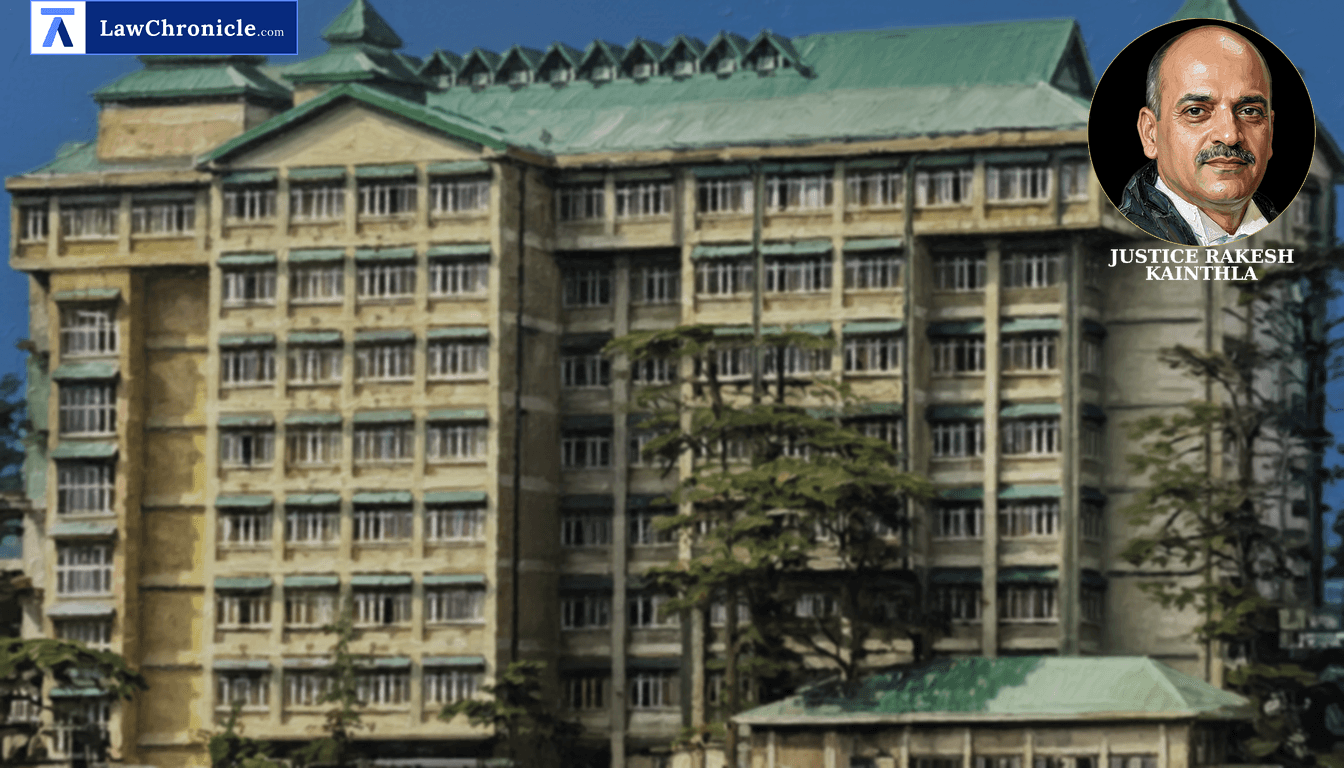
The Himachal Pradesh High Court has slammed the door on litigants attempting to bypass lower courts by filing inherent jurisdiction petitions for compoundable offences, ruling that such a practice constitutes an abuse of the judicial process. In a stern reminder of procedural hierarchy, the court dismissed a quashing petition with costs after finding the petitioners falsely claimed their offences were non-compoundable to secure a hearing before the High Court.
Justice Rakesh Kainthla, presiding over the matter, emphasized that the extraordinary powers of the High Court under the Bharatiya Nagarik Suraksha Sanhita, 2023 (equivalent to Section 482 of the Code Of Criminal Procedure, 1973) cannot be invoked when specific, efficacious remedies are already provided within the statutory framework. The bench was hearing a petition filed by Soni Ram and another seeking to quash an FIR registered under the Bharatiya Nyaya Sanhita, 2023 following a private compromise.
Key Takeaways
Exhaustion of Alternative Remedies
Litigants must approach the Magistrate's court for compounding offences that are legally compoundable under the Bharatiya Nagarik Suraksha Sanhita, 2023 before approaching the High Court.
Inherent Power Limitations
Inherent powers are extraordinary and should not be exercised when a specific statutory provision already addresses the grievance of the party.
Consequences of False Averments
Making factually incorrect statements regarding the nature of offences to bypass procedural law will attract exemplary costs and dismissal of the petition.
Court Observation on Compoundable Offences
The court noted that the offences under Section 303(2) and Section 318(4) of the Bharatiya Nyaya Sanhita, 2023 are explicitly compoundable under Section 359 of the Bharatiya Nagarik Suraksha Sanhita, 2023. The petitioners had claimed the matter was settled via compromise but incorrectly asserted that the offences were non-compoundable to justify their direct approach to the High Court.
The Court, in its reasoning, observed: "It was held in Madhu Limaye v. State of Maharashtra ( "(1977) 4 SCC 551: 1978 SCC (Cri) 10": 1977 CaseBase(SC) 193) that inherent power should not be exercised when a specific remedy exists... The inherent powers of the High Court, preserved by section 482 of the Code, are to be exercised in making orders as may be necessary to give effect to any order under the Code, or to prevent abuse of the process of any Court or otherwise to secure the ends of justice. This power cannot be exercised when a specific remedy is available under the other provisions of the Code."
The Court has following directions:
"The present petition fails and is dismissed. The petitioners made a false averment in the petition; therefore, the petition is dismissed with a cost of ₹5,000/-, which shall be deposited in Chief Justice Disaster Relief Fund within one month, failing which steps will be taken to recover it as per the law."
Ratio
Inherent jurisdiction under Section 482 of the Cr.P.C. (or Section 528 of the BNSS) is a power of last resort and cannot be invoked to bypass specific statutory remedies for compounding offences. Where an offence is compoundable under the Code, the parties must approach the trial court, and a High Court should decline to exercise its inherent power unless exceptional circumstances are established.
Background
The petitioners approached the High Court seeking the quashing of FIR No. 83 of 2025, registered at Police Station Manali for offences including theft and cheating under the Bharatiya Nyaya Sanhita, 2023. They contended that a compromise had been reached with the informant, Joginder Singh, who also appeared before the court to confirm his lack of objection to the quashing of proceedings.
However, during the analysis of the legal framework, the Court found that the petitioners had misstated the law. While the petitioners argued they had no other remedy, the Court pointed out that Section 359 of the Bharatiya Nagarik Suraksha Sanhita, 2023 specifically allows for the compounding of these offences. Relying on precedents like Gopal Dass vs State ( "AIR 1978 Del 138": 1977 CaseBase(DEL) 32) and Arun Shankar Shukla v. State of U.P., the court reiterated that inherent powers are to be used sparingly and not as a substitute for statutory appeals or compounding procedures. Consequently, the court dismissed the petition and imposed costs for the false averments regarding the non-compoundability of the offences.
Case Details:
Case No.: Cr. MMO No. 832 of 2026
Neutral Citation: 2026:HHC:39857
Case Title: Soni Ram & another Versus State of H.P. & others
Appearances:
For the Petitioner(s): Mr Hemant Thakur, Advocate.
For the Respondent(s): Mr Ajit Sharma, Deputy Advocate General for respondents No.1 to 3/State; Mr Vivek Thakur, Advocate, for respondent No.4.
Source: 2026 CaseBase(HP) 8036
Similar Articles
 Breaking News


