


Madras HC Directs Disciplinary Action for Administrative Delay in Disposing Grievance Petitions
 Copy Link
 Share
 Save
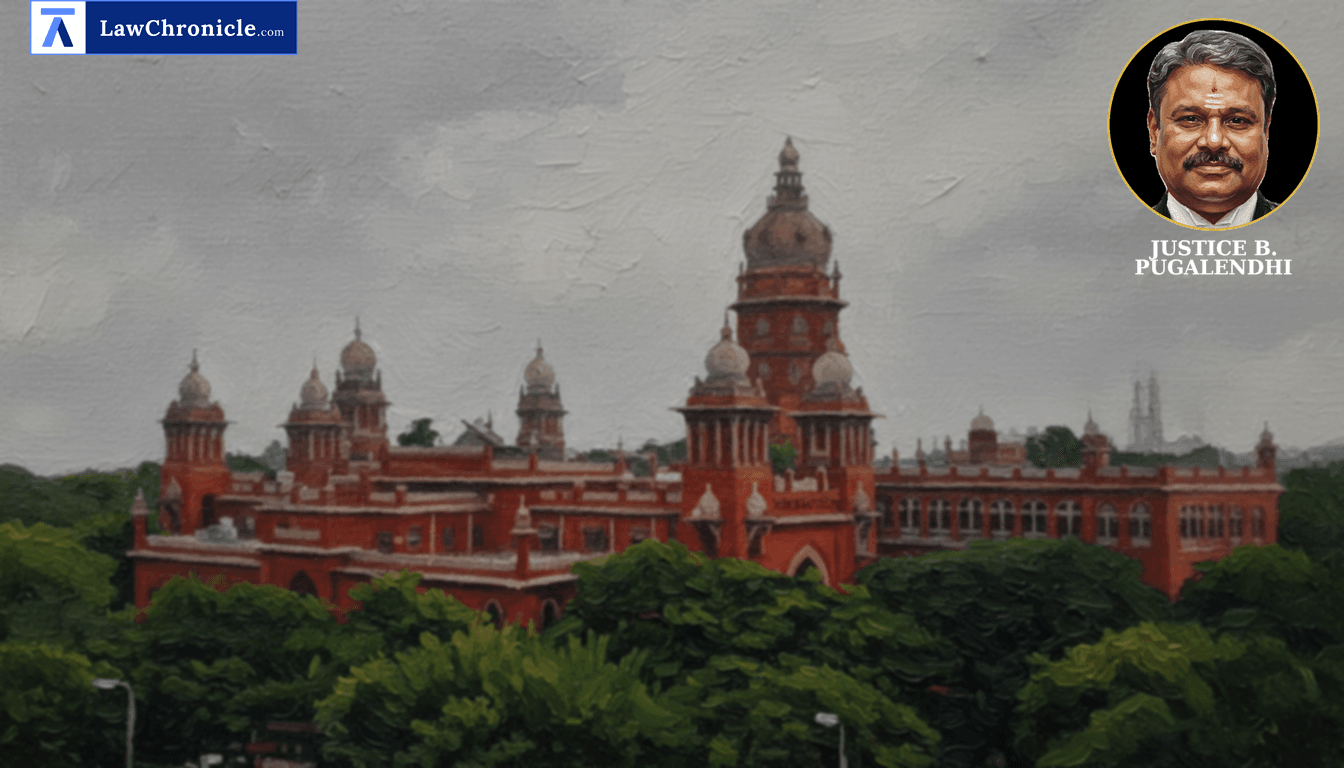
The Madras High Court has now mandated strict disciplinary action against government officials who fail to adhere to prescribed timelines for disposing of representations, warning that such inaction causes significant loss to the public exchequer and private resources. The Bench ruled that persistent administrative lethargy in handling public grievances constitutes a constitutional violation and a dereliction of duty, transforming the judiciary into a 'direction factory' for routine administrative tasks.
A single-judge bench of Justice B. Pugalendhi presided over a batch of writ petitions filed by retired government employees and legal heirs seeking settlement of retirement benefits and family pensions. The Madras High Court expressed deep concern over the 'Mandamus Mania' where litigants are forced to approach constitutional courts simply to secure a decision on long-pending representations.
Key Takeaways
Right to Representation is Constitutional
Every citizen has a constitutional right to submit representations for redressal of grievances under Constitution of India, which must be meaningfully exercised.
Inaction as Misconduct
Failure to dispose of representations within prescribed timelines amounts to a dereliction of duty and misconduct under the Tamil Nadu Government Servants Conduct Rules.
Financial Burden on State
Unnecessary litigation caused by administrative delays leads to avoidable expenditure of public funds on legal fees and government servant allowances.
Mandatory Monitoring Mechanism
Heads of Departments are now strictly required to implement monitoring mechanisms and initiate disciplinary action against defaulting officers.
Judicial Rebukes on 'Mandamus Mania'
The Madras High Court noted that the constitutional jurisdiction of the High Court is being diluted by a deluge of petitions seeking simple directions. Citing G.Soundarrajan v. The District Registrar ( "WP(MD)No.617 of 2021 dated 19.01.2021": 2021 CaseBase(MAD) 3000), the bench observed that the court has been converted into a 'Direction Factory' producing stereotyped orders that hardly require application of mind. It further referenced the Supreme Court's observation in Government of India and Another v. P.Venkatesh, where the 'dispose of the representation' mantra was criticized for doing no service to the cause of justice.
Justice Pugalendhi highlighted that the Government had already issued multiple orders, including G.O.Ms.No.99 (2015) and Paragraph 167 of the Tamil Nadu Government Office Manual, which mandate grievance disposal within thirty days. Despite these, authorities frequently used the pendency of a writ petition as an excuse to further delay decisions.
On Administrative Delays
The Madras High Court discussed lethargy shown by government officials by stating that “The obligation to dispose of representations within the prescribed time is not merely an administrative instruction, but also forms part of the responsibility of the Government servant entrusted with such duty. Persistent inaction, despite repeated Government instructions and judicial intervention, cannot be permitted to become an accepted feature of public administration.” Addressing the duty of statutory authorities, the Madras High Court relied on Vijayalechumi Gopalapillai v. The Principal Secretary to the Government ( "W.P.No.12154 of 2024 dated 10.06.2024": 2024 CaseBase(MAD) 50058) to reiterate that keeping representations pending indefinitely is a dereliction of duty.
The Madras High Court issued the following directions: "The newly impleaded respondents shall issue appropriate instructions to all the departments to scrupulously adhere to the prescribed timelines for receipt, consideration and disposal of representations submitted by retired Government servants, their family members and members of the general public. It shall also be ensured that the existing mechanism for monitoring the disposal of such representations is effectively implemented and that failure, without sufficient cause, to dispose of a representation within the prescribed time is viewed seriously and that appropriate disciplinary action is taken against the officers responsible, who fail to consider and dispose grievance petitions in time, in accordance with the applicable service rules. Insofar as the present writ petitions are concerned, the respective respondents are directed to consider and dispose of the representations submitted by the petitioners, on its own merits and in accordance with law, within a period of three months from the date of receipt of a copy of this order."
Ratio
The right to submit a representation under Constitution of India is a constitutional right, and the failure of government officers to dispose of such representations within the timelines prescribed by administrative manuals and government orders constitutes a dereliction of duty and 'misconduct' under service rules, warranting disciplinary action.
Background
The batch of petitions involved two categories: legal heirs of deceased employees seeking family pensions and retired employees seeking retirement benefits such as gratuity and provident fund. Many representations had been pending since 2024 without any response from government departments or co-operative societies. The State argued that delays occurred due to pending court cases or the need for additional documentation. The Madras High Court rejected these justifications, impleaded the Chief Secretary and the Secretary of the Human Resource and Management Department suo-motu, and ordered a systemic overhaul of the grievance redressal mechanism.
Case Details:
Case No.: WP(MD)Nos.1340 of 2025, etc., batch
Neutral Citation: 2026:MHC:4077
Case Title: S.Rajamanickam v. The Secretary, Tirunelveli Thani 115, Nagaram Primary Agricultural Co-operative Credit Society and Others
Appearances:
For the Petitioner(s): Mr.P.Saravanakumar, Advocate
For the Respondent(s): Mr.C.Jeganathan, Special Government Pleader
Source: 2026 CaseBase(MAD) 25398
Similar Articles

 Breaking News


