Madras HC: Review Jurisdiction Limited to Apparent Errors, Not Appeals
 Copy Link
 Share
 Save
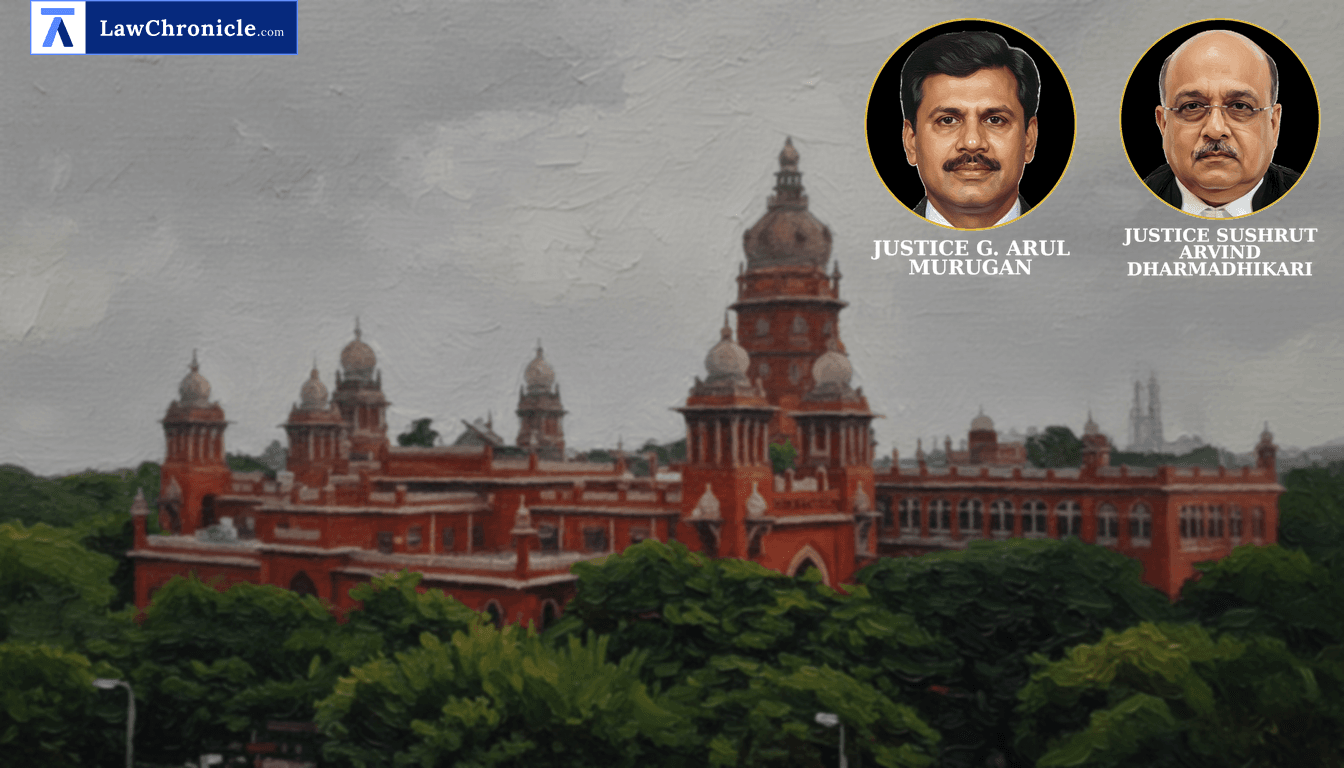
The Madras High Court dismissed a review application, reiterating that the power of review is strictly confined to correcting patent errors and cannot be used as a disguise for an appeal. The court emphasized that the discretionary nature of writ jurisdiction does not extend to assisting individuals who have slept over their rights for significant periods.
A bench comprising Chief Justice Sushrut Arvind Dharmadhikari and Justice G. Arul Murugan heard the review application filed against an earlier order dated April 7, 2026. The applicant sought to challenge the dismissal of his writ petition, which had targeted an allegedly unauthorized clubhouse construction at a residential complex.
Limited Scope of Review Jurisdiction
The Court scrutinized whether the grounds raised by the applicant fell within the ambit of Section 114 read with Order 47 Rule 1 of the Code of Civil Procedure, 1908. Relying on the legal principles established in Malleeswari v. K.Suguna and another ( "2025 INSC 1080": 2025 CaseBase(SC) 660), the bench observed that review proceedings are not a substitute for an appeal and are subject to strict limitations to maintain the finality of judicial decisions.
The Court, in its reasoning, observed: "A review petition, it must be remembered, has a limited purpose and cannot be allowed to be an appeal in disguise. The power of review can be exercised for the correction of a mistake, but not to substitute a view. Such powers can be exercised within the limits specified in the statute governing the exercise of power. The review court does not sit in appeal over its own order. A rehearing of the matter is impermissible. It constitutes an exception to the general rule that once a judgment is signed or pronounced, it should not be altered."
Dismissal of Factual Discrepancy Claims
While the applicant contended that the Court had erroneously assumed he had resided in the flat for 20 years when he only purchased it in 2018, the bench noted that even an eight-year delay in taking action remained unexplained. The Court held that such factual nuances do not constitute a 'patent error' that would warrant the reversal of the original decision, especially since the petitioner had not disclosed the specific purchase date in his original writ affidavit.
The Court has the following directions:
"For the foregoing discussion, the review application fails and is hereby dismissed. There shall be no order as to costs."
Background:
The dispute originated when the applicant filed a writ petition under Article 226 of the Constitution of India alleging that a clubhouse at Jain’s Nakshatra Apartments was built in violation of planning permissions granted by the Chennai Metropolitan Development Authority (CMDA). The original bench had dismissed the petition, noting that the planning permit dated back to 2006 and the petitioner had 'slept over the matter' for nearly two decades. The applicant moved the current review, arguing that the illegality was 'continuing and subsisting' and that his reliance was on the building permit rather than just an RTI response. However, the High Court maintained that since no 'error apparent on the face of the record' was demonstrated, the original dismissal must stand.
Case Details:
Case No.: Review Application No.88 of 2026
Case Title: Bipin Rajalingam S vs. The Member Secretary, Chennai Metropolitan Development Authority and Others
Appearances:
For the Petitioner(s): Mr. Bipin Rajalingam.S. (Applicant-in-person)
For the Respondent(s): Mrs. P. Veena Suresh, Standing Counsel for R1
Source: 2026 CaseBase(MAD) 305
 Breaking News