Madras HC Waives Police Escort For Convict Attending Daughter's Wedding
 Copy Link
 Share
Share Save
Save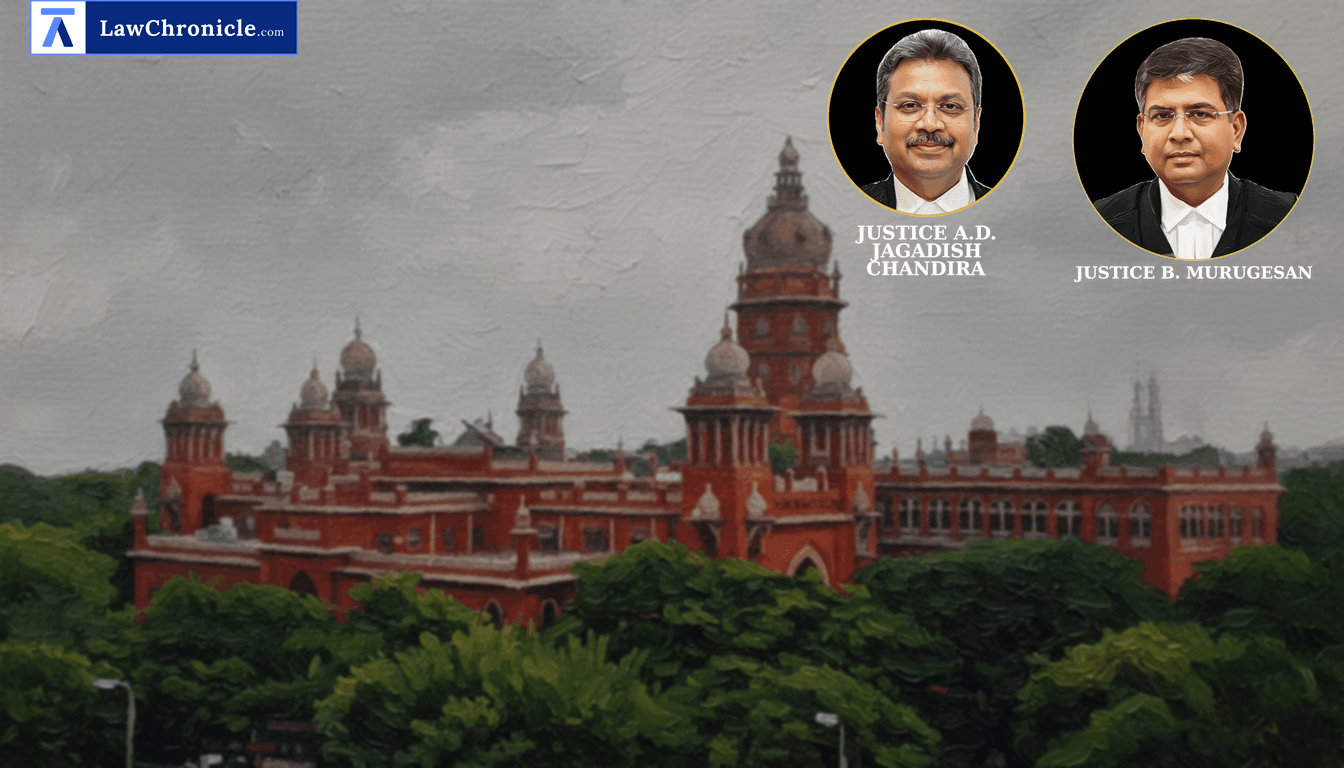
Prioritizing the dignity of family rituals over rigid custodial protocols, the Madras High Court has ordered the removal of police escort for a convict attending his daughter’s wedding, ruling that such surveillance causes 'unnecessary embarrassment' to the family. A division bench comprising Justice A.D. Jagadish Chandira and Justice B. Murugesan presided over the matter. The Madras High Court was adjudicating a writ of mandamus filed under Article 226 of the Constitution of India, seeking the grant of emergency leave for a convict prisoner to facilitate his daughter's marriage arrangements and participation in the ceremony.
Key Takeaways
Dignity in Social Functions
Family ceremonies like weddings are sensitive social events where the presence of uniformed police escort can stigmatize the family and the prisoner, justifying a waiver of such conditions.
Extension of Leave Duration
Recognizing the complexity of wedding arrangements, the Court extended the executive-granted three-day leave to six days to ensure the convict could meaningfully fulfill his parental duties.
Conditional Liberty
While waiving the escort, the Court balanced security concerns by mandating daily reporting to the local police station, ensuring the prisoner remains within the legal fold.
Police Escort and Family Dignity
The Madras High Court noted that while the prison authorities had initially granted a three-day emergency leave, the inclusion of a police escort was counterproductive to the purpose of the leave. The petitioner argued that the convict had previously been granted only a single day of leave with an escort, and the constant presence of police during the daughter's marriage would be socially distressing.
The Court issued the following directions:
"(i) The respondents are directed to grant six days emergency leave to the petitioner's husband, namely, Ashok Kumar, son of Ramu, aged 43 years, without police escort, from tomorrow i.e., 11.09.2026 onwards. (ii) During the said leave period, he shall report before the third respondent - Police Station, daily at 06.30 p.m., without fail. (iii) He shall report back to the second respondent, on completion of the leave period, without fail. (iv) The petitioner shall produce all necessary documents, along with a copy of this order, before the jail authorities. (v) During the leave period, the convict prisoner shall abide by all the conditions prescribed in the Jail Manual. (vi) The convict shall utilize the leave only for the reason for which it has been granted and shall not partake in any other activities (vii) No costs."
Ratio
The Madras High Court established that in cases of significant family milestones such as a child's marriage, the requirement of a police escort for a convict on emergency leave may be waived if such presence causes undue social embarrassment or stigma to the family, provided that security is maintained through alternative measures like daily reporting to local police and adherence to the Jail Manual.
Background
The petitioner, A. Narmatha, moved the High Court seeking 15 days of emergent leave for her husband, Ashok Kumar, who was confined at Trichy Central Prison. The leave was sought for their daughter Gunasree’s marriage, scheduled for September 13, 2026. While the State had passed an order on September 9, 2026, granting three days of leave with a police escort, the petitioner contended this was insufficient and socially damaging.
The Madras High Court evaluated the previous conduct where only one day was granted and determined that a six-day window without the visible presence of armed guards would better serve the ends of justice and humanity. The writ petition was subsequently disposed of with the modified directions for release.
Case Details:
Case No.: W.P.Crl.(MD) No.5082 of 2026
Case Title: A.Narmatha v. The State of Tamil Nadu and Others
Appearances:
For the Petitioner(s): Mr.C.M.Arumugam
For the Respondent(s): Mr.D.Venkatesh, Additional Public Prosecutor
Source: 2026 CaseBase(MAD) 21235
 Breaking News