


Magistrates Cannot Issue Summons Without Justifiable Reasons: Andhra Pradesh HC
 Copy Link
 Share
 Save
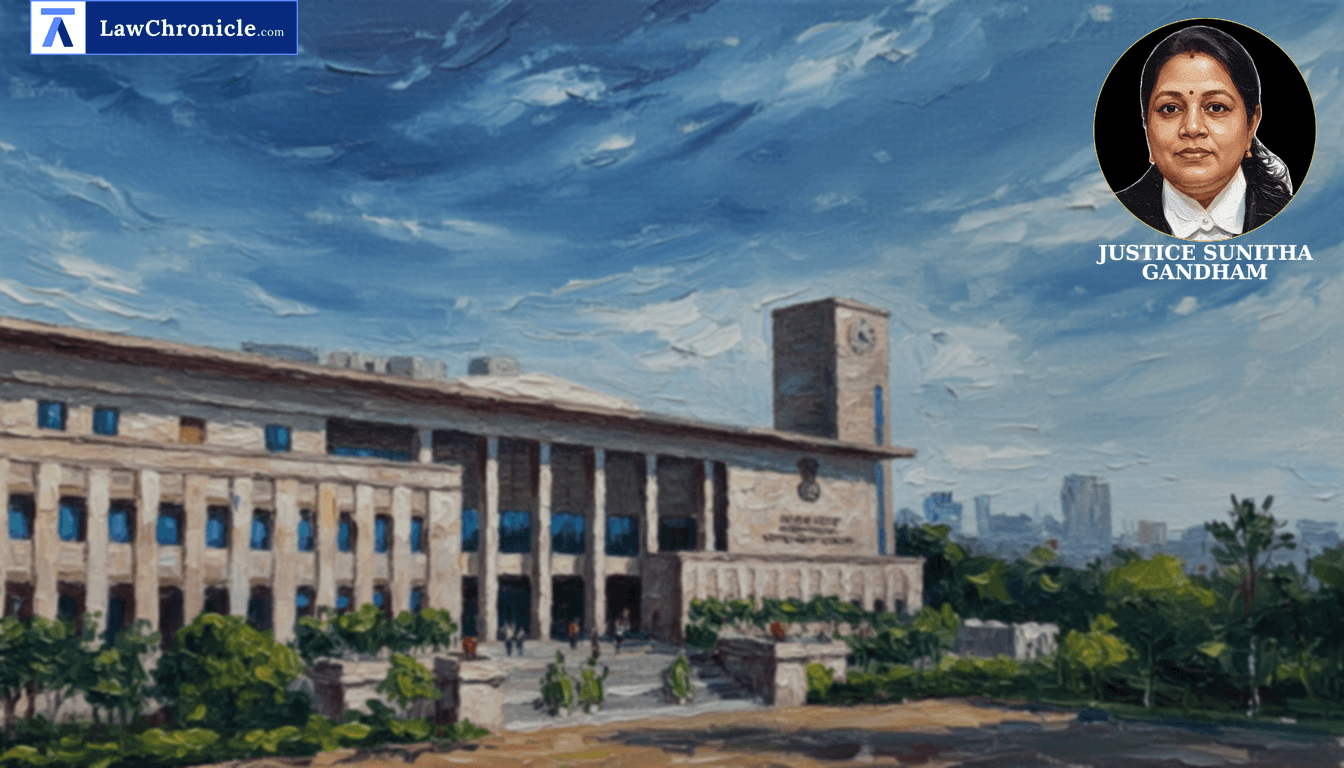
Magistrates cannot casually drag individuals into criminal proceedings without assigning clear, justifiable reasons or finding specific material against them. Emphasizing the sanctity of judicial mind application at the summoning stage, the Andhra Pradesh High Court partially quashed proceedings against two proposed accused while refusing relief to a named co-accused.
A single-judge bench of Justice Sunitha Gandham was hearing a criminal petition filed under Section 482 of the Code of Criminal Procedure and Section 528 of the BNSS seeking to quash criminal proceedings in C.C. No. 396 of 2021 on the file of the Special Judicial Magistrate of First Class (Mobile), Eluru, registered for offences under Sections 448, 323, and 506 read with Section 34 of the Indian Penal Code.
Key Takeaways
Judicial Reasoned Orders Essential: Trial courts cannot mechanically add proposed accused upon protest petitions without pointing out specific material establishing their involvement.
Protection Against Malicious Implication: Unnamed relatives or associates cannot be dragged into criminal cases post-investigation based on vague assertions.
Scope of Section 482 CrPC: High Courts will not interfere with criminal proceedings where specific allegations and overt acts are explicitly mentioned in the initial complaint.
Magistrate Must Assign Justifiable Reasons to Summons Proposed Accused
The High Court observed that the trial Magistrate had issued summons to two petitioners without analyzing the record or establishing their prima facie involvement. The Court noted that the initial report did not even contain their names, nor was any specific overt act attributed to them.
The Court has following directions:
"In the result, this Criminal Petition is partly allowed quashing the proceedings in C.C.No.396 of 2021 against the petitioner Nos.1 and 2 of the offences under Sections 448, 323 and 506 read with Section 34 of the Code and in so far as petitioner No.3 is concerned, the petition is dismissed."
Critiquing the lack of reasoning by the lower court, the Court, in its reasoning, observed:
"Before ordering the issuance of summons, the learned trial court ought to have considered the entire material and assigned justifiable reasons to establish the involvement of petitioner Nos.1 and 2. Without there being any material against them, it is not proper to add them as accused and issue summons."
Highlighting the parameters for exercise of inherent powers, the High Court relied on the landmark precedent in State of Haryana and Others v. Bajanlal and Others to reiterate that proceedings must be quashed where allegations in the FIR, taken at face value, do not disclose any offence.
Ratio
The power to issue summons to additional or proposed accused upon a protest petition requires the application of judicial mind and explicit recording of justifiable reasons based on material on record; mechanical addition of parties without prima facie evidence constitutes an abuse of process warranting quashing under Section 482 of the Code of Criminal Procedure.
Background
The dispute originated from a familial conflict where the de facto complainant (Respondent No. 3) lodged a police report alleging that on November 7, 2020, several individuals, including Petitioner No. 3 (an advocate), unlawfully entered his house, verbally abused him, and physically assaulted him and his mother. Police registered Crime No. 237 of 2020 under Sections 448, 323, and 506 read with Section 34 of the Indian Penal Code.
Upon investigation, the police filed a charge sheet against Accused Nos. 1 to 9, excluding Petitioner No. 3 based on statements from neighbours stating he did not participate. Dissatisfied, the complainant filed a protest petition under Section 200 of the Code of Criminal Procedure. The Magistrate, via order dated May 16, 2022, in Crl.M.P. No. 133 of 2022, issued summons not only to Petitioner No. 3 but also added Petitioners No. 1 and 2 as Accused Nos. 10 and 11.
Aggrieved by their array as accused, the petitioners approached the High Court. The High Court found that while Petitioner No. 3 was specifically named in the original complaint with explicit allegations of trespass and assault, Petitioners No. 1 and 2 were not even named in the initial report. Consequently, the High Court partly allowed the petition, quashing proceedings against Petitioners No. 1 and 2 while upholding the summons against Petitioner No. 3.
Case Details:
Case No.: Criminal Petition No. 3001 of 2023
Neutral Citation: 2026:APHC:34558
Case Title: Shaik. Nanda Kumari and Others v. The State of Andhra Pradesh and Others
Appearances:
For the Petitioner(s): Gandrala Rathna Kumar
For the Respondent(s): Public Prosecutor (AP)
Source: 2026 CaseBase(AP) 13066
Similar Articles


 Breaking News


