Marking Documents Without Witness Proof Is ‘No Evidence’ in Law: Calcutta HC
 Copy Link
 Share
 Save
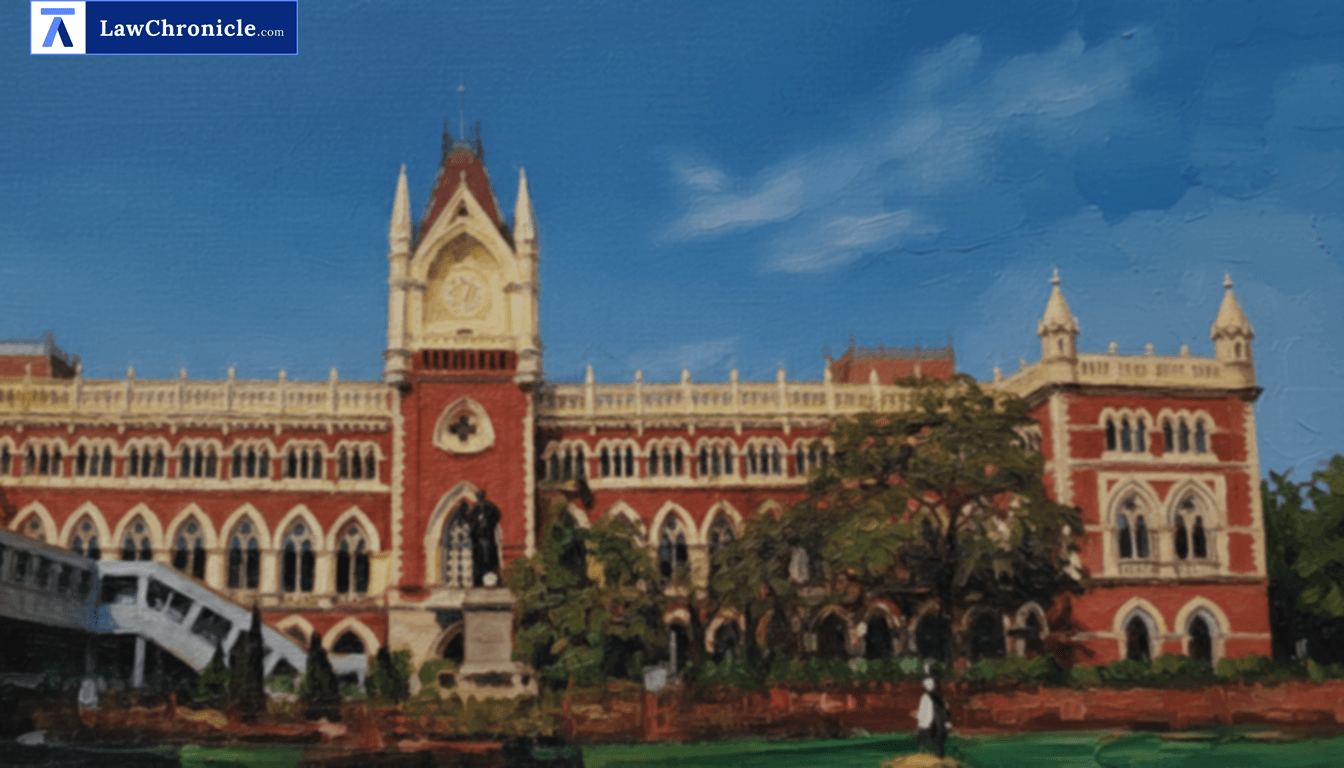
In a decisive check on disciplinary procedural lapses, the Calcutta High Court has quashed a bank employee's dismissal, ruling that marking documents as exhibits without formal examination of witnesses constitutes 'no evidence' and renders the entire inquiry perverse. The verdict establishes that even where the Evidence Act does not strictly apply, the fundamental principle of proving documents through witnesses remains a non-negotiable limb of natural justice.
Justice Sandip Kumar De adjudicated the writ petition filed by a bank employee challenging his dismissal from UCO Bank. The Court examined whether the disciplinary authority's reliance on documents that were never formally proved by witnesses could sustain a penalty as severe as dismissal from service.
Key Takeaways
Documentary Proof Essential
Marking documents as exhibits without a witness to prove them is legally unsustainable and equates to a 'no evidence' situation in departmental inquiries.
Natural Justice Beyond Formality
Providing a right to cross-examine is an 'empty formality' if the management fails to produce witnesses to prove the documents they rely upon.
Writ Maintainability for Award Staff
High-salaried bank employees with supervisory or managerial responsibilities fall outside the definition of 'workman' under the Industrial Disputes Act, 1947, making writ petitions against disciplinary actions maintainable.
Court Rejects Maintainability Objection
The Bank initially challenged the maintainability of the writ, arguing the petitioner was 'award staff' whose remedy lay under the Industrial Disputes Act, 1947. However, the Bench observed that the petitioner’s salary of approximately ₹45,000 and his duties as a Special Assistant which involved supervising clerks and sub-staff placed him in a managerial capacity. Consequently, the Court held the exception in Section 2(s) of the Industrial Disputes Act, 1947 was attracted, affirming the High Court's jurisdiction.
Perversity in Recording Evidence
The Court noted that while disciplinary proceedings follow the 'preponderance of probability' rather than strict proof, the complete absence of witnesses to prove management documents was fatal. The Court, in its reasoning, observed: "the evidence considered by the enquiry officer, disciplinary authority and the appellate authority falls in the category of ‘no evidence’ as the procedure for recording the documents by marking the documents as exhibits without examination of witnesses for such purpose is absolutely perverse, vitiated in law, and not sustainable. The plea of compliance of the principles of natural justice becomes an empty and idle formality if the recording of evidence being one of the vital limb of principles of natural justice is contrary to law."
Integrating the ratio of Union of India Vs. P.Gunasekaran ( "(2015)2 SCC 610": 2014 CaseBase(SC) 744) and Roop Singh Negi Vs. Punjab National Bank ( "(2009)2 SCC 570": 2008 CaseBase(SC) 713), the Court emphasized that documents tendered in evidence must be proved by examination of witnesses in the presence of the employee to allow for meaningful cross-examination.
Directions Issued to UCO Bank
The Court has the following directions:
"It is directed that the bank shall start the disciplinary proceeding from the stage of recording evidence de novo and take a decision afresh upon conclusion of the disciplinary proceeding strictly in accordance with law and preferably within a period of 3 months from the date of communication of this order. However, considering the gravity and extent of the charges... it would be proper that the petitioner is placed under suspension than being reinstated in service till the disciplinary authority takes the decision afresh as directed above.. The petitioner shall be under suspension till the final order in the disciplinary proceeding is passed afresh as directed above. The petitioner shall draw the subsistence allowances from the bank in terms of the applicable rules for such period."
Ratio
In a departmental inquiry, the marking of documents as exhibits without the examination of witnesses to prove the contents of said documents constitutes a violation of the fundamental principles of evidence and natural justice. Such a procedure results in a finding based on 'no evidence,' rendering the disciplinary action perverse and liable to be set aside under Article 226 of the Constitution of India.
Background
The petitioner joined UCO Bank in 2017 and was later charged with 23 counts of gross negligence and fraudulent activities, including siphoning funds to a daily wager's account and unauthorized cash withdrawals. Despite his detailed denials, the Inquiry Officer found him guilty, leading to his dismissal in June 2024. The petitioner argued that the inquiry was vitiated because no witnesses were produced to prove the complaints or bank records.
The Court relied on State Bank of Bikaner and Jaipur Vs. Nemi Chand Nalwaya ( "(2011)4 SCC 584": 2011 CaseBase(SC) 635) and Chinmay Bhattacharyya Vs. Bangiya Gramin Vikash Bank ( "delivered on September 20,2023 in WPA 16304 of 2017": 2023 CaseBase(CAL) 3696) to highlight that while courts generally do not interfere with findings of fact in disciplinary matters, they must intervene when findings are based on no evidence or are clearly perverse. Citing Satyendra Singh Vs. State of Uttar Pradesh ( "2024 SCC OnLine SC 3325": 2024 CaseBase(SC) 768) and State of Uttar Pradesh Vs. Ram Prakash Singh, the Court reinforced that witnesses must be examined to allow the delinquent employee a fair opportunity to cross-examine. While the dismissal was quashed, the Court did not grant immediate reinstatement, citing SBI vs. Bela Bagchi regarding the high standard of integrity expected in banking, and instead placed the petitioner under suspension pending the fresh inquiry.
Case Details:
Case No.: WPA 25382 of 2024
Neutral Citation: 2026:CHC-AS:2044
Case Title: Soumik Dutta Vs The Uco Bank & Ors.
Appearances:
For the Petitioner(s): Mr. Sobhan Majumder, Ms. Kalpita Paul … Advs
For the Respondent(s): Mr. S. Pal, Mrs. S. Dey Pal Choudhuri, Mr. S. Pal Choudhuri, Ms. Shilpi Paul, Ms. Baishali Saha … Advs
Source: 2026 CaseBase(CAL) 3813
 Breaking News