Medical evidence creates doubt over homicidal death; Supreme Court upholds High Court's conversion and sentence as undergone
 Copy Link
 Share
Share Save
Save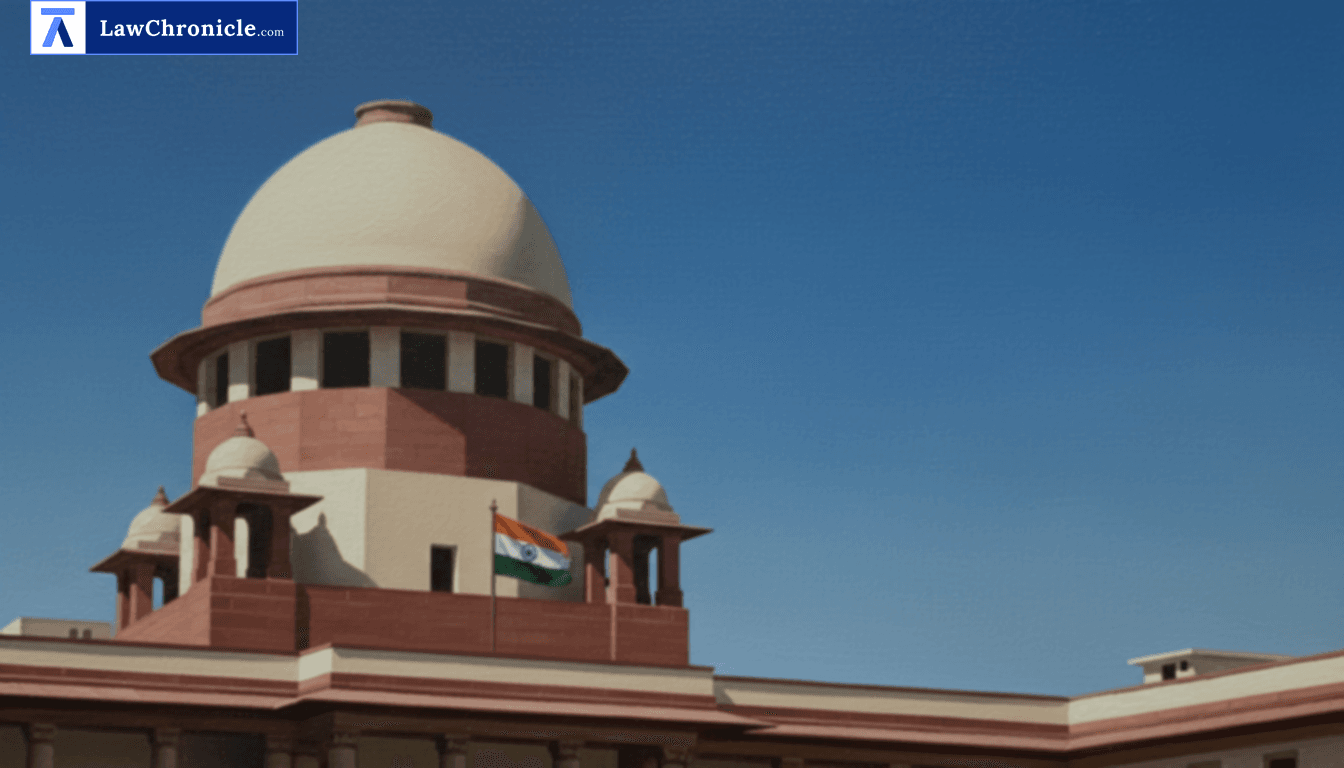
A bench of Justices Abhay S. Oka, Ahsanuddin Amanullah and Augustine George Masih heard the State of Madhya Pradesh’s appeal challenging the High Court of Madhya Pradesh’s judgment which had converted convictions under Section 302 IPC into the second part of Section 304 IPC and released the accused on the sentence already undergone subject to fines and compensation.
The Court dismissed the State’s appeal and declined to disturb the High Court’s order. The bench noted that the medical and forensic evidence raised a “serious doubt” whether the injuries inflicted on the deceased, Laxman, caused his death and that the death occurred fifteen days after the incident. The Court recorded the treating doctor’s observation that “All the injuries were before death. Laxman had died due to suffocation. It was difficult to give a definite reason.” The Court relied on the combined effect of the post-mortem, the State Forensic Laboratory report (which found no chemical poison in viscera) and the doctor’s testimony to hold that the prosecution had not established homicidal death beyond reasonable doubt. The Court, in its reasoning, observed: “The medical evidence creates a serious doubt as to whether injuries allegedly inflicted by the respondents caused the death of Laxman. Therefore, there is a serious doubt whether even Section 304 of the IPC could have been applied, as the medical opinion does not support the theory of homicidal death of the deceased.” The bench further noted the long delay in hearing the appeal and the advanced age of several accused as circumstances taken into account by the High Court.
Background The incident dated 1 November 1989 involved an alleged assault by the respondents on several villagers including the deceased Laxman after a dispute over a buffalo’s tail. The trial court convicted the respondents under Sections 147, 452, 302, 325 and 323 read with Section 149 IPC and sentenced them to life imprisonment for the Section 302/149 conviction. On appeal, the High Court on 24 August 2017 set aside the murder conviction under Section 302/149 and converted it into an offence under the second part of Section 304 IPC, confirmed other convictions, ordered the accused to be released on the sentence already undergone, imposed fines of Rs.16,000 each, directed Rs.1,00,000 to be paid to the deceased’s family and Rs.10,000 each to two injured witnesses. The State challenged the conversion, arguing that the brutal assault, multiple grievous injuries and the post-mortem findings supported a murder conviction and that leniency was inappropriate.
The Supreme Court examined trial and medical evidence, including the treating doctor PW‑17’s notes of multiple lacerations and fractures and his contemporaneous remark that the cause of death could not be definitely ascertained. The post-mortem recorded asphyxia as the cause of death but noted the precise cause was not discernible; forensic chemical analysis found no poison. Applying the standard of proof in criminal cases and assessing whether the evidence established homicidal death and intention, the Court found a reasonable doubt on causation and upheld the High Court’s exercise of discretion in reducing the conviction and permitting release on the sentence already undergone, also noting the considerable delay in adjudication and the advanced ages of several accused. The appeal was dismissed; no additional interim directions were issued and the High Court orders on fines and compensation stood.
Case Details: Case No.: 2025 INSC 377; Criminal Appeal No.1254 of 2024 Case Title: State of Madhya Pradesh v. Shyamlal & Ors. Appearances: For the Petitioner(s): Not specifically indicated in the judgment For the Respondent(s): Not specifically indicated in the judgment
 Breaking News