

Mediclaim Benefits Cannot Be Deducted From Motor Accident Compensation: SC
 Copy Link
 Share
Share Save
Save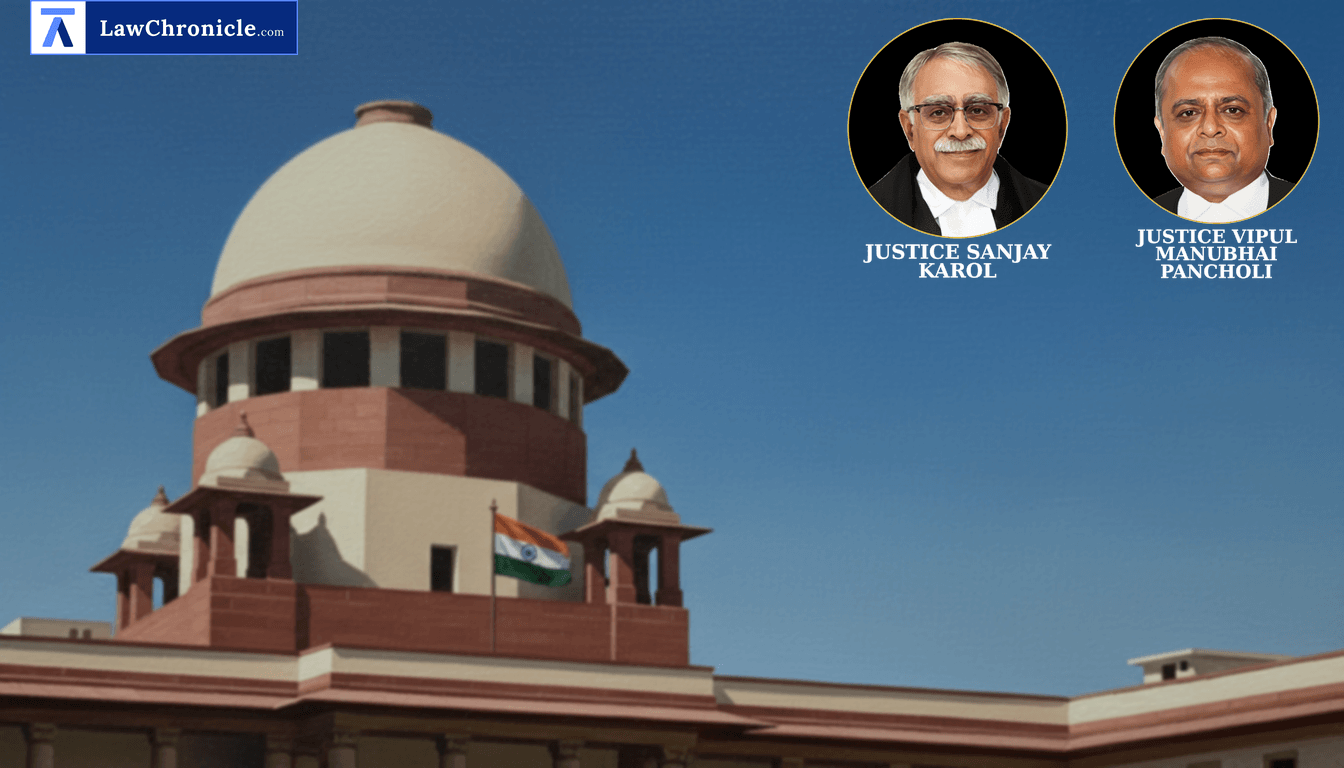
The Supreme Court has delivered a landmark ruling affirming that claimants are entitled to receive both their contractual Mediclaim benefits and statutory motor accident compensation without any deductions. A bench comprising Justice Sanjay Karol and Justice Vipul M. Pancholi settled a long-standing conflict among various High Courts, clarifying that medical insurance proceeds and accident compensation operate in distinct legal spheres.
Contractual Prudence vs Statutory Entitlement
While hearing an appeal by the New India Assurance Company Limited, the Court addressed the question of whether amounts received under a private medical insurance policy should be deducted from the compensation awarded by a Motor Accidents Claims Tribunal. The appellant-insurer argued that such payments constitute a "double benefit" and lead to unjust enrichment. However, the Court rejected this contention, emphasizing that a Mediclaim policy is a fruit of the claimant's own hard-earned money paid as premiums over the years.
The Court, in its reasoning, observed: "A Mediclaim policy is a policy that is purchased by a person, accounting for the uncertainties of life and preparing a financial base for an unfortunate possible eventuality... only because they appear same or similar, they cannot be termed as 'double benefit'. Still further, there is another reason why these two amounts stand on a different footing. The amount received under MVA arises from a beneficial legislation and as guided by just compensation... naturally, this stands on a higher pedestal."
Judicial Inconsistency Across High Courts
During the proceedings, the Bench expressed concern over the "unsettling" inconsistencies among various High Courts, including the Bombay, Delhi, and Kerala High Courts, where some benches allowed deductions while others did not. The Court noted that such divergent views create judicial uncertainty and hinder the efficiency of the justice delivery system. The Court relied on established principles from Helen C. Rebello v. Maharashtra SRTC and United India Insurance Co. Ltd. v. Patricia Jean Mahajan to distinguish between independent pecuniary advantages and those having a direct nexus with the accident.
While the appellant cited Reliance General Insurance Co. Ltd. v. Shashi Sharma ( "(2016) 9 SCC 627": 2016 CaseBase(SC) 867) to argue against double recovery, the Bench clarified that the said case dealt with statutory ex gratia assistance provided by the State, which is distinct from a private insurance contract. The Court also referred to Sebastiani Lakra v. National Insurance Co. Ltd. and Oriental Insurance Co. Ltd. v. R. Swaminathan to reinforce the principle that contractual or service-related benefits like pension and life insurance are not deductible.
Background:
The dispute arose after a claimant, involved in a motor accident, sought compensation under the Motor Vehicles Act, 1988. The insurer challenged the award on the ground that the claimant had already received reimbursement for medical expenses through a private Mediclaim policy. The High Court of Judicature at Bombay had previously ruled that such Mediclaim amounts are not deductible. The Supreme Court upheld this view, concluding that denying the benefit would result in an "undue advantage" to the tortfeasor's insurer and penalize the claimant for their foresight and prudence in securing insurance coverage.
Case Details:
Case No.: Civil Appeal No. OF 2026 (@ SLP (Civil) Nos.18267 of 2025)
NeutralCitation: 2026 INSC 498
Case Title: NEW INDIA ASSURANCE COMPANY LIMITED v. DOLLY SATISH GANDHI & ANR.
Appearances:
For the Petitioner(s): Not Mentioned
For the Respondent(s): Not Mentioned
Source: 2026 CaseBase(SC) 430
 Breaking News