


Mere Coincidence of Names Cannot Sustain Partition Claim: Patna HC
 Copy Link
 Share
 Save
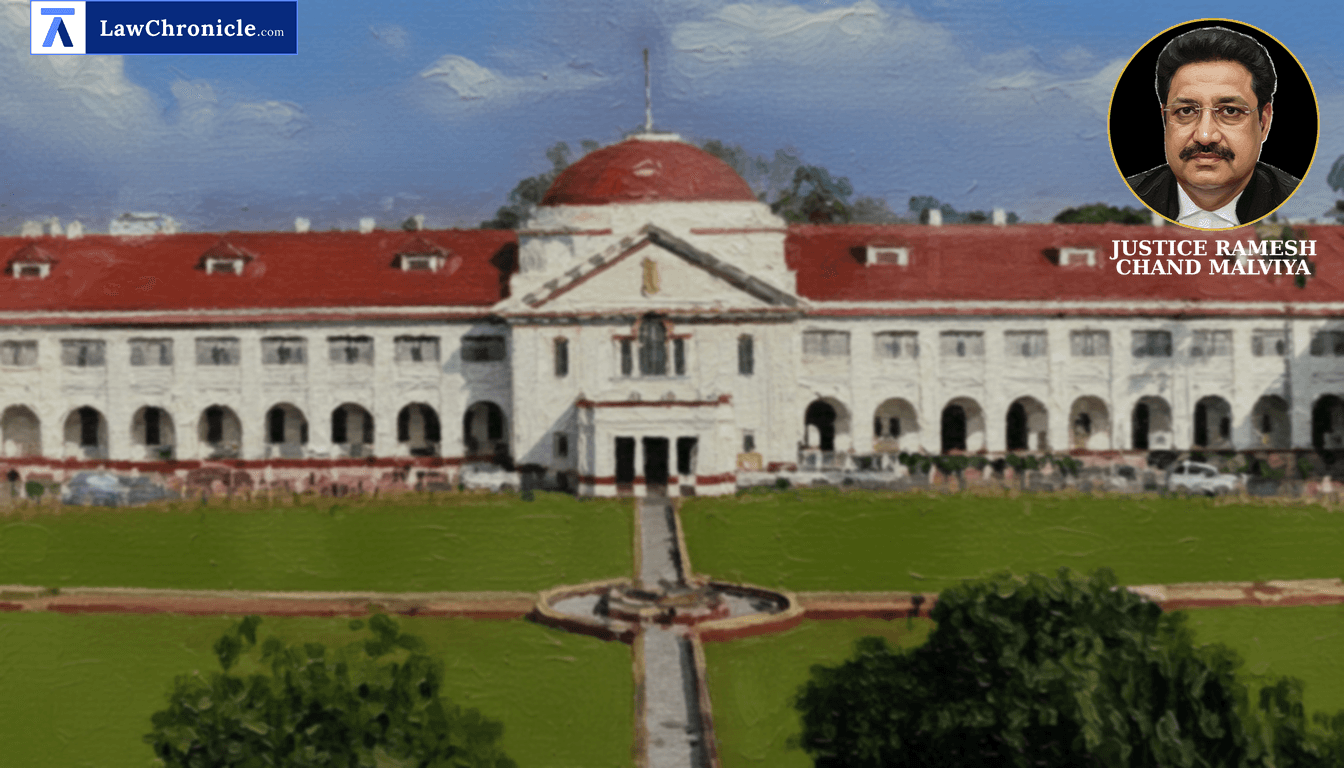
The Patna High Court has dismissed a first appeal seeking partition, ruling that a plaintiff cannot displace natural succession by relying on the mere coincidence of ancestral names without proving the factum of adoption. The court held that the burden of proving a common ancestor through reliable and consistent evidence rests squarely on the party asserting the relationship, particularly when seeking to override biological lineage.
In a judgment delivered by Justice Ramesh Chand Malviya, the High Court heard an appeal under Section 96 of the Code of Civil Procedure, 1908 against a Trial Court decree that dismissed a suit for partition. The appellants had claimed a 66 paise share in movable and immovable properties, asserting that their father was the adopted son of the common ancestor. The Court was tasked with determining whether the appellants successfully established a common lineage between the parties to sustain a partition claim.
Key Takeaways
- Burden of Proof in Adoption Cases: Litigants seeking to displace natural succession via adoption must discharge a high burden of proof, including establishing the ceremony of 'giving and taking'.
- Coincidence of Names as Fraud: The court warned that similarity in names between individuals from different districts cannot be misused to claim legal rights over properties without a proven common ancestor.
- Mandatory Joinder of Co-sharers: Failure to implead a full biological brother in a partition suit constitutes a non-joinder of a necessary party, rendering the suit defective.
- Appellate Scrutiny of Facts: Under Section 96 of the Code of Civil Procedure, 1908, the first appellate court is the final court of fact and must independently re-evaluate oral and documentary evidence.
Court Observation on Adoption Principles
The Court observed that the plaintiffs failed to provide the date, year, or circumstances of the alleged adoption. Referring to the Indian Evidence Act, 1872, the Court noted that the burden of proving the asserted title and share remains upon the appellants. The Court, in its reasoning, observed: "It is well settled that a person who seeks to displace the natural succession to property by alleging an adoption must discharge the burden that lies upon him by proof of the factum of adoption and its validity. It is also true that the evidence in proof of the adoption should be free from all suspicion of fraud and so consistent and probable as to give no occasion for doubting its truth."
The Court further noted that even the plaintiffs' own witnesses contradicted the claim of adoption, with some stating that the alleged adoptive father had a biological son, which naturally negates the necessity of adoption under the Hindu Adoptions and Maintenance Act, 1956 principles applicable at the time.
Directions Issued to the Trial Court
The Court has the following directions:
"51. Consequently, the appellants have failed to demonstrate any material error in the judgment and decree passed by the learned Trial Court warranting interference in this appeal. The judgment and decree dated 28.01.2006 passed by the learned Subordinate Judge-VII, Biharsharif, Nalanda, in Title Suit No. 102 of 1997 are affirmed.
52. The present First Appeal is, accordingly, dismissed.
53. The interlocutory application(s), if any stands disposed of, if any interim order or injunction order passed regarding disputed land deemed to be set aside in the light of above findings.
54. Let the trial court records be transmitted forthwith along with a copy of this judgement to the concerned court for the needful."
Ratio
In a suit for partition, the plaintiff must prove their own title and cannot succeed by relying on the weaknesses of the defense. A plea of adoption that displaces natural succession must be proved strictly through clear, cogent, and consistent evidence of the 'giving and taking' ceremony, and the mere coincidence of ancestral names is insufficient to establish a coparcenary relationship.
Background
The dispute originated from Title Suit No. 102 of 1997, where the appellants claimed their father, Gurusharan Ram, was adopted by one Kashiram of Nalanda. The respondents countered that Gurusharan Ram was Kashiram's natural son and that the plaintiffs belonged to an entirely different family from Gaya district whose father merely shared the same name. The Trial Court dismissed the suit, noting the suppression of a biological brother's existence and the lack of documentary evidence for adoption.
The High Court, relying on Madhusudan Das v. Narayani Bai and Ors. and Lakshman Singh Kothari v. Smt. Rup Kanwar @ Rup Kanwar Bai ( "AIR 1961 SC 1378": 1961 CaseBase(SC) 372), emphasized that a valid adoption requires the physical act of giving and taking. Furthermore, the court referred to L. Debi Prasad v. Tribeni Devi and Ors. regarding ancient adoptions, but found the inconsistencies in the plaintiffs' witness testimonies fatal to their case. The court also cited Santosh Hazari v. Purushottam Tiwari regarding the duties of a first appellate court to conduct a thorough de novo assessment of facts. Finding that the appellants failed to bridge the gap between rival genealogies, the appeal was dismissed.
Case Details:
Case No.: FIRST APPEAL No.48 of 2006
Case Title: Arjun Prasad & Ors. Versus Arvind Kumar & Ors.
Appearances:
For the Petitioner(s): Mr. Ramesh Kumar Chaudhary, Advocate
For the Respondent(s): Mr. Sanjay Prasad, Advocate
Source: 2026 CaseBase(PAT) 3971
Similar Articles
 Breaking News


