


Mere Insult Without Caste-Based Intent Not An Offence Under Atrocity Act: Gujarat HC
 Copy Link
 Share
 Save
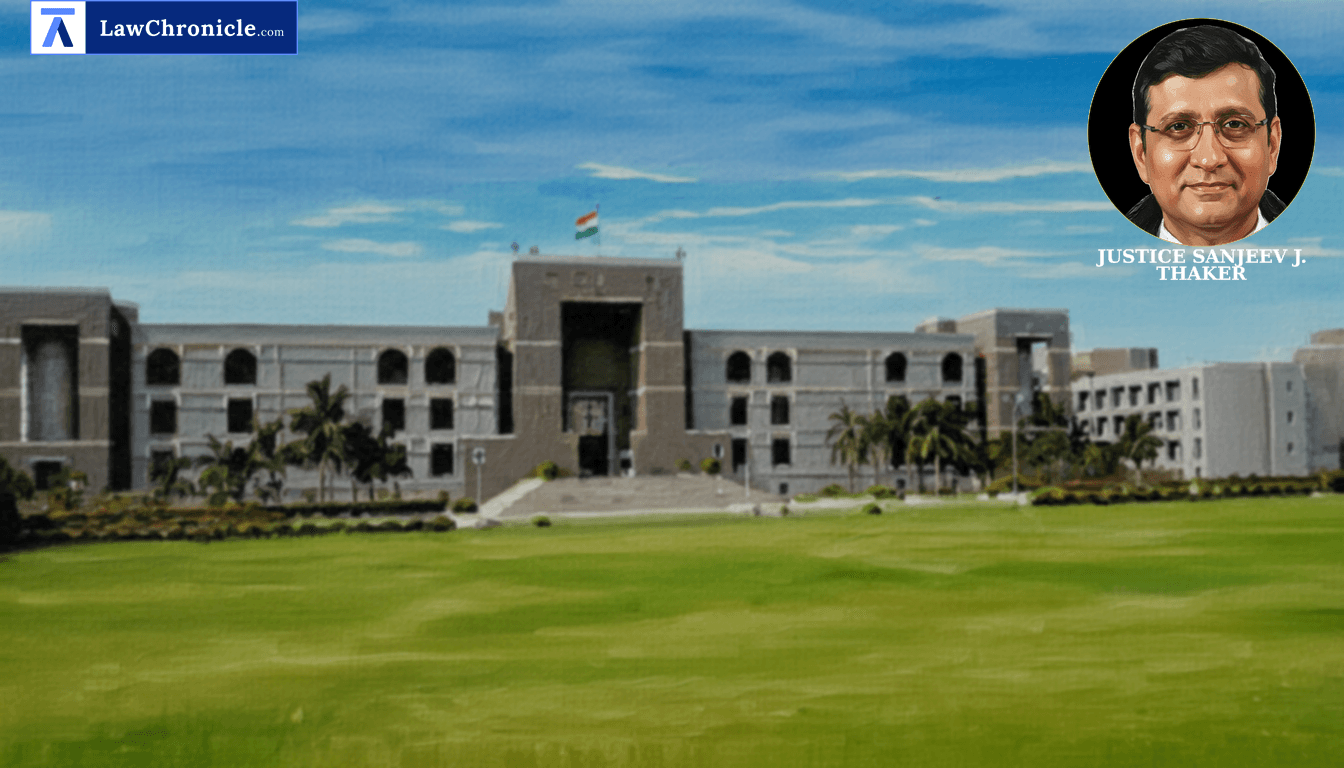
In a significant ruling clarifying the threshold for criminal liability under special statutes, the High Court of Gujarat affirmed that every instance of insult or intimidation does not automatically constitute an offence under the Atrocity Act unless specifically motivated by the victim's caste identity. This observation came as the Court upheld the acquittal of individuals accused of assault and verbal abuse, citing lack of established motive and material contradictions in the prosecution's evidence.
Delivering the verdict, a single-judge bench of Justice Sanjeev J. Thaker adjudicated upon an appeal filed by the State of Gujarat against a 2010 acquittal order. The State had challenged the findings of the Special Judge, Fast Track Court No.2, which had cleared the respondents of charges under Sections 323, 504, and 114 of the Indian Penal Code, as well as Section 3(1)(10) of the Scheduled Castes and the Scheduled Tribes (Prevention of Atrocities) Act.
Establishing Intent Under the Atrocity Act
The Court emphasized that for a conviction under the Scheduled Castes and the Scheduled Tribes (Prevention of Atrocities) Act, the prosecution must prove that the intimidation was directed at the victim precisely because they belonged to a Scheduled Caste or Scheduled Tribe. Relying on the principles laid down in Sajan Sakhariya Vs. State of Kerala and others, the Court noted that the mere use of indecent words does not suffice if the nexus between the act and the victim's caste is not established beyond a reasonable doubt.
The Court, in its reasoning, observed: "...every insult or intimidation would not amount to an offence under Section 3(1)(x) of the Scheduled Castes and Scheduled Tribes (Prevention of Atrocities) Act, 1989, unless such insult or intimidation is started at a victim because he is a member of a particular Scheduled Castes or Scheduled Tribes."
Limited Scope of Interference in Acquittal Appeals
Justice Thaker reiterated the settled legal position regarding the appellate court's power in appeals against acquittal under Section 378 of the Code of Criminal Procedure, 1973. Referring to State of Karnataka Vs. Hemareddy, the Court noted that it is not required to rewrite a judgment or provide fresh reasoning when the trial court's findings are found to be just and proper. The Court further cited Ram Kumar v. State of Haryana ( "AIR 1995 SC 280": 1995 CaseBase(PNH) 181), Rajesh Singh & Others vs. State of Uttar Pradesh ( "(2011) 11 SCC 444": 2011 CaseBase(SC) 1057), Bhaiyamiyan Alias Jardar Khan and Another vs. State of Madhya Pradesh, and Chandrappa v. State of Karnataka ( "(2007) 4 SCC 415": 2007 CaseBase(SC) 278) to underscore that if two reasonable conclusions are possible, the appellate court must not disturb the finding of acquittal.
Background:
The dispute originated from an incident on July 12, 2007, where the complainant alleged that while he was guarding his field with his nephew and grandson, the accused arrived armed with sticks, hurled caste-based abuses, and assaulted them. The prosecution examined 11 witnesses; however, several key panch witnesses and independent witnesses turned hostile.
The trial court had acquitted the accused after noting significant contradictions, such as the timing of the incident (ranging from 9:00 PM to 11:00 PM in different testimonies) and the lack of medical history provided to the treating doctor. The High Court, upon reappreciating the evidence, found that there was no direct evidence connecting the accused to the alleged caste-based slurs and no established motive or prior enmity. Consequently, the High Court dismissed the State's appeal, affirming that the prosecution had failed to prove the charges beyond reasonable doubt.
Case Details:
Case No.: R/CRIMINAL APPEAL NO. 1942 of 2010
NeutralCitation: 2026:GUJHC:30950
Case Title: STATE OF GUJARAT Versus BABBHAI BHIKHUBHAI KHACHAR & ORS.
Appearances:
For the Petitioner(s): MS SHRUTI PATHAK, APP
For the Respondent(s): MR DIPEN K DAVE, MR LAXMANSINH M ZALA
Source: 2026 CaseBase(GUJ) 234
Similar Articles

 Breaking News


