Mere Use Of Word 'Rent' Does Not Transform License Agreement into Rent Agreement: Bombay HC
 Copy Link
 Share
Share Save
Save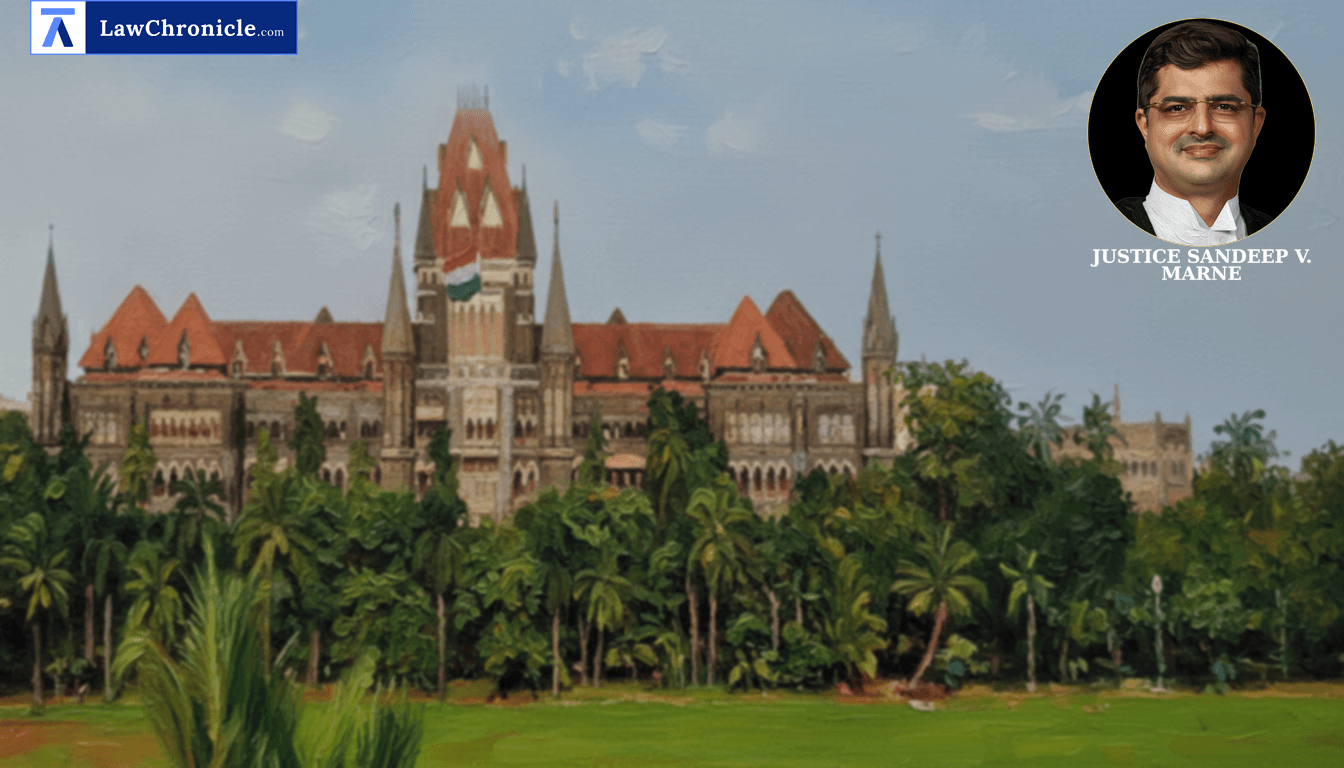
The Bombay High Court has slammed the "egregious approach" of lower courts in misinterpreting standard leave and license agreements as statutory tenancies, warning that such judicial overreach threatens to shrink India’s housing stock by discouraging property owners from inducting needy occupants. In a decisive ruling, the Bench clarified that neither the use of the word 'rent' nor typographical errors in a contract can override the clear intention of parties to create a temporary license agreement rather than a permanent transfer of interest vide rent agreement.
Justice Sandeep V. Marne delivered the judgment while hearing two writ petitions challenging a District Court's decree. The case centered on a dispute over a commercial gala in the APMC Market at Vashi, which had been occupied for 32 years despite a license term of only 22 months.
Key Takeaways
Intention Over Terminology
The Bombay High Court ruled that the legal relationship between parties must be gathered from a holistic reading of the document; the mere use of the word 'rent' is not dispositive of a tenancy.
Transfer of Interest Essential for Lease
Under Section 105 of the Transfer of Property Act, 1882, a lease requires a 'transfer of right to enjoy', whereas a license involves no transfer of interest, leaving legal possession with the owner.
Deterring Unauthorized Occupation
The Bombay High Court invoked powers under Order XLI Rule 33 of the Code of Civil Procedure, 1908 to order an enquiry into mesne profits, ensuring litigants do not benefit from decades of unauthorized squatting.
Protection of the License Regime
The Bombay High Court emphasized that converting licenses into statutory tenancies disturbs the fabric of property arrangements, discouraging owners from releasing properties into the market.
License Agreement vs Rent Agreement
The Bombay High Court observed that the Petitioner’s claim to tenancy was primarily based on the appearance of the word 'rent' in the agreements and a typographical error in Clause 5 which mentioned the relationship as 'landlord and tenant'. The Bench, in its reasoning, observed: "Use of the word ‘rent’ at few places in the Agreement would not ipso facto create tenancy in favour of the Petitioner. The intention between the parties is to be gathered from the holistic reading of the document instead of concentrating on use of a particular word. In common parlance and practice, parties do informally use the word ‘rent’ to describe license fees/monthly compensation payable under a license."
Furthermore, the Bombay High Court criticized the Trial Court for misinterpreting the Transfer of Property Act, 1882. It noted that for a lease to exist, there must be a transfer of interest. In this case, the Respondent retained control and dominion. The Bench remarked: "The approach of the Trial Court in the present case in converting a mere license for 11 months into statutory tenancy is disquieting. Such approach would discourage the home owners from permitting the home seekers to use the premises on license... Any reservation by property owners/licensors to create licenses (on account of fear of license being treated as a tenancy) would shrink the housing stock affecting the interests of licensees."
Powers Under Article 227 and Mesne Profits
Despite the Petitioner’s challenge under Article 227 of the Constitution of India, 1950, the Court held it could exercise appellate-like powers to do complete justice. Citing M/s. Musaji Mohamadali Master and Sons & Anr. V/s. Gulamali Dadabhai Amreliwala and Anr., the Court affirmed that it could permit a respondent to assail adverse findings even without a formal cross-objection. Consequently, the Court found the Petitioner, who had stopped paying even the paltry license fee in 2012, liable for mesne profits under Section 2(12) of the Code of Civil Procedure, 1908.
Ratio
The status of a 'licensee' is not elevated to that of a 'tenant' merely by the use of the word 'rent' or through clerical inconsistencies in a caretaker agreement if the document, read holistically, shows no transfer of interest and reserves dominion with the owner. Furthermore, High Courts exercising supervisory jurisdiction under Article 227 of the Constitution possess the power to invoke Order XLI Rule 33 of the CPC to modify decrees in favor of a respondent to ensure 'complete justice', including the direction for mesne profit enquiries, even in the absence of a formal cross-appeal.
Background
The dispute began when the Respondent owner executed a 'Caretaker Agreement' in 1994 for a shop in Vashi for 11 months, followed by a second agreement in 1995 with the Petitioner. When the license expired in 1996, the Petitioner refused to vacate, claiming tenancy rights. The Trial Court initially declared the Petitioner a tenant, but this was reversed by the Additional District Judge, Thane, who held her to be a licensee.
During the High Court proceedings, the Petitioner relied on Section 105 of the Transfer of Property Act, 1882 and cited Sardar Pruthisingh vs. Kanchanlal Purshottamdas Desai ( "2001 (2) MhLJ 948": 2001 CaseBase(BOM) 716). The Respondent, represented by Mr. Pradeep Thorat, argued that the Maharashtra Rent Control Act, 1999 (formerly Bombay Rents, Hotel and Lodging House Rates Control Act, 1947) and Indian Easements Act, 1882 provided mechanisms for eviction and that the Court should award mesne profits for 32 years of occupation. The Bombay High Court relied on precedents such as Suhas Yeshwant Chopde V/s. Sachhidanand D. Purekar ( "(1999) 5 SCC 721": 1999 CaseBase(SC) 80), Rajendra B. Nair V/s. Suresh D. Dyanmothe and Anr. ( "2002 (4) MhLJ 93": 2002 CaseBase(BOM) 812), and Banarsi vs. Ram Phal ( "2003 SCC OnLine SC 229": 2003 CaseBase(SC) 1658) to distinguish between lease and license, eventually dismissing the petitions and ordering the enquiry into mesne profits.
Case Details:
Case No.: WRIT PETITION NO. 7067 OF 2003 and 7068 of 2003
Neutral Citation: 2026:BHC-AS:37423
Case Title: Navina Dinesh Shetty V/s. Shaikh Ayub Rehman
Appearances:
For the Petitioner(s): Mr. Rohit D. Joshi, Advocate
For the Respondent(s): Mr. Pradeep Thorat i/b Ms. Anu R. Khanna, Advocate
Source: 2026 CaseBase(BOM) 5649
 Breaking News