


Minor GD Discrepancies Do Not Invalidate FIR: Calcutta High Court
 Copy Link
 Share
 Save
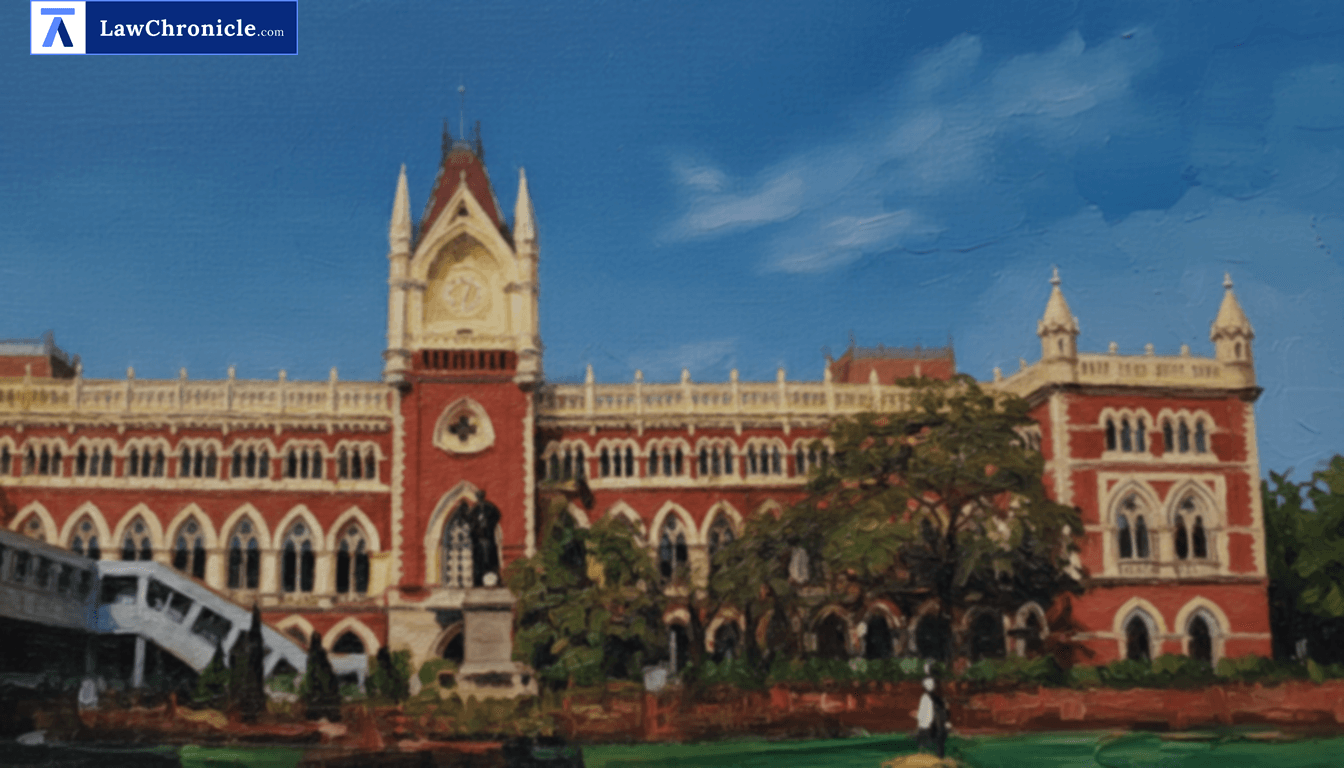
Substantive ocular testimony and credible evidence override procedural errors in police station daily diaries, cementing the principle that hyper-technical flaws cannot undermine an established criminal prosecution.
A Division Bench of the High Court at Calcutta, comprising Justice Rajasekhar Mantha and Justice Anuj Singh, affirmed the conviction and life sentence of two individuals accused of murder in a long-standing land dispute appeal.
Key Takeaways
- GD Entry Discrepancy Not Fatal: Inaccuracies or time discrepancies in General Diary entries that do not directly lead to the FIR registration cannot invalidate the FIR.
- Primacy of Eyewitnesses over Medical Opinion: Ocular evidence prevails over medical opinion unless medical findings completely rule out the physical possibility of the injuries occurring as alleged.
- Flexibility in Weapon Recovery: Recovery under Section 27 of the Evidence Act, 1872 does not strictly require a written disclosure memorandum in every case when supported by direct witness testimony of conduct.
- Verbal Dying Declarations Valid: A prompt, natural dying declaration made to private independent witnesses is fully admissible under Section 32 of the Evidence Act, 1872 out of legal necessity.
Court's Analysis on General Diary and FIR Validity
The appellants challenged their conviction under Section 302 read with Section 34 of the Indian Penal Code, 1860, arguing among other grounds that the initial General Diary (GD) entry time differed from the time reflected in the FIR, signaling manipulation. Rejecting this contention, the High Court emphasized that an unverified preliminary GD entry does not constitute an FIR.
Citing the landmark decision in Lalita Kumari v. Govt. of U.P. ( "(2014) 2 SCC 1": 2013 CaseBase(SC) 771), the Court noted that a police station daily diary is a voluminous record and administrative discrepancies do not vitiate the FIR. The Court observed:
"An entry in the General Diary of a police station cannot override the actual piece of information, which resulted in an FIR. Mere procedural or clerical errors in recording time entries in a General Diary do not invalidate an FIR or negate the prosecution's case unless deliberate fraud or prejudice to the accused is demonstrated."
Observations on Personal Enmity, Dying Declarations, and Weapon Recovery
Addressing the defense claim of mala fide prosecution owing to existing political and private rivalries, the Court relied on Sheonandan Paswan v. State of Bihar ( "(1987) 1 SCC 288": 1986 CaseBase(SC) 608) and A.R. Antulay v. Ramdas Sriniwas Nayak ( "(1984) 2 SCC 500": 1984 CaseBase(SC) 360) to reinforce that private malice cannot vitiate a case built on reliable evidence.
Evaluating the credibility of rural eyewitnesses whose statements contained minor omissions under Section 164 of the Code Of Criminal Procedure, 1973, the Court cited Shivaji Sahebrao Bobade v. State of Maharashtra ( "(1973) 2 SCC 793": 1973 CaseBase(SC) 123), observing that the evidence of village witnesses must be assessed considering their social background and perceptive habits.
Regarding the victim's oral statement before his death to an independent co-villager, the Court referred to Sudhakar v. State of Maharashtra ( "(2000) 6 SCC 671": 2000 CaseBase(SC) 124) and Arvind Singh v. State of Bihar ( "(2001) 6 SCC 407": 2001 CaseBase(SC) 509) to hold that verbal dying declarations made to private individuals are admissible out of sheer necessity when medical officers or magistrates are unavailable.
On the issue of weapon recovery under Section 27 of the Evidence Act, 1872 without a formal written disclosure memo, the Court distinguished the ruling in Boby v. State of Kerala ( "(2023) 15 SCC 760": 2023 CaseBase(SC) 1018) and applied the pragmatic approach articulated in Perumal Raja @ Perumal v. State, Rep. by Inspector Of Police ( "2024 INSC 13": 2024 CaseBase(SC) 452). The Court held that where witnesses directly observe the accused pointing out hidden weapons, such conduct assumes the character of direct evidence.
Aligning ocular evidence with medical findings, the Court reiterated that clear eyewitness testimonies override medical opinions unless an absolute contradiction exists. Referencing Goverdhan & Anr. v. State of Chhattisgarh ( "2025 INSC 47": 2025 CaseBase(SC) 200) on the standard of proof, the Court noted:
The Court, in its reasoning, observed: "It is also to be noted that the law does not contemplate stitching the pieces of evidence in a watertight manner, for the standard of proof in a criminal case is not proof beyond all doubts but only beyond reasonable doubt."
The Court issued the following directions:
"Consequently, the present appeal fails and is hereby dismissed along with all connected applications, if any. The judgment of conviction dated November 28, 2024, and the order of sentence dated November 29, 2024, passed by the learned Sessions Judge, Bankura, in Sessions Trial No. 01 of 2019 are hereby affirmed. The appellants, if on bail, are directed to surrender forthwith before the learned Sessions Judge, Bankura, to serve out their remaining sentences."
Ratio
A General Diary entry does not form the mandatory preface to an FIR, and clerical time discrepancies in non-FIR GD entries do not undermine the validity of a criminal prosecution supported by reliable ocular evidence. Furthermore, Section 27 of the Evidence Act, 1872 does not mandate a rigid straitjacket formula requiring a written statement memorandum when the voluntary act and conduct of the accused in pointing out hidden objects is proved by direct witness evidence.
Background
The prosecution arose from an incident on July 2, 2018, when the victim, Rabindranath Mondal, was fatally assaulted with a spade, iron rod, katari, and bamboo stick in an agricultural field in Bankura district due to long-standing enmity over a village road construction. The victim was rushed to Onda Super Speciality Hospital, where he succumbed to his injuries.
Following investigation, the trial court convicted the appellants under Sections 302/34 and 341/34 of the Indian Penal Code, 1860, sentencing them to life imprisonment. The appellants appealed their conviction before the High Court, asserting discrepancies in the place of occurrence, time variations in GD entries, conflict between medical and ocular evidence, and procedural flaws in weapon recovery. Dismissing all contentions, the High Court affirmed the trial court's conviction and sentence.
Case Details:
Case No.: CRA (DB) 43 of 2025 With CRAN 1 of 2025
Case Title: Somnath Mandal & Anr. Vs. The State of West Bengal
Appearances:
For the Petitioner(s): Mr. Soumik Ganguli, Mr. Soumyajit Das Mahapatra, Ms. Madhurai Sinha, Ms. Upasana Banerjee, Mr. Bisal Roy.
For the Respondent(s): Mr. Gouranga Kumar Das, A.P.P., Mr. Soumya Raha., Mr. Partha Sarathi Bhattacharya (Amicus Curiae)
Source: 2026 CaseBase(CAL) 2326
Similar Articles


 Breaking News


