


Minor's Consent Is No Defence In Rape Cases: Allahabad High Court
 Copy Link
 Share
 Save

The Allahabad High Court has reinforced the absolute nature of protection for minors in sexual offence cases, ruling that any alleged consent from a girl below 18 years of age is legally irrelevant and cannot serve as a shield for an accused. In a stern affirmation of child safety laws, the Bench held that a mature perpetrator cannot exploit a position of dominance or use false assurances of marriage to escape the consequences of sexual assault.
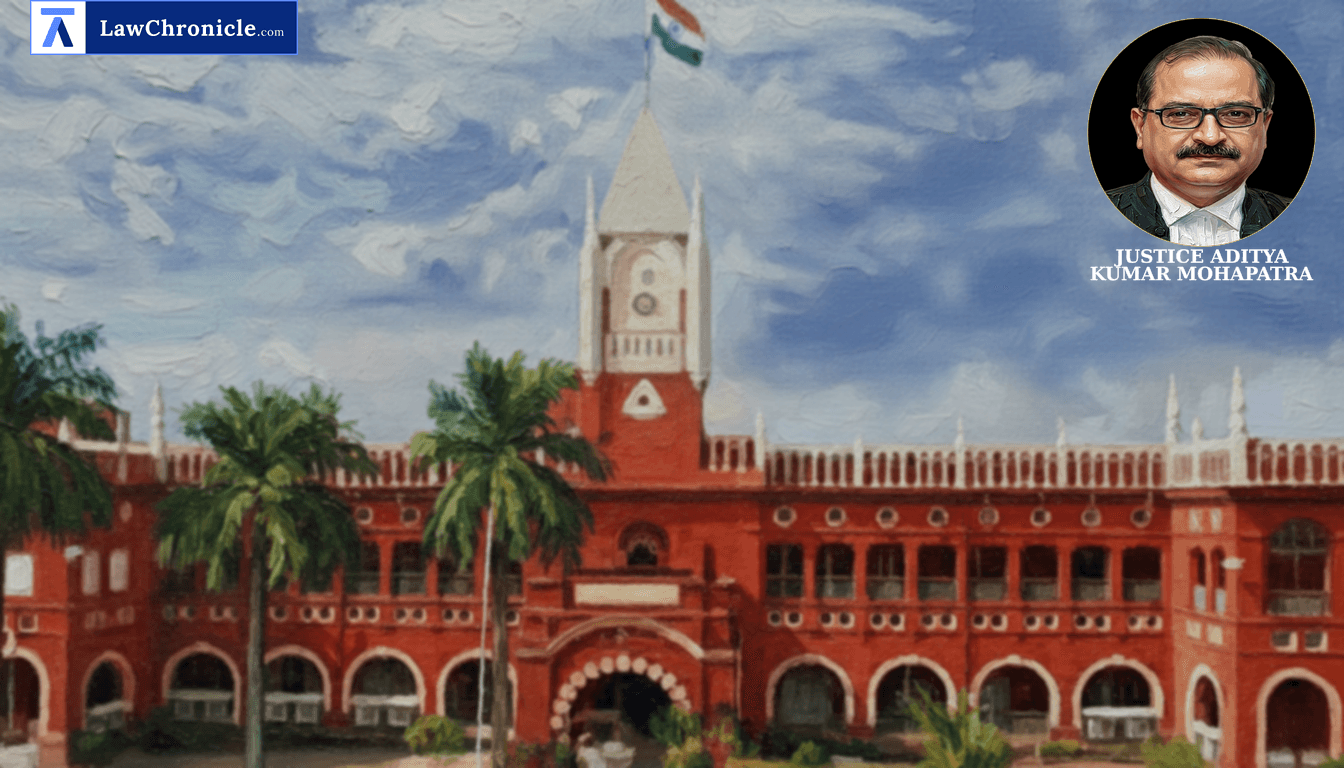
The appeal was heard by Justice Abdul Shahid, who presided over the challenge against a conviction for abduction and rape. The appellant, a married man with three children, sought to overturn a ten-year rigorous imprisonment sentence, contending that the victim had accompanied him voluntarily and that medical evidence was inconclusive.
Key Takeaways
Inadmissibility of Minor's Consent
Consent, whether express or implied, is entirely immaterial in criminal law when the victim is under 18 years of age, rendering the act of sexual intercourse inherently 'forcible' under Indian Penal Code, 1860.
Primacy of Prosecutrix Testimony
In sexual assault cases, the reliable and consistent testimony of the victim stands on a higher pedestal than medical corroboration, as a victim suffers emotional and psychological injuries that physical examinations may not capture.
Investigative Omissions Not Fatal
Lapses or irregularities by an Investigating Officer do not automatically entitle an accused to acquittal if the substantive oral and documentary evidence established during the trial is found to be truthful.
Court Observations and Reliability of Evidence
The Allahabad High Court dismissed the appellant's argument regarding the lack of medical corroboration and external injuries. It emphasized that the absence of spermatozoa or physical trauma does not negate the occurrence of rape, especially when the victim's account is categorical. The Bench relied on Ravi Kumar Singh Malhotra Vs. State of Madhya Pradesh ( "2026 Live Law (SC) 844; 2026 INSC 899": 2026 CaseBase(SC) 818) and Mohd. Imran Khan v. State (Govt. of NCT of Delhi) to reiterate that judicial sensitivity is required in dealing with such cases.
The Allahabad High Court, in its reasoning, observed that “Rape is not merely a physical assault; rather, it often affects the entire personality of the victim. The perpetrator degrades the very soul of a helpless woman. Therefore, the testimony of the prosecutrix must be appreciated in the context of the entire case. In such cases, the non-examination of other witnesses may not constitute a serious infirmity in the prosecution case... no self-respecting woman would ordinarily come forward to make a humiliating statement against her honour.”
Ratio
In cases involving the sexual assault of a minor, the legal definition of consent is strictly age-bound; any sexual act with a person below the age of 18 is 'against her will' regardless of the victim's participation. Furthermore, the testimony of a victim of sexual assault is not to be treated as that of an accomplice, and if found reliable, it is sufficient for conviction without the necessity of external medical corroboration or independent witnesses.
Background
The prosecution alleged that on the night of March 30, 2014, the appellant enticed the 16-year-old victim away from her home in Ghaziabad while her family was attending a religious function. The victim was taken to Faridabad, where she was confined in a rented room for 12-13 days and subjected to repeated sexual intercourse under the false pretext of marriage. The defense argued that the FIR was delayed by eight days, citing Balku Oram Vs. State of Odisha ( "2026 LiveLaw (SC) 802": 2026 CaseBase(SC) 776) and Ram Das and others Vs. State of Maharashtra to suggest the delay was fatal to the case. However, the Court, following the principles in Vijay alias Chinee v. State of M.P., found the explanation for the delay satisfactory given the social stigma involved.
The Allahabad High Court also addressed the defense's claim regarding the Investigating Officer's conduct, referencing Wahid Khan v. State of M.P., State of Karnataka v. K. Yarappa Reddy ( "(1999) 8 SCC 715": 1999 CaseBase(SC) 1337), and State of Bihar v. P.P. Sharma to hold that the court must remain pre-eminent in criminal trials and not allow investigative wrongs to defeat justice. While the radiological report suggested the victim was 18, the Bench prioritized the High School Certificate showing her as a minor, in line with established precedents like State of Maharashtra v. Chandraprakash Kewal Chand Jain ( "AIR 1990 SC 658": 1990 CaseBase(SC) 816) and State of Punjab v. Gurmit Singh ( "(1996) 2 SCC 384": 1996 CaseBase(SC) 1295). Finding no merit in the appeal, the Allahabad High Court dismissed it and ordered the appellant to surrender.
Case Details:
Case No.: CRIMINAL APPEAL No. - 4246 of 2017
Case Title: Padam Singh @ Padmi Versus State of U.P.
Appearances:
For the Petitioner(s): Nazia Ilyas, Sarwar Ali Siddique
For the Respondent(s): Jhamman Ram, G.A.
Source: 2026 CaseBase(ALL) 1347
Similar Articles


 Breaking News


