


Minor's Welfare is Paramount; Child Custody to Father can be denied even in the absence of Mother: SC
 Copy Link
 Share
 Save
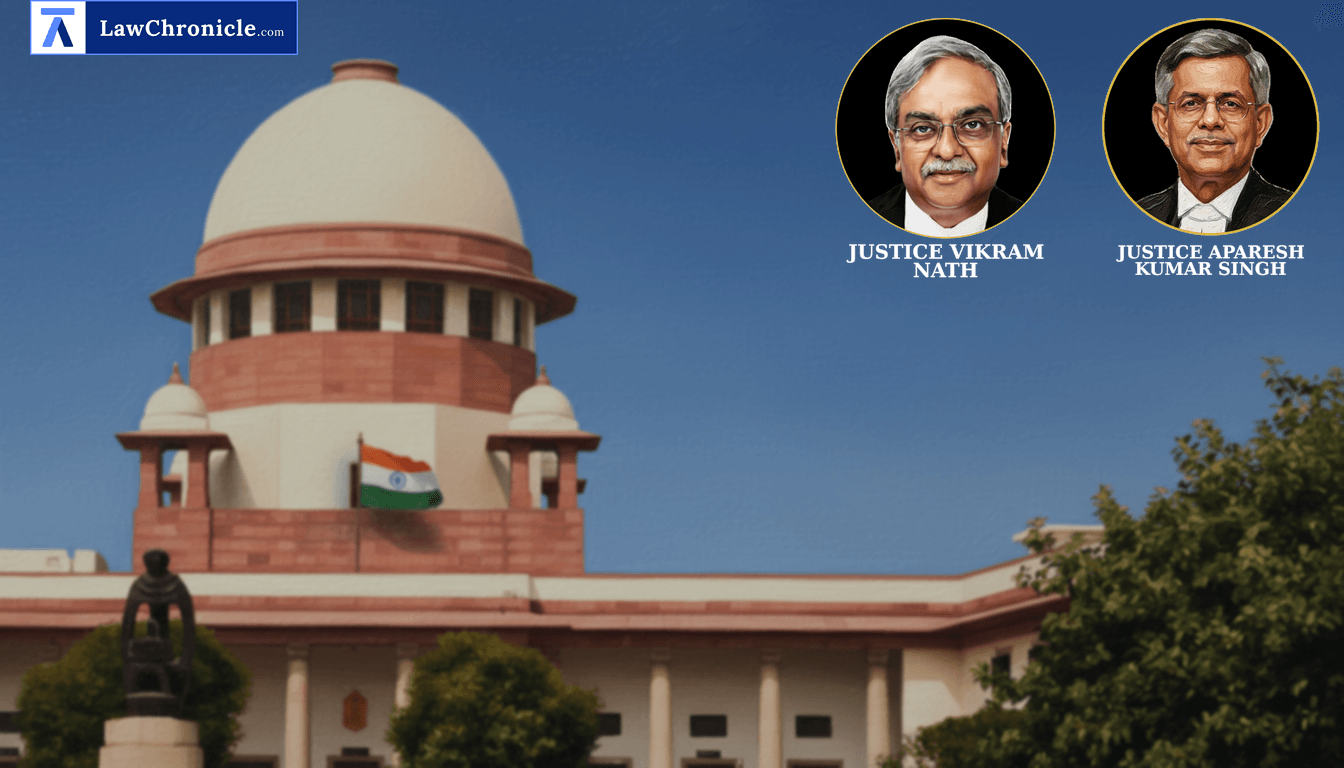
Overturning decisions of two lower courts, the Supreme Court has signified that child custody to father can be denied even in the absence of mother, for minor's welfare is paramount. The children in this case grew up in their mother's sole care and express a clear desire to remain with her. A bench of Justice Vikram Nath and Justice Aparesh Kumar Singh allowed the appeal brought by the mother against the judgment of the High Court, which had affirmed the Family Court's decision granting custody of two minor sons to the father.
Key Takeaways
Child Welfare Prevails Over Statutory Rights: A father's statutory position as a natural guardian yields to the paramount consideration of the child's overall physical, emotional, and educational well-being.
Preference of Mature Minors Is Crucial: When minor children reach an age where they can form an intelligent preference, courts must give due weight to their expressed choice regarding custody.
Disruption of Natural Growth Environment Avoided: Uprooting children from an established, healthy environment created by a single parent over several years is detrimental, even if the other parent is not legally unfit.
Non-Custodial Parental Rights Preserved: Denying primary custody does not extinguish parental contact; granting structured visitation is essential for balanced development.
Evaluating the legal framework, the Supreme Court emphasized that statutory rights under the Guardians and Wards Act, 1890 must strictly serve the child's best interests. The Bench noted that even if a father is not proven to be legally disqualified, custody cannot be granted mechanically purely based on his legal status as a natural guardian. The Apex Court observed that the minor children, aged 16 and 14, had lived continuously with their mother since 2014, received quality education, and clearly expressed their intention to remain in her care. Restructuring their living situation at this stage would disrupt their stability.
The Supreme Court observed that "In the facts and circumstances of the case, we are of the considered opinion that the children should not be separated from their mother with whom they have developed a strong natural bond over the years keeping into account the predominant criterion of paramount consideration of the welfare of the child. The children are also mature enough to convey their preferences in favor of their mother. Removing their custody at this stage from the environment in which they have lived with their mother and grandparents would not be conducive to their mental and physical well-being and their education despite the fact that the respondent has not been found unfit for having their custody."
Ratio
Under Section 17 and Section 19(b) of the Guardians and Wards Act, 1890, the predominant and sole criterion for determining custody between natural guardians is the welfare and best interest of the minor. Absolute parental rights yield to the child's moral, physical, and emotional well-being, and mature preferences expressed by minors under Section 17(3) must be given weight over formal rights of custody.
Background
The parties married in August 2009 and had two sons born in 2010 and 2012. Following marital discord, the parties separated in May 2014. The husband obtained a divorce decree on grounds of cruelty in 2018. Simultaneously, the Family Court at Madurai allowed child custody to father under the Guardians and Wards Act, 1890 and awarded maintenance to the children in a separate proceeding. Criminal proceedings initiated by the wife under Section 498-A, Section 294(b), and Section 506 of the Indian Penal Code, 1860 resulted in acquittal and partial quashing by the courts. The mother challenged the custody decree before the High Court in C.M.A. (MD) No. 17 of 2019. The High Court affirmed the Family Court's decision, observing that the father was a natural guardian and had not been shown to be unfit, while preserving status quo and visitation rights.
When the matter reached the Supreme Court, the bench interacted directly with the parents and both minor children. Relying on settled principles laid down in Anjali Kapoor (SMT) Vs. Rajiv Baijal, the Supreme Court recognized that custody decisions cannot be made solely on legal rights or financial status, but must prioritize stability and the child's welfare. Consequently, the Supreme Court set aside the High Court's judgment, allowed the appeal, and granted sole custody to the mother alongside structured visitation rights to the father.
Case Details:
Case No.: Civil Appeal No. _____ Of 2026 (Arising out of SLP (Civil) No. 30284 of 2024)
Neutral Citation: 2026 INSC 1260
Case Title: J. Sakthi Devi @ Chriti v. Joseph Charles
Source: 2026 CaseBase(SC) 10320
Similar Articles
 Breaking News


