


Multiplicity of Proceedings Not in Public Interest: Bombay HC Clubs 10 FIRs in Investment Fraud Case
 Copy Link
 Share
 Save
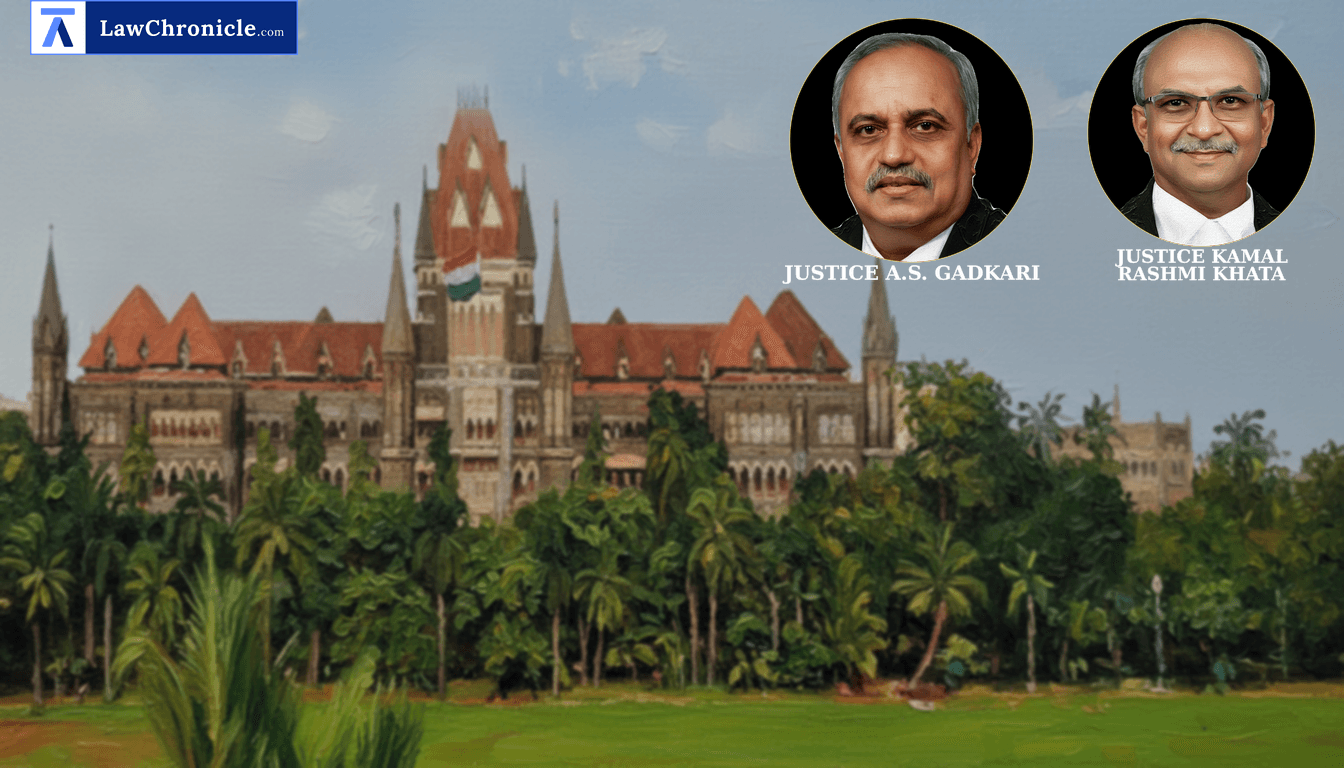
To prevent judicial fragmentation, the Bombay High Court has ordered the consolidation of ten separate FIRs registered across Maharashtra into a single trial, ruling that multiple prosecutions for identical investment-related allegations against a common promoter are contrary to the larger public interest. The Bench established that when a series of complaints arise from the same scheme and involve the same accused capacity, the first FIR must serve as the primary case to ensure efficient administration of justice and protect the accused from the rigors of defending themselves in ten different jurisdictions simultaneously.
A Division Bench comprising Justice A. S. Gadkari and Justice Kamal Khata delivered this ruling while hearing a writ petition filed by a director of three cooperative credit societies facing criminal charges in multiple districts including Nashik, Pune, Dhule, and Thane. The Petitioner sought the clubbing of ten FIRs registered under the Indian Penal Code, 1860, the Maharashtra Protection of Interest of Depositors (in Financial Establishments) Act, 1999, and the Prize Chits and Money Circulation Schemes (Banning) Act, 1978, contending that the complaints were a result of a retaliatory campaign by an RTI activist and subsequent panic among investors following a debit freeze on the entities' accounts.
Key Takeaways
Consolidation Over Multiplicity
Treating the first FIR as the main case prevents the wastage of judicial resources and protects the accused from the hardship of concurrent trials across different geographical locations for the same set of facts.
Public Interest Precedence
Multiplicity of proceedings in financial fraud cases involving numerous investors is not in the larger public interest or the interest of the State, necessitating a merged trial approach.
Witness Convenience via Technology
To balance the interests of the State and the investors, the trial court is empowered to record evidence through video conferencing, ensuring that witnesses/investors are not burdened by physical travel.
Judicial Rationale on Consolidating Criminal Proceedings
The Bombay High Court observed that the allegations in all ten FIRs were substantially identical, primarily concerning the acceptance of deposits on promises of high returns and subsequent defaults. The Bench emphasized that the law regarding the clubbing of FIRs for a common trial in offences registered under a similar scheme by a particular company or group is well-settled. Relying on the precedent set in State (NCT) of Delhi v Khimji Bhai Jadeja ( "2026 SCC OnLine 19": 2026 CaseBase(SC) 21) and Ravinder Singh Sidhu v. State of Punjab ( "2025 SCC OnLine SC 1164": 2025 CaseBase(SC) 582), the Court noted that later FIRs should ideally be merged with the earliest one to streamline the legal process.
The Bombay High Court observed that “...multiplicity of proceedings would not be in the larger public interest and the correct course of action would be to merge the later FIRs with the earliest FIR...In the present case, we find that the allegations in all ten FIRs are substantially the same. Each FIR alleges that the Petitioner accepted deposits from the Complainants on the promise of high returns and after making part payments, the Petitioner stopped paying altogether... In our view, clubbing of FIRs would facilitate the efficient administration of justice to expedite the trial of all the cases mentioned above.”
Ratio
Multiplicity of criminal proceedings arising out of a singular investment scheme or common facts involving the same accused constitutes a burden on the judicial system and the public interest. In such scenarios, subsequent FIRs must be treated as statements under Section 161 of the Code of Criminal Procedure, 1973 and clubbed with the first FIR for a consolidated trial to ensure the efficient administration of justice and prevent conflicting judicial outcomes.
Background
The Petitioner, Vishnu Ramchandra Bhagwat, is a Director and Promoter of Ujjwal Agro Multi State Co-operative Society Pvt Ltd and two other entities. According to the Petitioner, the businesses were operating without complaints until an RTI activist, previously arrested for extortion under the Arms Act, 1959, launched a revenge campaign. This led to a panic among customers and a debit freeze by the Economic Offence Wing (EOW), Nashik, resulting in repayment defaults despite the Petitioner holding assets valued at over Rs. 40 crore.
The Petitioner had been in custody for over four years and was facing trial in ten different courts despite the role and allegations being constant. The Court noted that the Petitioner had been granted bail in all matters and that the primary FIR (C.R. No. 209 of 2019) was registered with the Mumbai Naka Police Station. The Bombay High Court applied the principles laid down in T.T. Antony v. State of Kerala & Others ( "(2001) 6 SCC 181": 2001 CaseBase(SC) 983) and Alok Kumar v. State of Bihar ( "2025 SCC OnLine SC 1728": 2025 CaseBase(SC) 3534) to allow the petition and ordered the transfer of all cases to the Nashik Court within 30 days.
Case Details:
Case No.: WRIT PETITION NO. 1585 OF 2023
Neutral Citation: 2026:BHC-AS:43004-DB
Case Title: Vishnu Ramchandra Bhagwat V/s. State of Maharashtra
Appearances:
For the Petitioner(s): Mr. Vikram Parmar i/b. Mr. Sudatta Patil
For the Respondent(s): Mr. Ajay S. Patil, APP
Source: 2026 CaseBase(BOM) 7119
Similar Articles


 Breaking News


