


NHAI Cannot Bypass Contractual Warning Norms To Debar Independent Engineer: Delhi HC
 Copy Link
 Share
 Save
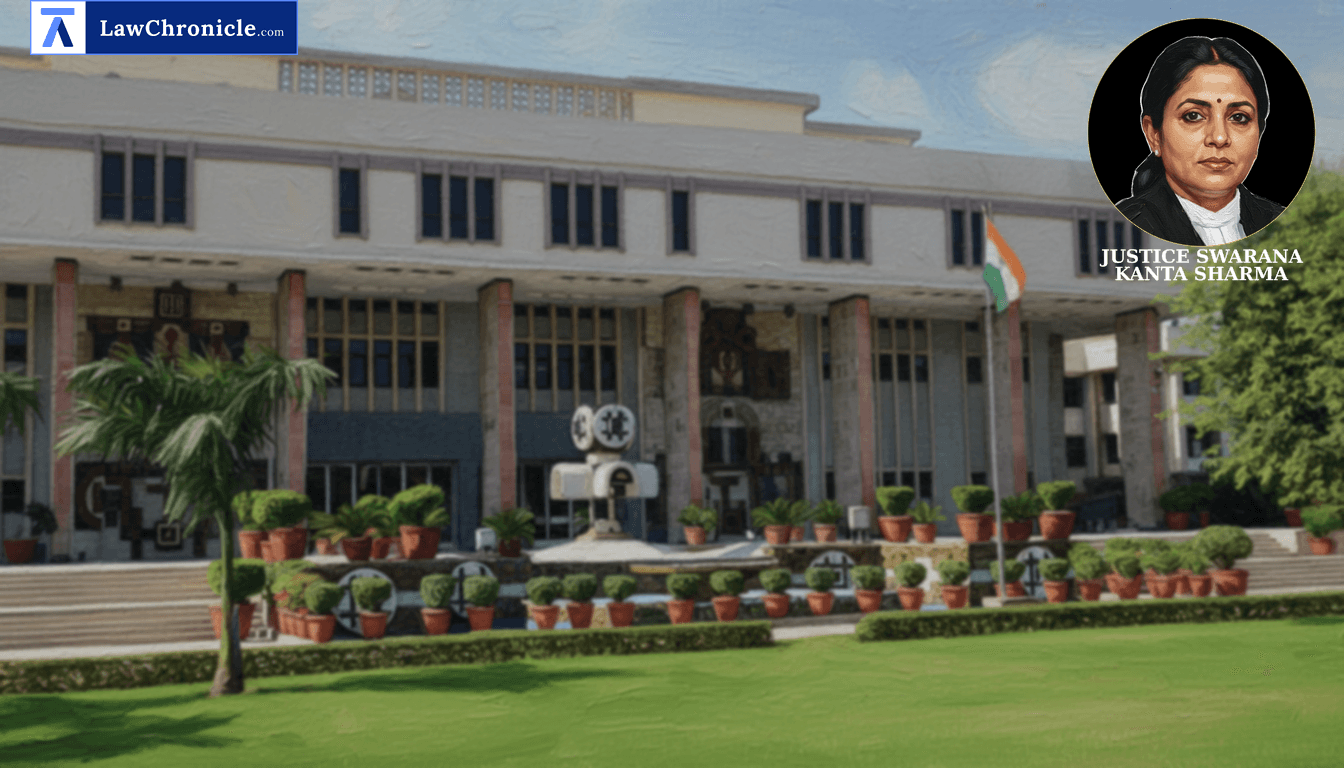
In a sharp setback to statutory infrastructure authorities attempting to bypass contractual obligations via internal administrative circulars, the High Court has stayed a debarment order issued by the National Highways Authority of India. The Court ruled that mandatory contractual safeguards specifically prior warnings cannot be ignored under the guise of exercising independent regulatory debarment powers.
A Single-Judge Bench of Justice Dr. Swarana Kanta Sharma halted the operation of the order that declared an Independent Engineer a non-performer, observing that contractual procedure governing alleged non-performance could not be bypassed before imposing the drastic consequence of debarment.
Key Takeaways
- Contractual Safeguards Primacy: Public authorities cannot ignore agreed contractual escalation steps like mandatory warnings by unilaterally invoking general administrative debarment circulars.
- Protection for Independent Engineers: Consultants and Independent Engineers working on large infrastructure projects gain protection against sudden prospective debarments issued without prior notice to cure or warnings.
- Impact of Force Majeure: The Court acknowledged intermediate force majeure events, such as severe cyclones requiring redesigns, as relevant factors when assessing project timelines.
Court's Rationale and Interim Relief
The High Court observed that NHAI had failed to follow the procedural regime outlined under the governing contract, which expressly contemplated warnings prior to taking punitive actions like debarment. The Court noted that during the two-year period of alleged delay, no prior warnings or cure notices were ever issued to the petitioner.
The Court, in its reasoning, observed: "In this Court’s view, prima facie, the contractual procedure governing such alleged non-performance could not have been bypassed before imposing the consequence of debarment... Without, at this stage, entering into the merits of the other contentions raised by the parties, this Court is of the view that, prima facie, the contractual procedure contemplated under Clause 13 of the TOR, including the issuance of warnings prior to resorting to debarment, has not been followed in the present case."
The Court issued the following directions:
"The impugned debarment order dated 20.07.2026 is, accordingly, stayed during the pendency of the present writ petition."
Ratio
A statutory authority bound by a contractual agreement prescribing a graded non-performance mechanism (such as mandatory prior warnings) cannot directly impose debarment by relying on general administrative policy circulars while bypassing the contractually agreed procedural preconditions.
Background
Respondent No. 1, NHAI, awarded a highway project under the Bharatmala Pariyojana Phase-I and subsequently appointed Petitioner No. 1 as the Independent Engineer (IE) via a Consultancy Agreement dated June 2, 2023. Following severe weather disruptions caused by Cyclone Michaung in December 2023, deficiencies in the original Detailed Project Report (DPR) surfaced, requiring additional cross-drainage structures and processing of Change of Scope (CoS) proposals.
While CoS proposals were being processed across multiple internal tiers of NHAI, the Authority issued a Show Cause Notice on April 10, 2026, alleging a delay of over one year by the IE in submitting the comprehensive CoS proposal. Subsequently, on July 20, 2026, NHAI issued a Debarment Order declaring the petitioner JV a "non-performer" and debarring it from participating in future NHAI bids for one year under NHAI Policy Circular No. 16.12/2022.
The petitioners challenged this before the High Court under Article 226 of Constitution of India, contending that Clause 13 of the Terms of Reference (TOR) prescribed a graded regime requiring multiple warnings before debarment, none of which were issued. NHAI, relying on Patel Engineering Ltd. v. Union of India, argued that debarment was an independent administrative action under its statutory policy framework to prevent project delays, operating outside the strict terms of the Consultancy Agreement.
Rejecting NHAI's initial contention, the High Court granted interim relief by staying the debarment order and listed the writ petition for final hearing on January 22, 2027.
Case Details:
Case No.: W.P.(C) 10430/2026 & CM APPL. 48445/2026
Case Title: URS SCOTT WILSON INDIA PRIVATE LIMITED IN JOINT VENTURE WITH M/S LION ENGINEERING CONSULTANTS PRIVATE LIMITED & ANR. v. NATIONAL HIGHWAYS AUTHORITY OF INDIA & ANR.
Appearances:
For the Petitioner(s): Mr. Rajshekhar Rao, Sr. Advocate with Mr. Atul Sharma, Mr. Abhishek Agarwal, Ms. Vinita Sasidharan, Ms. Anandita and Ms. Neha Narang, Advocates
For the Respondent(s): Mr. Santosh Kumar, Senior Advocate with Mr. Devansh Malhotra, Ms. Dharitry Phookan and Mr. Akash Kishore, Advocates for R-1; Mr. Nirmalya Shukla, Advocate for R-2
Source: 2026 CaseBase(DEL) 4789
Similar Articles
 Breaking News


